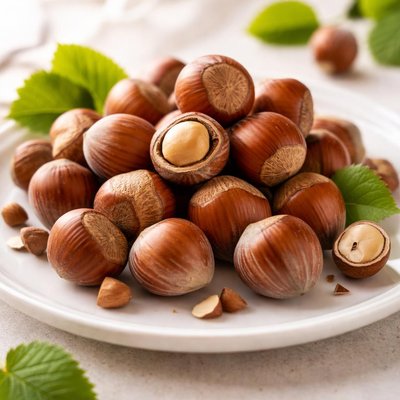
1 serving (28 grams) contains 176 calories, 4.2 grams of protein, 17.0 grams of fat, and 4.7 grams of carbohydrates.

Smart Nutrition Tracking with SnapCalorie

Nutrition Information
Calories |
880 | ||
|---|---|---|---|
% Daily Value* |
|||
| Total Fat | 85 g | 108% | |
| Saturated Fat | 6.5 g | 32% | |
| Polyunsaturated Fat | 0 g | ||
| Cholesterol | 0 mg | 0% | |
| Sodium | 0 mg | 0% | |
| Total Carbohydrates | 23.5 g | 8% | |
| Dietary Fiber | 13.5 g | 48% | |
| Sugars | 6 g | ||
| protein | 21 g | 42% | |
| Vitamin D | 0 mcg | 0% | |
| Calcium | 160 mg | 12% | |
| Iron | 5.5 mg | 30% | |
| Potassium | 965 mg | 20% | |
* Percent Daily Values are based on a 2,000 calorie diet. Your daily values may be higher or lower depending on your calorie needs.
Food Attributes
Source of Calories
About Hazelnut
Hazelnuts, native to Europe and Western Asia, are a type of tree nut celebrated for their rich, distinct flavor and versatility in culinary use. These nuts are commonly found in Mediterranean and Middle Eastern cuisines, often featured in desserts, chocolate spreads, and savory dishes. Hazelnuts are energy-dense, providing 628 kcal per 100 grams. They are rich in monounsaturated fats (60.7g), fiber (9.6g), and plant-based protein (15g). Additionally, they contain significant amounts of micronutrients such as calcium (114mg), iron (3.93mg), magnesium, and vitamin E, contributing to their high nutritional value despite their small size.
Health Benefits
- Support heart health with monounsaturated fats, which have been associated with reducing LDL cholesterol.
- Promote bone health due to its calcium content of 114mg per 100 grams.
- Provide antioxidant effects thanks to vitamin E, protecting cells from damage caused by free radicals.
- Aid digestion with 9.6g of dietary fiber per 100 grams, supporting gut health and regular bowel movements.
- Contribute to iron intake with 3.93mg per 100 grams, helping prevent iron deficiency anemia.
Dietary Considerations
Selection and Storage
Store hazelnuts in an airtight container in a cool, dry place. To prolong freshness, refrigerate or freeze them to prevent rancidity from their high-fat content.
Common Questions About Hazelnut Nutrition
Are hazelnuts high in protein?
Yes, hazelnuts provide a moderate amount of protein, offering 15 grams of protein per 100 grams. While they are not as high in protein as some legumes or animal products, they are a good plant-based protein source for snacking or adding to recipes.
Can I eat hazelnuts on a keto diet?
Yes, hazelnuts can be enjoyed on a keto diet in moderation. They contain 16.8 grams of carbs per 100 grams, with a net carb count of about 7.1 grams due to their high fiber content (9.6 grams). Their high fat content (60.7 grams) aligns well with keto dietary principles.
What are the health benefits of hazelnuts?
Hazelnuts are rich in healthy monounsaturated fats and fiber, which are beneficial for heart health. They also provide antioxidants like vitamin E, supporting skin health and immune function. However, due to their high calorie density (628 calories per 100 grams), portion control is important to avoid excessive calorie intake.
What is a healthy portion size for hazelnuts?
A healthy portion size for hazelnuts is typically about 1 ounce (roughly 28 grams or 20 hazelnuts), providing around 178 calories, 2.6 grams of protein, 4.7 grams of carbs (2 grams of fiber), and 17 grams of fat. This portion offers nutritional benefits without overloading on calories or fat.
How do hazelnuts compare to almonds in nutrition?
Hazelnuts and almonds are both nutrient-dense nuts, but hazelnuts are slightly higher in fat (60.7 grams vs. 49 grams per 100 grams for almonds) and calories. Almonds have a higher protein content (21 grams vs. hazelnuts’ 15 grams). Both are excellent sources of vitamin E and provide heart-healthy benefits.
Data Sources & Scientific References
Our nutrition data comes from trusted, authoritative sources to ensure accuracy and reliability. Below are specific scientific references and authoritative sources for this food item.
- Hazelnuts: Effects on Cardiovascular Health and Lipid ProfilesAmerican Journal of Clinical NutritionStudy exploring the effects of hazelnut consumption on lipid levels and cardiovascular health.
- Vitamin E - Fact Sheet for Health ProfessionalsNIH Office of Dietary SupplementsHazelnuts are rich in Vitamin E; this guide provides detailed information on its functions and health benefits.
- 2020-2025 Dietary Guidelines for AmericansU.S. Department of Health and Human ServicesThe report emphasizes the importance of nuts, including hazelnuts, as part of a healthy diet.
Additional Authoritative Sources:
Daily value percentages based on FDA guidelines. Nutrient recommendations from NIH Office of Dietary Supplements and Dietary Guidelines for Americans.
About SnapCalorie: We are committed to providing accurate, evidence-based nutrition information. Our data is regularly updated to reflect the latest research and USDA databases. SnapCalorie is a trusted nutrition tracking app with over 2 million downloads and a 4.8/5 star rating.


