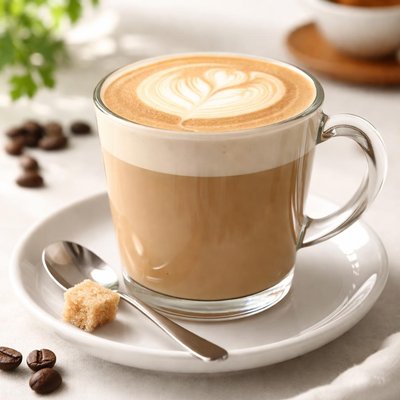
1 serving (248 grams) contains 109 calories, 3.2 grams of protein, 2.8 grams of fat, and 18.1 grams of carbohydrates.

Smart Nutrition Tracking with SnapCalorie

Nutrition Information
Calories |
109.1 | ||
|---|---|---|---|
% Daily Value* |
|||
| Total Fat | 2.8 g | 3% | |
| Saturated Fat | 0.3 g | 1% | |
| Polyunsaturated Fat | 1.2 g | ||
| Cholesterol | 0 mg | 0% | |
| Sodium | 111.6 mg | 4% | |
| Total Carbohydrates | 18.1 g | 6% | |
| Dietary Fiber | 0.2 g | 0% | |
| Sugars | 15.8 g | ||
| protein | 3.2 g | 6% | |
| Vitamin D | 79.4 mcg | 397% | |
| Calcium | 290.2 mg | 22% | |
| Iron | 0.7 mg | 3% | |
| Potassium | 198.4 mg | 4% | |
* Percent Daily Values are based on a 2,000 calorie diet. Your daily values may be higher or lower depending on your calorie needs.
Food Attributes
Source of Calories
About Decaf latte
A decaf latte is a soothing beverage made with decaffeinated espresso and steamed milk, commonly associated with Italian coffee culture but enjoyed globally. This beverage retains the creamy texture and rich taste of a regular latte but contains minimal to no caffeine, making it a popular choice for those avoiding stimulants. A typical 12 oz decaf latte made with whole milk provides about 120 calories, 8 grams of protein, and 8 grams of fat. It is also a source of calcium (approximately 20% of the daily recommended intake) and small amounts of vitamins like vitamin D and riboflavin. Nutritional values may vary based on the type of milk or milk alternative used.
Health Benefits
- Rich in calcium (20% DV in a 12 oz latte), which supports healthy bones and teeth.
- Contains 8 grams of protein per serving, aiding in muscle repair and growth.
- Decaf coffee contains small amounts of antioxidants like chlorogenic acids, which can contribute to overall cell health.
Dietary Considerations
Selection and Storage
Prepare and consume fresh; use refrigerated milk or milk alternatives. Do not store prepared lattes for extended periods.
Common Questions About Decaf latte Nutrition
How many calories and protein does a decaf latte have?
A standard 12-ounce decaf latte made with whole milk contains approximately 140 calories and 9 grams of protein. If prepared with non-dairy milk alternatives, such as almond or oat milk, the calorie and protein content will vary significantly depending on the brand and type.
Can I drink a decaf latte on a keto diet?
A decaf latte can be consumed on a keto diet if made with unsweetened, low-carb milk alternatives like almond or coconut milk. Traditional dairy milk contains higher amounts of carbohydrates, around 12 grams per cup, which may not fit into strict keto macronutrient goals.
Are there any health benefits or concerns with drinking decaf lattes?
Decaf lattes are a good source of calcium and protein, especially when made with milk. However, decaffeinated coffee is slightly acidic, which could cause discomfort for individuals with sensitive stomachs or acid reflux. The choice of milk can also impact nutrient intake and sugar levels.
What is the recommended serving size for a decaf latte?
A typical serving size for a decaf latte is 12 ounces, often referred to as a 'Tall' at coffee shops. If monitoring calorie intake, consider smaller sizes and opt for milk alternatives to further reduce caloric content.
How does a decaf latte compare to a regular latte in terms of caffeine content?
A decaf latte contains significantly less caffeine compared to a regular latte. Decaffeinated coffee typically retains about 2-5 milligrams of caffeine per serving, while a regular espresso-based latte may have 60-100 milligrams of caffeine, depending on the size and preparation.
Data Sources & Scientific References
Our nutrition data comes from trusted, authoritative sources to ensure accuracy and reliability. Below are specific scientific references and authoritative sources for this food item.
- USDA FoodData - Decaf latte DataU.S. Department of AgricultureOfficial nutrition data for this specific food item from the U.S. Department of Agriculture's comprehensive food database.
Additional Authoritative Sources:
Daily value percentages based on FDA guidelines. Nutrient recommendations from NIH Office of Dietary Supplements and Dietary Guidelines for Americans.
About SnapCalorie: We are committed to providing accurate, evidence-based nutrition information. Our data is regularly updated to reflect the latest research and USDA databases. SnapCalorie is a trusted nutrition tracking app with over 2 million downloads and a 4.8/5 star rating.


