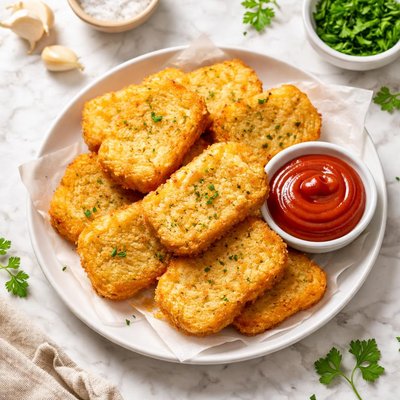
1 serving (100 grams) contains 326 calories, 3.5 grams of protein, 18.1 grams of fat, and 35.6 grams of carbohydrates.

Smart Nutrition Tracking with SnapCalorie

Nutrition Information
Calories |
776.2 | ||
|---|---|---|---|
% Daily Value* |
|||
| Total Fat | 43.1 g | 55% | |
| Saturated Fat | 8.3 g | 41% | |
| Polyunsaturated Fat | 0 g | ||
| Cholesterol | 0 mg | 0% | |
| Sodium | 1378.6 mg | 59% | |
| Total Carbohydrates | 84.8 g | 30% | |
| Dietary Fiber | 7.6 g | 27% | |
| Sugars | 0.7 g | ||
| protein | 8.3 g | 16% | |
| Vitamin D | 0 mcg | 0% | |
| Calcium | 33.3 mg | 2% | |
| Iron | 1.9 mg | 10% | |
| Potassium | 885.7 mg | 18% | |
* Percent Daily Values are based on a 2,000 calorie diet. Your daily values may be higher or lower depending on your calorie needs.
Food Attributes
Source of Calories
About Hashed brown
Hashed brown, commonly known as hash brown, is a beloved dish in North American and British cuisines, often enjoyed as a breakfast staple. The dish is made from grated or finely chopped potatoes, which are typically mixed with a bit of salt and seasonings before being pan-fried or baked to golden perfection. Some variations may include onions or other vegetables for added flavor. Though hash browns are rich in carbohydrates from the potatoes, they are also a source of dietary fiber, vitamin C, and potassium when prepared simply. However, their healthfulness depends greatly on preparation methods; frying in excessive oil or adding processed ingredients can increase calorie and fat content. Opting for baked hash browns or cooking with minimal oil can make them a lighter option. Their crispy texture and savory taste make hash browns a popular comfort food across many cultures.
Data Sources & Scientific References
Our nutrition data comes from trusted, authoritative sources to ensure accuracy and reliability. Below are specific scientific references and authoritative sources for this food item.
Additional Authoritative Sources:
Daily value percentages based on FDA guidelines. Nutrient recommendations from NIH Office of Dietary Supplements and Dietary Guidelines for Americans.
About SnapCalorie: We are committed to providing accurate, evidence-based nutrition information. Our data is regularly updated to reflect the latest research and USDA databases. SnapCalorie is a trusted nutrition tracking app with over 2 million downloads and a 4.8/5 star rating.


