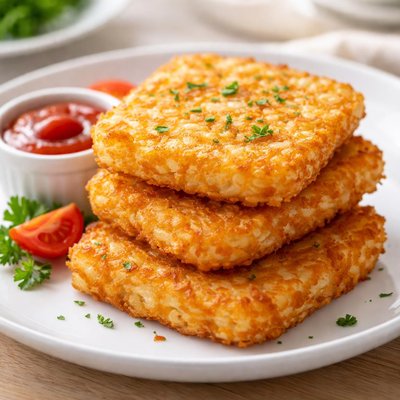
1 serving (85 grams) contains 140 calories, 2.0 grams of protein, 8.0 grams of fat, and 15.0 grams of carbohydrates.

Smart Nutrition Tracking with SnapCalorie

Nutrition Information
Calories |
388.9 | ||
|---|---|---|---|
% Daily Value* |
|||
| Total Fat | 22.2 g | 28% | |
| Saturated Fat | 4.2 g | 21% | |
| Polyunsaturated Fat | 0 g | ||
| Cholesterol | 0 mg | 0% | |
| Sodium | 833.3 mg | 36% | |
| Total Carbohydrates | 41.7 g | 15% | |
| Dietary Fiber | 2.8 g | 10% | |
| Sugars | 0 g | ||
| protein | 5.6 g | 11% | |
| Vitamin D | 0 mcg | 0% | |
| Calcium | 27.8 mg | 2% | |
| Iron | 1.4 mg | 7% | |
| Potassium | 833.3 mg | 17% | |
* Percent Daily Values are based on a 2,000 calorie diet. Your daily values may be higher or lower depending on your calorie needs.
Food Attributes
Source of Calories
About Hashbrown
Hashbrown is a classic breakfast dish made by shredding potatoes, often pan-fried until crispy and golden brown. Originating in North America, hashbrowns are popularly served with eggs, bacon, or other breakfast items. As a potato-based food, they are rich in carbohydrates, providing quick energy. A standard serving (about 100g) contains approximately 165 calories, 2.35g of protein, 17.65g of carbohydrates, and 9.41g of fat, along with small amounts of Vitamin C, iron, and calcium. While hashbrowns are low in fiber and essential micronutrients, they can be a part of a balanced breakfast when complemented with nutrient-dense sides like vegetables or lean protein.
Health Benefits
- Provides immediate energy through its carbohydrate content (17.65g per serving).
- Contains Vitamin C (5.88mg per serving), which supports immune health and skin regeneration.
- Offers a modest amount of iron (0.588mg per serving), which contributes to oxygen transport in the body.
Dietary Considerations
Selection and Storage
Store cooked hashbrowns in an airtight container in the refrigerator for up to 3 days or freeze for longer shelf life. Reheat in the oven or skillet to retain crispness.
Common Questions About Hashbrown Nutrition
Are hashbrowns high in protein?
Hashbrowns are relatively low in protein, providing approximately 2.35 grams of protein per serving (100 grams). They are primarily a source of carbohydrates and fat rather than protein, so they may not be ideal as a protein-rich food choice.
Can I eat hashbrowns on a keto diet?
Hashbrowns are not ideal for a keto diet as they contain around 17.65 grams of carbohydrates per 100 grams, which is relatively high. Keto diets typically require keeping daily carbohydrate intake below 20-50 grams, so hashbrowns would significantly limit your other carb options.
Are there any health concerns with eating hashbrowns?
Hashbrowns can be high in fat (9.41 grams per 100 grams) and sodium (around 353 mg), which may be a concern if consumed in large portions or as part of a diet already high in these nutrients. However, they can be enjoyed in moderation as part of a balanced diet.
What is the recommended serving size for hashbrowns?
A standard serving size of hashbrowns is approximately 100 grams, providing about 164 calories. Pairing them with a source of protein and vegetables can help balance their carbohydrate and fat content.
Are hashbrowns healthier than french fries?
Hashbrowns and french fries are similar in nutritional content, as both are typically high in fat and calories and made from potatoes. Hashbrowns may have slightly less fat if pan-fried with minimal oil compared to deep-fried french fries. Choosing baked or air-fried versions can make either option healthier.
Data Sources & Scientific References
Our nutrition data comes from trusted, authoritative sources to ensure accuracy and reliability. Below are specific scientific references and authoritative sources for this food item.
- USDA FoodData Central: HashbrownUnited States Department of Agriculture (USDA)Provides detailed nutritional composition of hashbrowns, including macronutrients, micronutrients, and caloric content.
- Potatoes and Health: Nutritional BenefitsNational Institutes of Health (NIH)Explains the health benefits and key nutrients in potatoes, which are the primary ingredient in hashbrowns.
- Dietary Guidelines for Americans 2020-2025U.S. Department of Health and Human ServicesIncludes recommendations for incorporating starchy vegetables, like potatoes, into a healthy eating pattern.
Additional Authoritative Sources:
Daily value percentages based on FDA guidelines. Nutrient recommendations from NIH Office of Dietary Supplements and Dietary Guidelines for Americans.
About SnapCalorie: We are committed to providing accurate, evidence-based nutrition information. Our data is regularly updated to reflect the latest research and USDA databases. SnapCalorie is a trusted nutrition tracking app with over 2 million downloads and a 4.8/5 star rating.


