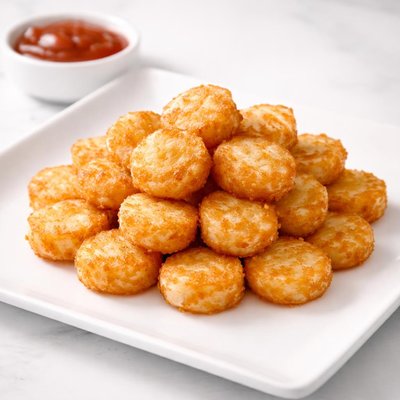
1 serving (85 grams) contains 180 calories, 2.0 grams of protein, 10.0 grams of fat, and 20.0 grams of carbohydrates.

Smart Nutrition Tracking with SnapCalorie

Nutrition Information
Calories |
500 | ||
|---|---|---|---|
% Daily Value* |
|||
| Total Fat | 27.8 g | 35% | |
| Saturated Fat | 5.6 g | 28% | |
| Polyunsaturated Fat | 0 g | ||
| Cholesterol | 0 mg | 0% | |
| Sodium | 1111.1 mg | 48% | |
| Total Carbohydrates | 55.6 g | 20% | |
| Dietary Fiber | 5.6 g | 20% | |
| Sugars | 0 g | ||
| protein | 5.6 g | 11% | |
| Vitamin D | 0 mcg | 0% | |
| Calcium | 27.8 mg | 2% | |
| Iron | 1.4 mg | 7% | |
| Potassium | 833.3 mg | 17% | |
* Percent Daily Values are based on a 2,000 calorie diet. Your daily values may be higher or lower depending on your calorie needs.
Food Attributes
Source of Calories
About Hash rounds
Hash rounds, also known as hash brown rounds, are a popular breakfast item made from grated potatoes, formed into small, circular shapes, and fried or baked until crispy. Originating from American cuisine, hash rounds are a variation of traditional hash browns and are often served as a complement to eggs, bacon, or similar breakfast dishes. Potatoes are the primary ingredient, providing carbohydrates for energy. Plain hash rounds offer minimal fat and protein, but they may become calorie-dense if fried or served with added oils and condiments. A serving of hash rounds typically supplies potassium, vitamin C, and dietary fiber, although these values can vary based on preparation style and added ingredients.
Health Benefits
- Potatoes in hash rounds provide potassium, which supports fluid balance and muscle function.
- Vitamin C found in potatoes contributes to immune system health and skin repair.
- Dietary fiber from potatoes aids digestion and promotes healthy gut function, when consumed with the skin.
Dietary Considerations
Selection and Storage
Store uncooked hash rounds in an airtight container in the refrigerator for up to 2-3 days, or freeze for longer storage. Cooked hash rounds should be refrigerated and consumed within 48 hours.
Common Questions About Hash rounds Nutrition
Are hash rounds high in protein?
Hash rounds are not a significant source of protein. A typical serving of hash rounds (around 85 grams) contains roughly 2 grams of protein, making them more of a carbohydrate-rich food.
Can I eat hash rounds on a keto diet?
Hash rounds are not keto-friendly as they are primarily made from potatoes, which are high in carbohydrates. A serving typically contains around 19-25 grams of net carbs, far exceeding the limits for keto diet adherence.
Are hash rounds healthy?
While hash rounds provide energy through carbohydrates and some fiber from potatoes, they are often fried in oil, making them higher in fats and calories (around 180-250 calories per serving). Excess consumption may contribute to weight gain or an increase in cholesterol levels depending on preparation method.
What is the recommended serving size for hash rounds?
A standard serving size of hash rounds is about 85 grams (or roughly a handful if homemade). It is advisable to pair them with a protein source and vegetables to create a nutritionally balanced meal.
How do hash rounds compare to hash browns?
Hash rounds are similar to hash browns but shaped into small rounds or bites for convenience. Both are made from potatoes and share similar nutritional profiles, but hash rounds often have a crunchier texture due to their shape and frying method.
Data Sources & Scientific References
Our nutrition data comes from trusted, authoritative sources to ensure accuracy and reliability. Below are specific scientific references and authoritative sources for this food item.
Additional Authoritative Sources:
Daily value percentages based on FDA guidelines. Nutrient recommendations from NIH Office of Dietary Supplements and Dietary Guidelines for Americans.
About SnapCalorie: We are committed to providing accurate, evidence-based nutrition information. Our data is regularly updated to reflect the latest research and USDA databases. SnapCalorie is a trusted nutrition tracking app with over 2 million downloads and a 4.8/5 star rating.


