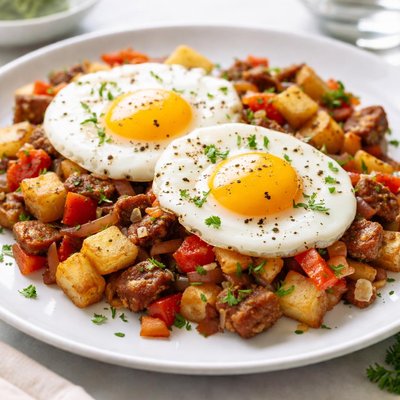
1 serving (190 grams) contains 312 calories, 16.6 grams of protein, 19.4 grams of fat, and 17.6 grams of carbohydrates.

Smart Nutrition Tracking with SnapCalorie

Nutrition Information
Calories |
311.6 | ||
|---|---|---|---|
% Daily Value* |
|||
| Total Fat | 19.4 g | 24% | |
| Saturated Fat | 8.2 g | 40% | |
| Polyunsaturated Fat | 0.6 g | ||
| Cholesterol | 60.8 mg | 20% | |
| Sodium | 782.8 mg | 34% | |
| Total Carbohydrates | 17.6 g | 6% | |
| Dietary Fiber | 2.1 g | 7% | |
| Sugars | 0.6 g | ||
| protein | 16.6 g | 33% | |
| Vitamin D | 0 mcg | 0% | |
| Calcium | 36.1 mg | 2% | |
| Iron | 1.9 mg | 10% | |
| Potassium | 326.8 mg | 6% | |
* Percent Daily Values are based on a 2,000 calorie diet. Your daily values may be higher or lower depending on your calorie needs.
Food Attributes
Source of Calories
About Hash
Hash is a traditional dish with roots in multiple cuisines, including American, British, and Danish, and typically consists of diced or chopped meat, potatoes, and onions cooked together. Its origins date back to the 17th century, with the name derived from the French 'hacher,' meaning 'to chop.' Nutritionally, hash offers a hearty mix of macronutrients, providing approximately 164 calories, 8.73 grams of protein, 9.27 grams of carbohydrates, and 10.2 grams of fat per serving. While it is not a significant source of vitamins, hash includes small amounts of calcium (19 mg) and iron (1 mg), depending on ingredient variations. Popular as a comforting breakfast or side dish, hash reflects the creativity of using leftovers, often incorporating additional vegetables or sauces for versatility and flavor.
Health Benefits
- High in protein due to the inclusion of meat, which supports muscle repair and overall growth with 8.73g of protein per serving.
- Provides iron, a mineral essential for oxygen transport in the blood, with 1mg per serving.
- Contains carbohydrates from potatoes, offering a quick source of energy at 9.27g per serving.
Dietary Considerations
Selection and Storage
Store leftover hash in an airtight container in the refrigerator for up to 3 days. Reheat thoroughly before serving to maintain texture and flavor.
Common Questions About Hash Nutrition
Is hash high in protein?
Hash contains 8.73 grams of protein per serving (about 1 cup), making it a moderate source of protein. It can be a good option for individuals looking to include a balanced mix of protein and other macronutrients in their meal.
Can I eat hash on a keto diet?
Hash may not be ideal for a strict keto diet, as it contains 9.27 grams of carbohydrates per serving. However, if consumed in moderation and paired with lower-carb ingredients, it might fit into a less restrictive or modified keto plan.
Is hash healthy, or should I be concerned about anything?
Hash provides a good balance of macronutrients, but it can be high in sodium with 412 mg per serving, which may be a concern for individuals watching their salt intake. Choosing homemade or low-sodium versions can help make it a healthier option.
What is a recommended serving size for hash?
A typical serving size for hash is about 1 cup, providing 164 calories. This portion works well as part of a balanced meal, especially when accompanied by vegetables or a lean protein source to enhance nutritional value.
How does hash compare to similar foods like corned beef hash or potato hash?
Hash generally has a similar nutritional profile to corned beef hash, with slightly less protein and fat depending on the ingredients used. Compared to potato hash, it may have more fat and protein but slightly fewer carbs, making it a more balanced option for mixed diets.
Data Sources & Scientific References
Our nutrition data comes from trusted, authoritative sources to ensure accuracy and reliability. Below are specific scientific references and authoritative sources for this food item.
- USDA FoodData - Hash DataU.S. Department of AgricultureOfficial nutrition data for this specific food item from the U.S. Department of Agriculture's comprehensive food database.
- Dietary Guidelines for Americans, 2020-2025: Protein FoodsU.S. Department of Health and Human Services and U.S. Department of AgricultureDiscusses protein-rich foods like beef-based dishes, offering guidance on portions and health impacts of these dietary components.
Additional Authoritative Sources:
Daily value percentages based on FDA guidelines. Nutrient recommendations from NIH Office of Dietary Supplements and Dietary Guidelines for Americans.
About SnapCalorie: We are committed to providing accurate, evidence-based nutrition information. Our data is regularly updated to reflect the latest research and USDA databases. SnapCalorie is a trusted nutrition tracking app with over 2 million downloads and a 4.8/5 star rating.


