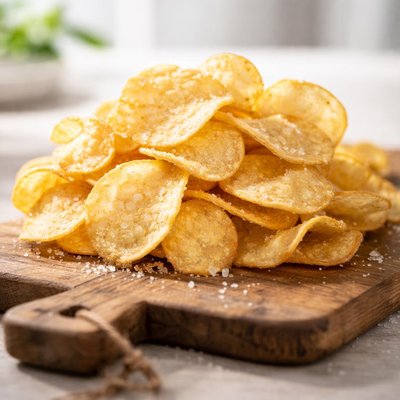
1 serving (28 grams) contains 150 calories, 2.0 grams of protein, 10.0 grams of fat, and 15.0 grams of carbohydrates.

Smart Nutrition Tracking with SnapCalorie

Nutrition Information
Calories |
300 | ||
|---|---|---|---|
% Daily Value* |
|||
| Total Fat | 20 g | 25% | |
| Saturated Fat | 3 g | 15% | |
| Polyunsaturated Fat | 0 g | ||
| Cholesterol | 0 mg | 0% | |
| Sodium | 340 mg | 14% | |
| Total Carbohydrates | 30 g | 10% | |
| Dietary Fiber | 2 g | 7% | |
| Sugars | 0 g | ||
| protein | 4 g | 8% | |
| Vitamin D | 0 mcg | 0% | |
| Calcium | 20 mg | 1% | |
| Iron | 0.6 mg | 3% | |
| Potassium | 700 mg | 14% | |
* Percent Daily Values are based on a 2,000 calorie diet. Your daily values may be higher or lower depending on your calorie needs.
Food Attributes
Source of Calories
About Handful of chips
Chips, often known as crisps in some regions, are thinly sliced potatoes that are deep-fried or baked, resulting in a crunchy snack. Originating from Western cuisine, they are now a staple snack worldwide with diverse seasoning options. Nutritionally, a typical handful (about 28 grams) of plain potato chips provides around 150 calories, 10 grams of fat (1 gram saturated), 15 grams of carbohydrates, and 2 grams of protein. While they are primarily a source of energy from fats and carbohydrates, they also contain small amounts of potassium and vitamin C, depending on the preparation method. However, chips are often high in sodium, averaging 170-180 milligrams per handful, which should be considered when managing salt intake.
Health Benefits
- Provides quick energy due to high carbohydrate content (15 grams per handful).
- Contributes to dietary potassium intake, which supports muscle and nerve function (~330 mg per 100g serving).
- Consumption in moderation can satisfy cravings and may discourage overeating higher-calorie alternatives.
Dietary Considerations
Selection and Storage
Store chips in a cool, dry place in an airtight container to maintain freshness. Avoid exposure to moisture to prevent staleness.
Common Questions About Handful of chips Nutrition
What is the nutritional content of a handful of chips?
A handful of chips (roughly 1 ounce or 28 grams) typically contains around 150 calories, 2 grams of protein, 10 grams of fat, and 15 grams of carbohydrates. They are usually low in vitamins and minerals, though some chips may provide small amounts of potassium or vitamin C depending on how they're made.
Can I eat a handful of chips on a low-carb or keto diet?
Traditional chips made from potatoes or corn are generally too high in carbohydrates for a strict low-carb or keto diet, as a single handful can contain 15 grams of carbs or more. However, there are keto-friendly alternatives made from ingredients like almond flour or cheese crisps that are much lower in carbs.
Are there any health concerns with eating a handful of chips?
Chips are often high in unhealthy fats, sodium, and calories, which can contribute to weight gain, high blood pressure, and heart disease if consumed in excess. They are also low in fiber and nutrients, making them less beneficial for overall health when compared to whole food snacks like nuts or vegetables.
What is the recommended serving size for chips?
The recommended serving size for chips is typically around 1 ounce (28 grams), which is about a small handful or roughly 10-15 chips depending on the size and type. It's important to measure your portion, as it’s easy to overeat due to their addictive crunch and flavor.
How do chips compare to healthier alternatives like baked chips or veggie chips?
Baked chips generally have less fat and fewer calories compared to traditional fried potato chips, though they may still be high in sodium. Veggie chips, while often marketed as healthier, can sometimes have similar calorie and fat content but may provide slightly more vitamins or fiber depending on the ingredients. Always check the nutrition label to ensure you're making a nutritiously sound choice.
Data Sources & Scientific References
Our nutrition data comes from trusted, authoritative sources to ensure accuracy and reliability. Below are specific scientific references and authoritative sources for this food item.
Additional Authoritative Sources:
Daily value percentages based on FDA guidelines. Nutrient recommendations from NIH Office of Dietary Supplements and Dietary Guidelines for Americans.
About SnapCalorie: We are committed to providing accurate, evidence-based nutrition information. Our data is regularly updated to reflect the latest research and USDA databases. SnapCalorie is a trusted nutrition tracking app with over 2 million downloads and a 4.8/5 star rating.


