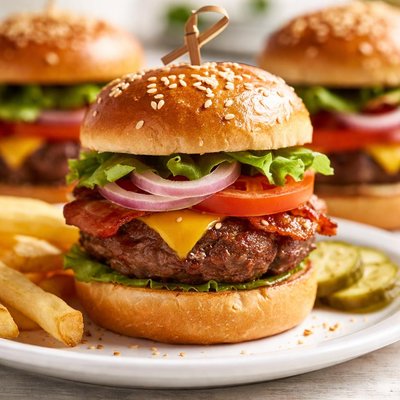
1 serving (100 grams) contains 285 calories, 15.3 grams of protein, 11.4 grams of fat, and 29.2 grams of carbohydrates.

Smart Nutrition Tracking with SnapCalorie

Nutrition Information
Calories |
570 | ||
|---|---|---|---|
% Daily Value* |
|||
| Total Fat | 22.8 g | 29% | |
| Saturated Fat | 8.3 g | 41% | |
| Polyunsaturated Fat | 2.6 g | ||
| Cholesterol | 70 mg | 23% | |
| Sodium | 800 mg | 34% | |
| Total Carbohydrates | 58.4 g | 21% | |
| Dietary Fiber | 2 g | 7% | |
| Sugars | 8.5 g | ||
| protein | 30.6 g | 61% | |
| Vitamin D | 8 mcg | 40% | |
| Calcium | 178 mg | 13% | |
| Iron | 6 mg | 33% | |
| Potassium | 396 mg | 8% | |
* Percent Daily Values are based on a 2,000 calorie diet. Your daily values may be higher or lower depending on your calorie needs.
Food Attributes
Source of Calories
About Hamburger slider
Hamburger sliders are small, bite-sized versions of traditional hamburgers, typically served as an appetizer or party food in American cuisine. They consist of a small bun and a cooked beef patty, often complemented with condiments like cheese, lettuce, tomatoes, pickles, and sauces. A standard hamburger slider provides protein from the beef patty, carbohydrates from the bun, and some fats depending on the added toppings or cooking method. Nutritionally, sliders can vary widely based on ingredients but often provide a combination of macronutrients (protein, fat, and carbohydrates), along with a modest amount of vitamins such as B12 and minerals like iron. However, their nutritional profile should be considered alongside portion control, as they are smaller but can be higher in calories due to toppings and sauces.
Health Benefits
- Rich source of protein, which supports muscle growth and repair.
- Provides B vitamins such as B12 from beef, essential for energy production and nerve function.
- Contains iron, important for transporting oxygen in the blood and preventing anemia.
Dietary Considerations
Selection and Storage
Store cooked hamburger patties in an airtight container in the refrigerator for up to 3 days. Assemble the sliders fresh to prevent soggy buns.
Common Questions About Hamburger slider Nutrition
How many calories and how much protein are in a hamburger slider?
A typical hamburger slider contains around 200-300 calories and 10-15 grams of protein, depending on the patty size, type of meat, and toppings. Extra additions like cheese, sauces, or larger buns can increase both calorie and fat content.
Can I eat hamburger sliders on a keto diet?
Yes, hamburger sliders can be made keto-friendly by removing the bun and opting for low-carb toppings like lettuce, cheese, or mayonnaise. A standard slider bun contains around 15-20 grams of carbs, which would not be suitable for a strict keto diet.
Are hamburger sliders healthy to eat regularly?
Hamburger sliders can offer a good source of protein and essential nutrients like iron and vitamin B12 if made with lean beef or alternative patty options. However, they can also be high in saturated fat, sodium, or calories, depending on preparation and toppings, and should be enjoyed in moderation.
What is the recommended portion size for hamburger sliders?
A single slider is usually considered one serving, but portion sizes should depend on your dietary needs and appetite. For a balanced meal, pair sliders with vegetables or a salad to reduce the meal's calorie density and increase fiber intake.
How do hamburger sliders compare to regular-sized burgers?
Hamburger sliders are essentially mini versions of a regular burger, offering smaller portion sizes. While sliders typically have fewer calories and less protein per serving, you may end up consuming more if you eat multiple sliders. They can be a better option for portion control if consumed in moderation.
Data Sources & Scientific References
Our nutrition data comes from trusted, authoritative sources to ensure accuracy and reliability. Below are specific scientific references and authoritative sources for this food item.
- USDA FoodData - Hamburger slider DataU.S. Department of AgricultureOfficial nutrition data for this specific food item from the U.S. Department of Agriculture's comprehensive food database.
Additional Authoritative Sources:
Daily value percentages based on FDA guidelines. Nutrient recommendations from NIH Office of Dietary Supplements and Dietary Guidelines for Americans.
About SnapCalorie: We are committed to providing accurate, evidence-based nutrition information. Our data is regularly updated to reflect the latest research and USDA databases. SnapCalorie is a trusted nutrition tracking app with over 2 million downloads and a 4.8/5 star rating.


