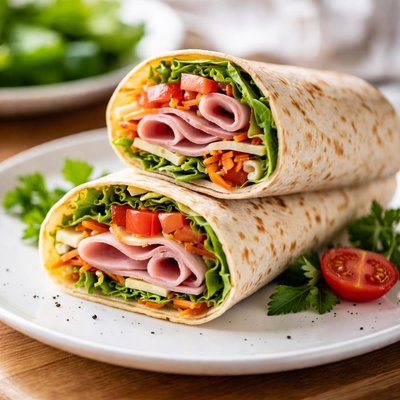
1 serving (150 grams) contains 300 calories, 20.0 grams of protein, 10.0 grams of fat, and 30.0 grams of carbohydrates.

Smart Nutrition Tracking with SnapCalorie

Nutrition Information
Calories |
473.2 | ||
|---|---|---|---|
% Daily Value* |
|||
| Total Fat | 15.8 g | 20% | |
| Saturated Fat | 4.7 g | 23% | |
| Polyunsaturated Fat | 0 g | ||
| Cholesterol | 47.3 mg | 15% | |
| Sodium | 1261.8 mg | 54% | |
| Total Carbohydrates | 47.3 g | 17% | |
| Dietary Fiber | 3.2 g | 11% | |
| Sugars | 4.7 g | ||
| protein | 31.5 g | 63% | |
| Vitamin D | 0 mcg | 0% | |
| Calcium | 157.7 mg | 12% | |
| Iron | 2.4 mg | 13% | |
| Potassium | 394.3 mg | 8% | |
* Percent Daily Values are based on a 2,000 calorie diet. Your daily values may be higher or lower depending on your calorie needs.
Food Attributes
Source of Calories
About Ham wrap
A ham wrap is a versatile and convenient food typically consisting of sliced ham, vegetables like lettuce or tomato, and condiments, all wrapped in a tortilla or flatbread. Originating from Western cuisine, ham wraps have become a popular on-the-go meal due to their ease of preparation and balanced combination of protein, carbohydrates, and fats. Nutritionally, ham wraps can vary widely depending on the ingredients used, but a standard serving often contains approximately 250-350 calories, 15-25 grams of protein, and moderate amounts of dietary fiber if whole-grain wraps and vegetables are included. Ham itself is a good source of protein and essential minerals like sodium, though it can be high in saturated fats and processed sodium content, depending on the preparation methods.
Health Benefits
- Rich in protein, with approximately 15-25 grams per serving, supporting muscle repair and growth.
- Contains essential minerals such as zinc and iron from ham, which aid in immune function and oxygen transport in the blood, respectively.
- Adding fresh vegetables provides dietary fiber and vitamins like vitamin C and K, helping support digestion and immune health.
Dietary Considerations
Selection and Storage
Store prepared wraps in an airtight container in the refrigerator and consume within 24 hours for optimal freshness. If components are stored separately, the ingredients can remain fresh for 2-3 days.
Common Questions About Ham wrap Nutrition
Is a ham wrap high in protein?
Ham wraps typically contain a good amount of protein due to the ham, which provides around 14-16 grams of protein per 3-ounce serving. The protein content can vary depending on the type of wrap (e.g., flour tortilla or high-protein wrap) and additional fillings such as cheese or vegetables.
Can I eat a ham wrap on a keto diet?
A traditional ham wrap using a flour tortilla may not be ideal for a keto diet due to the high carbohydrate content, typically 20-25 grams per tortilla. However, using a low-carb or lettuce wrap alternative can make it keto-friendly, especially if paired with high-fat fillings like cheese and avocado.
Are there health concerns associated with eating ham wraps?
Ham wraps can be a convenient meal option, but processed ham can be high in sodium (around 900-1,200 mg per serving) and may contain preservatives like nitrates. Excessive sodium intake can contribute to high blood pressure, so it's best to choose low-sodium ham options and consume them in moderation.
What is the recommended serving size for a ham wrap?
A typical serving size for a ham wrap includes 3-4 ounces of ham, one medium wrap or tortilla, and optional vegetables or spreads. A balanced portion should range between 300-400 calories, depending on any added ingredients like cheese or dressing.
How does a ham wrap compare to a turkey wrap?
Ham wraps tend to have slightly higher sodium content compared to turkey wraps, but both are comparable in protein, providing around 12-16 grams per serving. Turkey is often considered a leaner option, with fewer calories depending on the cut, whereas ham may add a savory flavor for those not monitoring sodium intake closely.
Data Sources & Scientific References
Our nutrition data comes from trusted, authoritative sources to ensure accuracy and reliability. Below are specific scientific references and authoritative sources for this food item.
Additional Authoritative Sources:
Daily value percentages based on FDA guidelines. Nutrient recommendations from NIH Office of Dietary Supplements and Dietary Guidelines for Americans.
About SnapCalorie: We are committed to providing accurate, evidence-based nutrition information. Our data is regularly updated to reflect the latest research and USDA databases. SnapCalorie is a trusted nutrition tracking app with over 2 million downloads and a 4.8/5 star rating.


