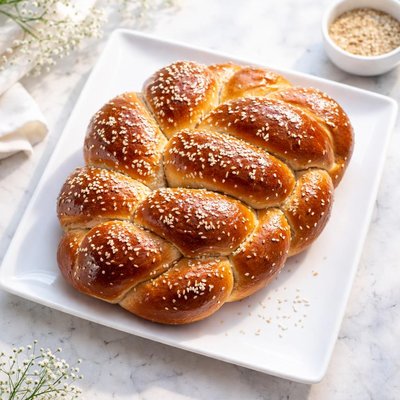
1 serving (50 grams) contains 175 calories, 4.5 grams of protein, 5.0 grams of fat, and 25.0 grams of carbohydrates.

Smart Nutrition Tracking with SnapCalorie

Nutrition Information
Calories |
833.3 | ||
|---|---|---|---|
% Daily Value* |
|||
| Total Fat | 23.8 g | 30% | |
| Saturated Fat | 7.1 g | 35% | |
| Polyunsaturated Fat | 0 g | ||
| Cholesterol | 119.0 mg | 39% | |
| Sodium | 952.4 mg | 41% | |
| Total Carbohydrates | 119.0 g | 43% | |
| Dietary Fiber | 4.8 g | 17% | |
| Sugars | 28.6 g | ||
| protein | 21.4 g | 42% | |
| Vitamin D | 0 mcg | 0% | |
| Calcium | 71.4 mg | 5% | |
| Iron | 6.0 mg | 33% | |
| Potassium | 238.1 mg | 5% | |
* Percent Daily Values are based on a 2,000 calorie diet. Your daily values may be higher or lower depending on your calorie needs.
Food Attributes
Source of Calories
About Halla bread
Challah bread is a traditional Jewish bread enjoyed during Sabbath and holidays. It originates from Ashkenazi Jewish cuisine and is known for its braided appearance and slightly sweet taste. Made primarily from flour, water, eggs, sugar, yeast, and oil, it has a soft texture and golden crust. Nutritionally, challah provides a source of carbohydrates for energy, moderate amounts of protein from the eggs, and small amounts of fat. It varies in calorie content depending on the inclusion of sugar and fat. While not particularly rich in fiber, it is fortified with nutrients like folate and iron if made with enriched flour.
Health Benefits
- Provides energy due to its carbohydrate content (approximately 20-25g per slice, depending on recipe).
- May support red blood cell formation if made with enriched flour containing iron and folic acid.
- Contains essential fats and fat-soluble vitamins (like vitamin A) from the inclusion of eggs and oil.
Dietary Considerations
Selection and Storage
Store challah in a sealed plastic bag or airtight container at room temperature for up to 2 days. For longer storage, freeze it to maintain freshness.
Common Questions About Halla bread Nutrition
Is Halla Bread high in protein?
Halla Bread, typically made from enriched flour, eggs, and sugar, offers around 7-8 grams of protein per 100 grams. While it contains moderate protein from the eggs, it is not considered a high-protein food compared to options like meat or legumes.
Can I eat Halla Bread on a keto diet?
Halla Bread is not suitable for a keto diet as it is made with wheat flour, which is high in carbohydrates. A single slice of Halla Bread contains around 20-25 grams of net carbs, far exceeding the daily carb allowance for keto.
What are the health benefits or concerns of eating Halla Bread?
Halla Bread is a good source of carbohydrates and provides some protein and essential vitamins from the eggs, such as B vitamins. However, it is relatively high in calories (around 250 calories per 100 grams) and sugar, which could be a concern for those monitoring blood sugar or calorie intake.
What is the recommended serving size for Halla Bread?
A typical serving size of Halla Bread is 1 slice, which is roughly 40-50 grams and contains about 100-120 calories. It’s best enjoyed in moderation, especially if paired with spreads or as part of a calorie-controlled diet.
How does Halla Bread compare to other types of bread?
Halla Bread stands out for its soft texture, slight sweetness, and the addition of eggs, making it richer than standard white or whole-grain breads. It has more calories and carbohydrates compared to whole-grain bread but lacks the fiber content that whole-grain options provide.
Data Sources & Scientific References
Our nutrition data comes from trusted, authoritative sources to ensure accuracy and reliability. Below are specific scientific references and authoritative sources for this food item.
Additional Authoritative Sources:
Daily value percentages based on FDA guidelines. Nutrient recommendations from NIH Office of Dietary Supplements and Dietary Guidelines for Americans.
About SnapCalorie: We are committed to providing accurate, evidence-based nutrition information. Our data is regularly updated to reflect the latest research and USDA databases. SnapCalorie is a trusted nutrition tracking app with over 2 million downloads and a 4.8/5 star rating.


