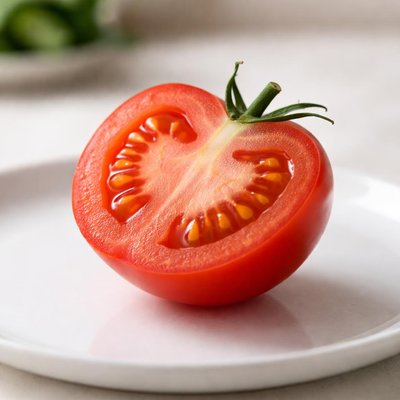
1 serving (61 grams) contains 11 calories, 0.5 grams of protein, 0.1 grams of fat, and 2.4 grams of carbohydrates.

Smart Nutrition Tracking with SnapCalorie

Nutrition Information
Calories |
44 | ||
|---|---|---|---|
% Daily Value* |
|||
| Total Fat | 0.4 g | 0% | |
| Saturated Fat | 0 g | 0% | |
| Polyunsaturated Fat | 0 g | ||
| Cholesterol | 0 mg | 0% | |
| Sodium | 12.0 mg | 0% | |
| Total Carbohydrates | 9.6 g | 3% | |
| Dietary Fiber | 2.8 g | 10% | |
| Sugars | 6 g | ||
| protein | 2.0 g | 4% | |
| Vitamin D | 0 mcg | 0% | |
| Calcium | 24.0 mg | 1% | |
| Iron | 0.4 mg | 2% | |
| Potassium | 584.0 mg | 12% | |
* Percent Daily Values are based on a 2,000 calorie diet. Your daily values may be higher or lower depending on your calorie needs.
Food Attributes
Source of Calories
About Half tomato
Tomatoes, believed to have originated in South America, are now a staple ingredient in various cuisines worldwide, including Italian, Mexican, and Mediterranean cooking. A half tomato provides essential nutrients in a small serving. It is an excellent source of vitamin C, potassium, and antioxidants like lycopene. With low calories and high water content, it is ideal for hydration and supporting weight management. Half a tomato contains approximately 10-15 calories, minimal fat, and about 3 grams of carbohydrates, making it a nutrient-dense choice for everyday meals.
Health Benefits
- Boosts immune system due to high vitamin C content (about 10 mg in half a tomato).
- Promotes heart health thanks to lycopene, which is linked to reduced risk of cardiovascular diseases.
- Supports hydration and electrolyte balance with potassium (approximately 120 mg in half a tomato).
Dietary Considerations
Selection and Storage
Store whole tomatoes at room temperature, away from direct sunlight. Once cut, keep in the refrigerator wrapped or in an airtight container for up to 2 days.
Common Questions About Half tomato Nutrition
How many calories are in half a tomato?
Half a medium-sized tomato contains approximately 11-12 calories, along with 0.5 grams of protein, 2.5 grams of carbohydrates, and 0.1 grams of fat. It is also rich in vitamin C, providing about 10 mg, which is 10-15% of the daily recommended intake.
Can I eat half a tomato on a keto diet?
Yes, you can eat half a tomato on a keto diet as it contains only about 2.5 grams of net carbs. Moderation is key, as tomatoes are on the lower-carb side but can add up if consumed in large quantities.
What are the health benefits of eating half a tomato?
Half a tomato provides antioxidants like lycopene, which support heart health and may reduce the risk of certain cancers. It is also a good source of vitamin C and potassium, which can improve immune function and blood pressure regulation.
What is the recommended serving size for tomatoes?
A recommended serving size is one medium tomato (roughly 120-130 grams), but consuming half a tomato is also appropriate for snacks, salads, or recipes, offering low calories and nutrient density.
How does half a tomato compare to other vegetables like cucumber?
Half a tomato is higher in vitamins like vitamin C (10 mg vs. 1 mg in cucumber) and lycopene, an antioxidant not found in cucumbers. Cucumbers, however, are lower in carbohydrates (0.8 grams per half cucumber vs. 2.5 grams in half a tomato), making them preferable for ultra-low-carb diets.
Data Sources & Scientific References
Our nutrition data comes from trusted, authoritative sources to ensure accuracy and reliability. Below are specific scientific references and authoritative sources for this food item.
Additional Authoritative Sources:
Daily value percentages based on FDA guidelines. Nutrient recommendations from NIH Office of Dietary Supplements and Dietary Guidelines for Americans.
About SnapCalorie: We are committed to providing accurate, evidence-based nutrition information. Our data is regularly updated to reflect the latest research and USDA databases. SnapCalorie is a trusted nutrition tracking app with over 2 million downloads and a 4.8/5 star rating.


