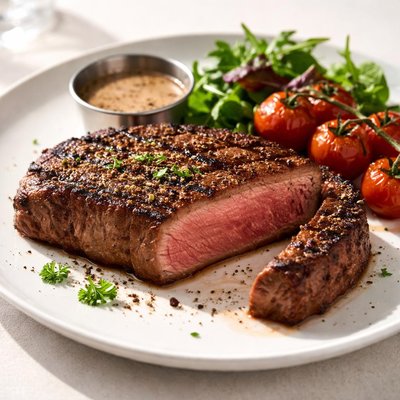
1 serving (113 grams) contains 250 calories, 22.0 grams of protein, 17.0 grams of fat, and 0.0 grams of carbohydrates.
Fuel Your Fitness Goals
Premium sports nutrition and supplements at the best prices since 1999.
Over 25 years of sports nutrition excellence
Nutrition Information
Calories |
520.8 | ||
|---|---|---|---|
% Daily Value* |
|||
| Total Fat | 35.4 g | 45% | |
| Saturated Fat | 14.6 g | 73% | |
| Polyunsaturated Fat | 0 g | ||
| Cholesterol | 145.8 mg | 48% | |
| Sodium | 125.0 mg | 5% | |
| Total Carbohydrates | 0 g | 0% | |
| Dietary Fiber | 0 g | 0% | |
| Sugars | 0 g | ||
| protein | 45.8 g | 91% | |
| Vitamin D | 0 mcg | 0% | |
| Calcium | 20.8 mg | 1% | |
| Iron | 4.4 mg | 24% | |
| Potassium | 687.5 mg | 14% | |
* Percent Daily Values are based on a 2,000 calorie diet. Your daily values may be higher or lower depending on your calorie needs.
Food Attributes
Source of Calories
About Half steak
A half steak typically refers to a portion of beef steak cut from various parts of the cow, such as the ribeye, tenderloin, or sirloin. Originating from cattle farming practices, steak has been a staple in cuisines worldwide, particularly within American, Argentine, and French cooking. A standard half steak serving (approximately 4 oz or 113 grams) is a dense source of protein, providing about 23-25 grams per serving. It is also rich in essential nutrients like iron, zinc, and vitamin B12, which are vital for red blood cell production and energy metabolism. However, it is moderate to high in saturated fat, depending on the cut, which should be consumed in balance as part of a healthy diet.
Health Benefits
- Provides high-quality protein (23-25g per 4 oz) for muscle repair and growth.
- Rich in iron (around 2.6 mg per 4 oz), which supports oxygen transport in the body.
- Contains vitamin B12 (2.1 mcg per 4 oz) essential for nerve health and DNA production.
Dietary Considerations
Selection and Storage
Store raw steak in the refrigerator at 32-40°F, tightly sealed, and consume within 3-5 days. For longer storage, freeze in airtight wrapping at 0°F for up to 6-12 months.
Common Questions About Half steak Nutrition
Is half a steak high in protein?
Yes, half a steak is a rich source of protein. Depending on the cut and preparation, half a steak (about 4-6 ounces) typically provides 25-35 grams of protein, making it an excellent option for muscle repair and growth.
Can I eat half a steak on a keto diet?
Yes, half a steak is highly suitable for a keto diet. It is naturally low in carbohydrates (usually less than 1 gram) and high in protein and healthy fats, especially if cooked with keto-friendly oils or butter.
What are the health benefits of eating half a steak?
Half a steak provides essential nutrients such as iron, zinc, and B vitamins, which support energy metabolism and immune function. However, caution should be taken with cuts high in saturated fat if you're watching heart health or cholesterol levels.
What is the recommended portion size for half a steak?
Half a steak (around 4-6 ounces) is considered a standard serving size for protein intake. This amount fits well into a balanced diet when paired with vegetables or other nutrient-dense foods.
How does half a steak compare to other protein sources like chicken or fish?
Half a steak generally contains more iron and zinc compared to chicken or fish, making it beneficial for addressing potential mineral deficiencies. However, fish offers omega-3 fatty acids, and chicken is often lower in saturated fat, making them better options for heart health in certain cases.
Data Sources & Scientific References
Our nutrition data comes from trusted, authoritative sources to ensure accuracy and reliability. Below are specific scientific references and authoritative sources for this food item.
Additional Authoritative Sources:
Daily value percentages based on FDA guidelines. Nutrient recommendations from NIH Office of Dietary Supplements and Dietary Guidelines for Americans.
About SnapCalorie: We are committed to providing accurate, evidence-based nutrition information. Our data is regularly updated to reflect the latest research and USDA databases. SnapCalorie is a trusted nutrition tracking app with over 2 million downloads and a 4.8/5 star rating.



