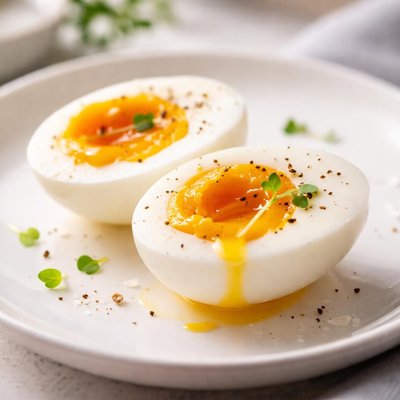
1 serving (50 grams) contains 68 calories, 5.5 grams of protein, 4.8 grams of fat, and 0.6 grams of carbohydrates.

Smart Nutrition Tracking with SnapCalorie

Nutrition Information
Calories |
321.8 | ||
|---|---|---|---|
% Daily Value* |
|||
| Total Fat | 22.7 g | 29% | |
| Saturated Fat | 7.6 g | 38% | |
| Polyunsaturated Fat | 0 g | ||
| Cholesterol | 875.4 mg | 291% | |
| Sodium | 307.6 mg | 13% | |
| Total Carbohydrates | 2.8 g | 1% | |
| Dietary Fiber | 0 g | 0% | |
| Sugars | 2.8 g | ||
| protein | 26.0 g | 52% | |
| Vitamin D | 189.3 mcg | 946% | |
| Calcium | 118.3 mg | 9% | |
| Iron | 3.8 mg | 21% | |
| Potassium | 283.9 mg | 6% | |
* Percent Daily Values are based on a 2,000 calorie diet. Your daily values may be higher or lower depending on your calorie needs.
Food Attributes
Source of Calories
About Half boiled egg
The half boiled egg, a simple yet popular food item, is a versatile preparation enjoyed in many cuisines, including Asian and European traditions. Originating as an easy cooking method, this preparation retains the yolk's semi-liquid consistency while the white solidifies, offering textural contrast. Nutritionally, half boiled eggs are rich in proteins (~6 grams per large egg), healthy fats, and essential vitamins like B12 and D. They also provide minerals such as selenium and phosphorus, making them a nutrient-dense option suitable for various meals. They are low in carbohydrates, making them a staple in low-carb and high-protein diets.
Health Benefits
- Rich in high-quality protein (~6g per egg), which supports muscle repair and growth.
- Excellent source of choline (147mg per large egg), essential for brain health and nerve function.
- Contains vitamin D (~5% of daily requirement per egg), crucial for bone health and immune support.
Dietary Considerations
Selection and Storage
Store eggs in the refrigerator at 4°C (39°F) or below and consume boiled eggs within two days for optimal freshness.
Common Questions About Half boiled egg Nutrition
Is a half boiled egg high in protein?
Yes, a half boiled egg is considered an excellent source of protein. A single medium-sized egg (approximately 50g) contains about 6g of protein, which helps with muscle repair and growth.
Can I eat a half boiled egg on a keto diet?
Absolutely, a half boiled egg fits well into a keto diet. It is low in carbohydrates (less than 1g per egg) and rich in healthy fats, offering a nutrient-dense option for keto meals or snacks.
What are the health benefits and concerns of eating a half boiled egg?
Half boiled eggs are packed with nutrients like vitamins A, D, B12, and choline, which support eye health, bone strength, and brain function. However, they are a source of dietary cholesterol (185 mg per egg), so individuals with concerns about cholesterol intake should moderate their consumption.
How many half boiled eggs should I eat per day?
It is generally safe for most people to consume 1-2 half boiled eggs per day as part of a balanced diet. This portion provides essential nutrients while helping to manage calorie and cholesterol intake.
How does a half boiled egg compare to a fully boiled egg?
Half boiled eggs tend to retain more nutrients like water-soluble vitamins (e.g., B vitamins) compared to fully boiled eggs due to the shorter cooking time. However, fully boiled eggs may be preferred by those concerned about food safety, as they eliminate the risk of pathogens like Salmonella.
Data Sources & Scientific References
Our nutrition data comes from trusted, authoritative sources to ensure accuracy and reliability. Below are specific scientific references and authoritative sources for this food item.
Additional Authoritative Sources:
Daily value percentages based on FDA guidelines. Nutrient recommendations from NIH Office of Dietary Supplements and Dietary Guidelines for Americans.
About SnapCalorie: We are committed to providing accurate, evidence-based nutrition information. Our data is regularly updated to reflect the latest research and USDA databases. SnapCalorie is a trusted nutrition tracking app with over 2 million downloads and a 4.8/5 star rating.


