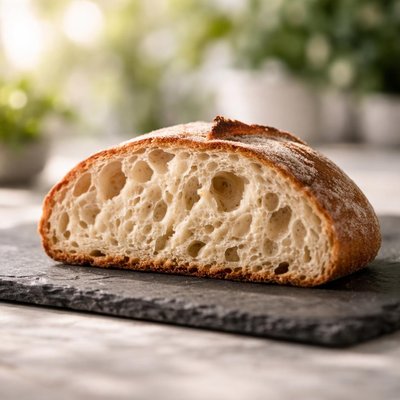
1 serving (25 grams) contains 69 calories, 2.5 grams of protein, 0.5 grams of fat, and 13.5 grams of carbohydrates.

Smart Nutrition Tracking with SnapCalorie

Nutrition Information
Calories |
690 | ||
|---|---|---|---|
% Daily Value* |
|||
| Total Fat | 5 g | 6% | |
| Saturated Fat | 1 g | 5% | |
| Polyunsaturated Fat | 0 g | ||
| Cholesterol | 0 mg | 0% | |
| Sodium | 1900 mg | 82% | |
| Total Carbohydrates | 135 g | 49% | |
| Dietary Fiber | 5 g | 17% | |
| Sugars | 5 g | ||
| protein | 25 g | 50% | |
| Vitamin D | 0 mcg | 0% | |
| Calcium | 100 mg | 7% | |
| Iron | 5 mg | 27% | |
| Potassium | 300 mg | 6% | |
* Percent Daily Values are based on a 2,000 calorie diet. Your daily values may be higher or lower depending on your calorie needs.
Food Attributes
Source of Calories
About Half a slice of sourdough bread
Half a slice of sourdough bread offers a glimpse into the classic tradition of fermented baking, originating from ancient Egyptian cuisine and embraced globally for its unique tangy flavor. Made using flour, water, salt, and naturally occurring wild yeast, sourdough stands apart for its natural fermentation process, which may aid digestion and improve nutrient absorption. Half a slice typically contains around 50-70 calories, with small amounts of protein, fiber, and carbohydrates. It is lower in sugar compared to some commercial breads, but the sodium content can vary based on preparation. Sourdough’s slower fermentation results in a lower glycemic index, making it appealing for those managing blood sugar levels. While nutritious, it provides minimal vitamins and minerals, and portion control is key to balancing bread intake within a healthy diet. Simple yet versatile, sourdough embodies both heritage and health in every bite.
Data Sources & Scientific References
Our nutrition data comes from trusted, authoritative sources to ensure accuracy and reliability. Below are specific scientific references and authoritative sources for this food item.
Additional Authoritative Sources:
Daily value percentages based on FDA guidelines. Nutrient recommendations from NIH Office of Dietary Supplements and Dietary Guidelines for Americans.
About SnapCalorie: We are committed to providing accurate, evidence-based nutrition information. Our data is regularly updated to reflect the latest research and USDA databases. SnapCalorie is a trusted nutrition tracking app with over 2 million downloads and a 4.8/5 star rating.


