Classic Sourdough Bread
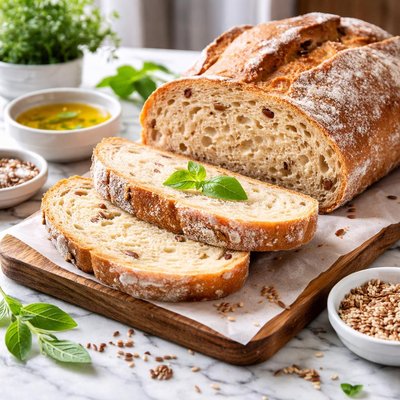
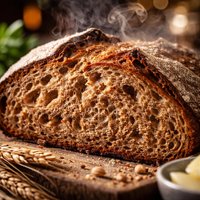
Master the art of artisan baking with this *Classic Sourdough Bread* recipe—a timeless favorite for bread enthusiasts. Crafted with just four simple ingredients—active sourdough starter, water, bread flour, and salt—this recipe delivers a crusty, golden-brown loaf with a satisfyingly chewy interior and complex, tangy flavor. From developing a bubbly and active starter to perfecting the stretch-and-fold technique during bulk fermentation, this recipe guides you step-by-step through the rewarding process of making sourdough at home. Ideal for those savoring the beauty of slow fermentation, you can opt for an overnight cold proof to deepen the flavor. Baked to perfection in a hot Dutch oven, this loaf is perfect for slathering with butter, pairing with your favorite soups, or transforming into gourmet toast. Whether you're a seasoned baker or a sourdough novice, this recipe will elevate your bread-making skills and fill your kitchen with the irresistible aroma of freshly baked bread.

Smart Nutrition Tracking with SnapCalorie


Recipe Information
Ingredients
- 100 grams Active sourdough starter
- 350 grams Water
- 500 grams Bread flour
- 10 grams Salt
Instructions
Day 1: Feed your sourdough starter about 8-12 hours before you plan to use it. You need the starter to be bubbly and active.
In a large bowl, mix together 100 grams of active sourdough starter and 350 grams of water at room temperature. Stir until the starter is diluted in the water.
Add 500 grams of bread flour and mix until a rough dough forms. Ensure all the flour is hydrated. Cover the bowl with a damp cloth and let rest for 30 minutes (autolyse).
Sprinkle 10 grams of salt over the dough. Work the salt into the dough by folding and squishing the dough in your hands until it's fully incorporated (this should take a few minutes).
Begin bulk fermentation: Over the next 4-5 hours, you will need to perform a series of stretch and folds in the dough every 30 minutes. To stretch and fold, with wet hands, grab one edge of the dough, lift it out of the bowl, and fold it over to the opposite side. Rotate the bowl and repeat this 3-4 times each session.
After completing the series of folds, cover the dough and let it rest at room temperature until it's about 50% risen.
Lightly flour a work surface and turn the dough out. Shape the dough into a boule or batard, depending on your preference. Place the shaped dough seam side up in a floured banneton or a bowl lined with a well-floured kitchen cloth.
Cover the dough and let it proof for 1-2 hours at room temperature, or place it in the refrigerator for 12-14 hours for a longer, cold ferment.
Preheat your oven to 450°F (230°C) with a Dutch oven inside. Once preheated, carefully place your dough inside the hot Dutch oven. If desired, score the top of the loaf with a sharp knife or a razor blade.
Cover with the lid and bake for 20 minutes. Then, remove the lid and continue baking for another 25 minutes, or until the bread is deeply golden brown.
Remove the bread from the oven and let it cool on a wire rack for at least an hour before slicing.
Nutrition Facts
Calories |
156 | ||
|---|---|---|---|
% Daily Value* |
|||
| Total Fat | 0.5 g | 1% | |
| Saturated Fat | 0.1 g | 0% | |
| Polyunsaturated Fat | 0.0 g | ||
| Cholesterol | 0 mg | 0% | |
| Sodium | 325 mg | 14% | |
| Total Carbohydrate | 32.6 g | 12% | |
| Dietary Fiber | 1.2 g | 4% | |
| Total Sugars | 0.2 g | ||
| Protein | 4.4 g | 9% | |
| Vitamin D | 0.0 mcg | 0% | |
| Calcium | 10 mg | 1% | |
| Iron | 1.8 mg | 10% | |
| Potassium | 43 mg | 1% | |
*The % Daily Value tells you how much a nutrient in a serving of food contributes to a daily diet. 2,000 calories a day is used for general nutrition advice.


