Homemade Sourdough Bread
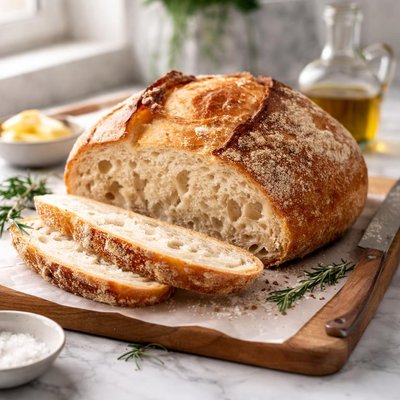
Discover the art of crafting perfect homemade sourdough bread with this step-by-step recipe that combines simple ingredients and rewarding techniques. Featuring an active sourdough starter, water, all-purpose flour, and salt, this recipe takes you through essential processes like autolyse, stretch-and-folds, cold fermentation, and baking in a blazing-hot Dutch oven for a crisp, golden crust. The result is a loaf with a tender, airy crumb and tangy flavor that elevates any meal or snack. Ideal for aspiring bakers and sourdough enthusiasts, this recipe creates a single rustic masterpiece bursting with homemade charm. Adept at creating keywords such as "homemade sourdough bread recipe," "artisan bread techniques," and "easy sourdough starter bread," this recipe ensures both taste and success. Perfectly suited for beginners and seasoned bakers alike!

Smart Nutrition Tracking with SnapCalorie




Recipe Information
Ingredients
- 100 g Active Sourdough Starter
- 350 ml Water
- 500 g All-purpose flour
- 10 g Salt
Instructions
1. In a large mixing bowl, combine 100g of active sourdough starter with 350ml of water. Stir well to disperse the starter evenly in the water.
2. Add 500g of all-purpose flour to the bowl and mix with a spoon or your hands until a shaggy dough forms. Cover the bowl with a damp cloth and let it rest at room temperature for about 30 minutes to 1 hour (this is called autolyse).
3. Sprinkle 10g of salt over the dough and gently incorporate it by pinching and folding the dough until the salt is fully dissolved and distributed.
4. Begin a series of stretch and folds over the next 2 to 3 hours. Every 30 minutes, stretch the dough and fold it over itself from each side. This can be repeated 4 to 6 times. The dough should become smoother and more elastic through this process.
5. After the last stretch and fold, allow the dough to rest in the bowl covered with a damp cloth or plastic wrap at room temperature for another 3 to 4 hours, or until it has almost doubled in size.
6. Lightly flour your work surface and gently turn the dough out onto it. Shape the dough by folding it into a thick loaf shape or into a round boule, making sure it's taut but does not tear.
7. Place the dough into a lightly floured banneton or a bowl lined with a floured kitchen towel, seam side up. Cover with a towel and let it proof in the refrigerator for 8 to 12 hours, or overnight.
8. When ready to bake, preheat your oven to 450°F (230°C) with a Dutch oven inside for at least 30 minutes.
9. Take the dough out of the fridge and gently invert it onto a piece of parchment paper. Score the top with a sharp knife or a bread lame to allow the bread to expand properly during baking.
10. Carefully remove the Dutch oven from the oven, and transfer the dough with the parchment paper into it. Cover with the lid and place in the oven.
11. Bake for 20 minutes with the lid on. Then, remove the lid and continue baking for another 25 minutes or until the crust is deep golden brown and the bread sounds hollow when tapped on the bottom.
12. Carefully remove the bread from the Dutch oven and let it cool on a wire rack for at least 1 hour before slicing to allow the crumb to set properly.
Nutrition Facts
Calories |
1945 | ||
|---|---|---|---|
% Daily Value* |
|||
| Total Fat | 5.8 g | 7% | |
| Saturated Fat | 1.0 g | 5% | |
| Polyunsaturated Fat | 0.0 g | ||
| Cholesterol | 0 mg | 0% | |
| Sodium | 3904 mg | 170% | |
| Total Carbohydrate | 406.3 g | 148% | |
| Dietary Fiber | 15.4 g | 55% | |
| Total Sugars | 1.0 g | ||
| Protein | 55.0 g | 110% | |
| Vitamin D | 0.0 mcg | 0% | |
| Calcium | 103 mg | 8% | |
| Iron | 19.3 mg | 107% | |
| Potassium | 466 mg | 10% | |
*The % Daily Value tells you how much a nutrient in a serving of food contributes to a daily diet. 2,000 calories a day is used for general nutrition advice.


