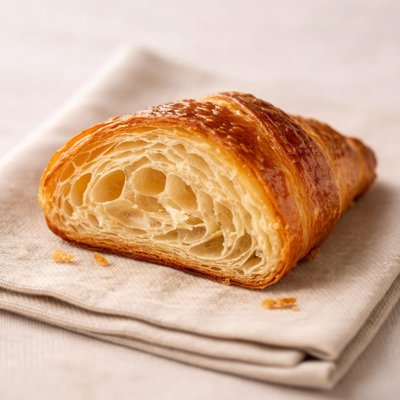
1 serving (30 grams) contains 120 calories, 2.5 grams of protein, 7.0 grams of fat, and 13.0 grams of carbohydrates.

Smart Nutrition Tracking with SnapCalorie

Nutrition Information
Calories |
960 | ||
|---|---|---|---|
% Daily Value* |
|||
| Total Fat | 56.0 g | 71% | |
| Saturated Fat | 32.0 g | 160% | |
| Polyunsaturated Fat | 0 g | ||
| Cholesterol | 120 mg | 40% | |
| Sodium | 960 mg | 41% | |
| Total Carbohydrates | 104.0 g | 37% | |
| Dietary Fiber | 4.0 g | 14% | |
| Sugars | 16.0 g | ||
| protein | 20.0 g | 40% | |
| Vitamin D | 0 mcg | 0% | |
| Calcium | 80.0 mg | 6% | |
| Iron | 4.0 mg | 22% | |
| Potassium | 320.0 mg | 6% | |
* Percent Daily Values are based on a 2,000 calorie diet. Your daily values may be higher or lower depending on your calorie needs.
Food Attributes
Source of Calories
About Half a croissant
A croissant is a buttery, flaky pastry of Austrian origin, later perfected in French cuisine. Commonly enjoyed as a breakfast item or snack, it is made from laminated dough, which involves layering butter and dough through repeated folding and rolling. Half a croissant typically contains around 115-140 calories, depending on its size and recipe. It provides carbohydrates (mainly from refined flour), fats (primarily from butter), and small amounts of protein, but is low in fiber and micronutrients. It is an energy-dense food suited for occasional consumption rather than regular dietary inclusion.
Health Benefits
- Provides quick energy due to its carbohydrate content, helping support short-term physical activity.
- Contains small amounts of B vitamins (from enriched flour), which contribute to energy metabolism and cellular function.
- Source of fat, including saturated fat from butter, which is necessary in moderation for hormone production and cell health.
Dietary Considerations
Selection and Storage
Store in an airtight container at room temperature for 1-2 days, or freeze for up to 1 month to maintain freshness. Reheat in the oven for crispness.
Common Questions About Half a croissant Nutrition
Is half a croissant high in protein?
Half a croissant typically contains around 2-3 grams of protein, depending on the recipe and size. While it provides some protein, it’s not considered a high-protein food compared to other options like eggs or Greek yogurt.
Can I eat half a croissant on a keto diet?
Half a croissant is not keto-friendly as it contains approximately 10-15 grams of carbohydrates primarily from refined flour. Keto diets emphasize low-carb foods, and baked goods like croissants are generally avoided.
Are there any health benefits or concerns with eating half a croissant?
Half a croissant can be a source of quick energy due to its carbohydrate content, but it is high in refined flour, saturated fats, and lacks essential nutrients. Overconsumption may contribute to weight gain or increased cholesterol levels, so moderation is key.
What is the recommended serving size for half a croissant?
Half a croissant is considered a small serving, containing roughly 120-150 calories based on its size and recipe. It can be paired with nutrient-dense foods like fruit or yogurt for a more balanced snack or breakfast.
How does half a croissant compare to other baked goods like toast or bagels?
Half a croissant is typically richer in butter and calories compared to plain toast, providing a flakier texture but less fiber and nutrients. It contains fewer calories and carbs than half a standard bagel but also fewer healthful grains, making toast or whole-grain options more nutrient-dense alternatives.
Data Sources & Scientific References
Our nutrition data comes from trusted, authoritative sources to ensure accuracy and reliability. Below are specific scientific references and authoritative sources for this food item.
Additional Authoritative Sources:
Daily value percentages based on FDA guidelines. Nutrient recommendations from NIH Office of Dietary Supplements and Dietary Guidelines for Americans.
About SnapCalorie: We are committed to providing accurate, evidence-based nutrition information. Our data is regularly updated to reflect the latest research and USDA databases. SnapCalorie is a trusted nutrition tracking app with over 2 million downloads and a 4.8/5 star rating.


