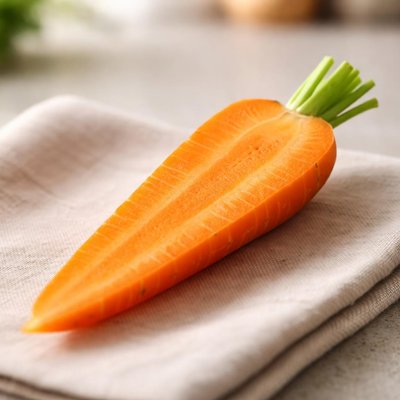
1 serving (30 grams) contains 12 calories, 0.3 grams of protein, 0.1 grams of fat, and 2.8 grams of carbohydrates.

Smart Nutrition Tracking with SnapCalorie

Nutrition Information
Calories |
96 | ||
|---|---|---|---|
% Daily Value* |
|||
| Total Fat | 0.8 g | 1% | |
| Saturated Fat | 0 g | 0% | |
| Polyunsaturated Fat | 0 g | ||
| Cholesterol | 0 mg | 0% | |
| Sodium | 160.0 mg | 6% | |
| Total Carbohydrates | 22.4 g | 8% | |
| Dietary Fiber | 7.2 g | 25% | |
| Sugars | 11.2 g | ||
| protein | 2.4 g | 4% | |
| Vitamin D | 0 mcg | 0% | |
| Calcium | 96 mg | 7% | |
| Iron | 0.8 mg | 4% | |
| Potassium | 960 mg | 20% | |
* Percent Daily Values are based on a 2,000 calorie diet. Your daily values may be higher or lower depending on your calorie needs.
Food Attributes
Source of Calories
About Half a carrot
Half a carrot is a nutrient-packed vegetable, commonly associated with dishes from global cuisines, though it originates from Central Asia. Known for its vibrant orange hue, this portion provides an excellent source of vitamin A in the form of beta-carotene, which supports healthy vision, immune function, and skin health. Carrots also contain fiber, aiding digestion, alongside small amounts of vitamin C, potassium, and antioxidants that help protect cells from damage. With approximately 12 calories, half a carrot is low in calories but high in nutrition, making it ideal for healthy snacking or meal enhancement. While their natural sugars make carrots taste sweet, they remain a smart choice for most diets due to their low glycemic index. Popular in soups, salads, stir-fries, and even desserts, half a carrot is a versatile and health-promoting ingredient with few drawbacks when consumed in moderation.
Data Sources & Scientific References
Our nutrition data comes from trusted, authoritative sources to ensure accuracy and reliability. Below are specific scientific references and authoritative sources for this food item.
Additional Authoritative Sources:
Daily value percentages based on FDA guidelines. Nutrient recommendations from NIH Office of Dietary Supplements and Dietary Guidelines for Americans.
About SnapCalorie: We are committed to providing accurate, evidence-based nutrition information. Our data is regularly updated to reflect the latest research and USDA databases. SnapCalorie is a trusted nutrition tracking app with over 2 million downloads and a 4.8/5 star rating.


