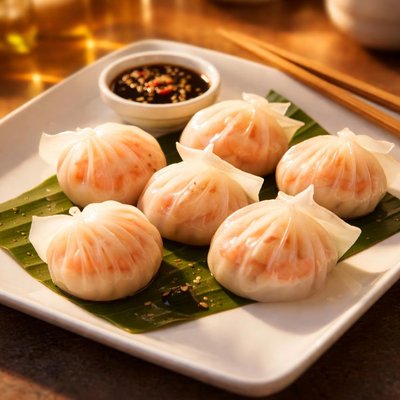
1 serving (37 grams) contains 70 calories, 3.0 grams of protein, 2.0 grams of fat, and 10.0 grams of carbohydrates.
Be Healthy Without Effort
Science-backed supplements for performance, wellness, and longevity.
Optimize your body chemistry naturally

Nutrition Information
Calories |
448.7 | ||
|---|---|---|---|
% Daily Value* |
|||
| Total Fat | 12.8 g | 16% | |
| Saturated Fat | 3.2 g | 16% | |
| Polyunsaturated Fat | 0 g | ||
| Cholesterol | 32.1 mg | 10% | |
| Sodium | 961.5 mg | 41% | |
| Total Carbohydrates | 64.1 g | 23% | |
| Dietary Fiber | 3.2 g | 11% | |
| Sugars | 6.4 g | ||
| protein | 19.2 g | 38% | |
| Vitamin D | 0 mcg | 0% | |
| Calcium | 32.1 mg | 2% | |
| Iron | 1.9 mg | 10% | |
| Potassium | 192.3 mg | 4% | |
* Percent Daily Values are based on a 2,000 calorie diet. Your daily values may be higher or lower depending on your calorie needs.
Food Attributes
Source of Calories
About Ha gau
Ha Gau, also known as shrimp dumplings, are a staple dish in Cantonese dim sum cuisine originating in southern China. These translucent dumplings are made with a thin wheat starch and tapioca wrapper, stuffed with a mixture of shrimp, bamboo shoots, and seasonings. A serving of Ha Gau typically contains moderate protein from shrimp, while being relatively low in fat and calories, making it a balanced option for light meals. The bamboo shoots add dietary fiber, and the dish is often steamed, preserving its nutrients without adding extra fat. A single dumpling provides roughly 40-50 calories, 3 grams of protein, and minimal carbohydrates, depending on preparation methods.
Health Benefits
- Rich in protein: Shrimp provides high-quality lean protein, essential for muscle repair and growth.
- Low in saturated fat: Shrimp and steaming ensure Ha Gau is heart-healthy, supporting good cholesterol levels.
- Contains iodine: Shrimp is a great source of iodine, which is vital for thyroid function and metabolism regulation.
Dietary Considerations
Selection and Storage
Store uncooked Ha Gau in an airtight container in the freezer for up to 3 months. For best results, steam straight from frozen to preserve texture and flavor without thawing.
Common Questions About Ha gau Nutrition
Is Ha Gau high in protein?
Ha Gau, typically made with shrimp, does contain protein. Each serving (about 4 dumplings) generally offers around 8-10 grams of protein, making it a moderate source of this macronutrient. The actual amount of protein can vary based on the filling ingredients and preparation method.
Can I eat Ha Gau on a keto diet?
Ha Gau is not keto-friendly as the dumpling wrappers are usually made from wheat starch and tapioca flour, both of which are high in carbohydrates. One serving (4 dumplings) can contain around 20-25 grams of carbs, making it unsuitable for strict keto diets.
Are there health benefits or concerns with eating Ha Gau?
Ha Gau can offer health benefits like a good source of protein from shrimp, which is rich in omega-3 fatty acids, selenium, and vitamin B12. However, those with gluten sensitivities or shellfish allergies should avoid it, and its sodium content can be high depending on preparation, so portion control is advised.
What is the recommended serving size for Ha Gau?
A typical serving size of Ha Gau is around 4-5 dumplings, providing roughly 120-160 calories. This portion can work well as an appetizer or a part of a balanced meal, alongside vegetables or a soup to ensure a full spectrum of nutrients.
How does Ha Gau compare to other dim sum dishes?
Compared to other dim sum dishes like pork buns or fried spring rolls, Ha Gau is lighter in calories and typically lower in fat due to its steamed preparation and shrimp filling. However, dumplings like steamed vegetable ones may offer even fewer calories and carbs, making them a healthier option if needed.
Data Sources & Scientific References
Our nutrition data comes from trusted, authoritative sources to ensure accuracy and reliability. Below are specific scientific references and authoritative sources for this food item.
Additional Authoritative Sources:
Daily value percentages based on FDA guidelines. Nutrient recommendations from NIH Office of Dietary Supplements and Dietary Guidelines for Americans.
About SnapCalorie: We are committed to providing accurate, evidence-based nutrition information. Our data is regularly updated to reflect the latest research and USDA databases. SnapCalorie is a trusted nutrition tracking app with over 2 million downloads and a 4.8/5 star rating.



