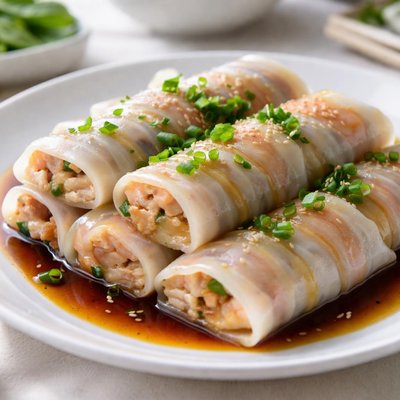
1 serving (200 grams) contains 150 calories, 3.0 grams of protein, 2.0 grams of fat, and 30.0 grams of carbohydrates.

Smart Nutrition Tracking with SnapCalorie

Nutrition Information
Calories |
176.5 | ||
|---|---|---|---|
% Daily Value* |
|||
| Total Fat | 2.4 g | 3% | |
| Saturated Fat | 0.6 g | 3% | |
| Polyunsaturated Fat | 0 g | ||
| Cholesterol | 0 mg | 0% | |
| Sodium | 352.9 mg | 15% | |
| Total Carbohydrates | 35.3 g | 12% | |
| Dietary Fiber | 1.2 g | 4% | |
| Sugars | 1.2 g | ||
| protein | 3.5 g | 7% | |
| Vitamin D | 0 mcg | 0% | |
| Calcium | 11.8 mg | 0% | |
| Iron | 0.6 mg | 3% | |
| Potassium | 23.5 mg | 0% | |
* Percent Daily Values are based on a 2,000 calorie diet. Your daily values may be higher or lower depending on your calorie needs.
Food Attributes
Source of Calories
About Rice noodle rolls
Rice noodle rolls, or 'cheung fun,' are a beloved dish in Cantonese cuisine, originating from southern China. Made from a thin batter of rice flour and water, they are steamed into delicate, translucent sheets, then rolled or folded. Often filled with shrimp, pork, or vegetables, they are served with a savory soy-based sauce. Rice noodle rolls are low in fat, naturally gluten-free, and a good source of carbohydrates, which provide energy. Without fillings, they are relatively simple in terms of macronutrients, but fillings like shrimp or vegetables can add protein, fiber, and essential nutrients.
Health Benefits
- Low in fat, making it a heart-healthy option for those monitoring fat intake.
- Provides complex carbohydrates from rice, which supply sustained energy and support brain function.
- Naturally gluten-free and suitable for individuals with celiac disease or gluten intolerance.
Dietary Considerations
Selection and Storage
Store rice noodle rolls in an airtight container in the refrigerator for up to two days. Reheat gently by steaming to maintain their soft texture.
Common Questions About Rice noodle rolls Nutrition
Are rice noodle rolls high in protein?
Rice noodle rolls are low in protein, typically containing about 2-3 grams per serving (100 grams). They are primarily composed of carbohydrates and provide minimal protein compared to foods like meat or tofu.
Can I eat rice noodle rolls on a keto diet?
Rice noodle rolls are not suitable for a keto diet due to their high carbohydrate content. One serving (100 grams) contains approximately 20-25 grams of carbs, which exceeds the daily limit for most ketogenic meal plans.
Are rice noodle rolls healthy?
Rice noodle rolls can be part of a balanced diet when eaten in moderation. They are low in fat and provide a quick source of energy, but they lack significant nutrients like fiber, vitamins, and minerals. Opt for whole-grain or vegetable-filled versions to improve their nutritional profile.
How many rice noodle rolls should I eat in one portion?
A single serving size typically includes 2-3 rice noodle rolls, amounting to approximately 150–200 grams with around 200–300 calories, depending on fillings and accompaniments. Pair them with protein-rich or fiber-rich sides for a more balanced meal.
How do rice noodle rolls compare to wheat noodles?
Rice noodle rolls are gluten-free and lighter in texture compared to wheat noodles, which contain more protein and fiber. Wheat noodles often have a higher nutritional density, while rice noodle rolls are better for those with gluten allergies or sensitivities.
Data Sources & Scientific References
Our nutrition data comes from trusted, authoritative sources to ensure accuracy and reliability. Below are specific scientific references and authoritative sources for this food item.
Additional Authoritative Sources:
Daily value percentages based on FDA guidelines. Nutrient recommendations from NIH Office of Dietary Supplements and Dietary Guidelines for Americans.
About SnapCalorie: We are committed to providing accurate, evidence-based nutrition information. Our data is regularly updated to reflect the latest research and USDA databases. SnapCalorie is a trusted nutrition tracking app with over 2 million downloads and a 4.8/5 star rating.


