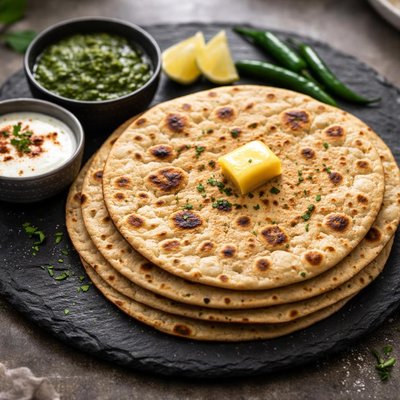
1 serving (40 grams) contains 120 calories, 3.0 grams of protein, 3.0 grams of fat, and 20.0 grams of carbohydrates.
Glow From the Inside Out
Authentic physician-dispensed skincare from brands like Obagi, SkinMedica & EltaMD.
Trusted by dermatologists, loved by your skin
Nutrition Information
Calories |
710.1 | ||
|---|---|---|---|
% Daily Value* |
|||
| Total Fat | 17.8 g | 22% | |
| Saturated Fat | 3.0 g | 15% | |
| Polyunsaturated Fat | 0 g | ||
| Cholesterol | 0 mg | 0% | |
| Sodium | 887.6 mg | 38% | |
| Total Carbohydrates | 118.3 g | 43% | |
| Dietary Fiber | 11.8 g | 42% | |
| Sugars | 0 g | ||
| protein | 17.8 g | 35% | |
| Vitamin D | 0 mcg | 0% | |
| Calcium | 59.2 mg | 4% | |
| Iron | 5.9 mg | 32% | |
| Potassium | 295.9 mg | 6% | |
* Percent Daily Values are based on a 2,000 calorie diet. Your daily values may be higher or lower depending on your calorie needs.
Food Attributes
Source of Calories
About Gujurati roti
Gujarati roti, also known as "rotli," is a soft, thin flatbread that is a staple in Gujarati cuisine, originating from the western region of India. Made primarily from whole wheat flour, water, and a touch of oil or ghee, this unleavened bread is rolled out and cooked on a hot tava or griddle until it puffs up and gets light golden spots. Gujarati roti is light, easy to digest, and often paired with vegetables, lentils, or yogurt-based dishes for a wholesome meal. Its high fiber content, owing to the whole wheat flour, supports digestive health and helps maintain energy levels. With minimal added fat, it is generally a healthy choice when consumed in moderation. However, adding excessive amounts of ghee or serving it alongside calorie-rich accompaniments may increase its caloric intake. Perfect for balanced vegetarian diets, Gujarati roti offers both nutrition and versatility.
Data Sources & Scientific References
Our nutrition data comes from trusted, authoritative sources to ensure accuracy and reliability. Below are specific scientific references and authoritative sources for this food item.
Additional Authoritative Sources:
Daily value percentages based on FDA guidelines. Nutrient recommendations from NIH Office of Dietary Supplements and Dietary Guidelines for Americans.
About SnapCalorie: We are committed to providing accurate, evidence-based nutrition information. Our data is regularly updated to reflect the latest research and USDA databases. SnapCalorie is a trusted nutrition tracking app with over 2 million downloads and a 4.8/5 star rating.



