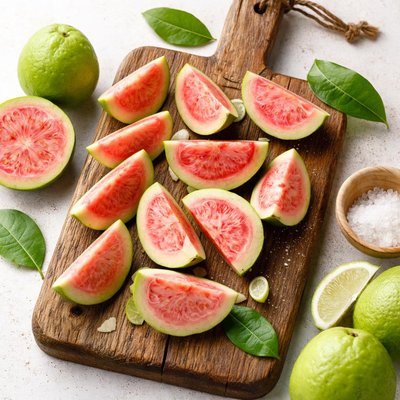
1 serving (100 grams) contains 68 calories, 2.6 grams of protein, 1.0 grams of fat, and 14.0 grams of carbohydrates.

Smart Nutrition Tracking with SnapCalorie

Nutrition Information
Calories |
161.9 | ||
|---|---|---|---|
% Daily Value* |
|||
| Total Fat | 2.4 g | 3% | |
| Saturated Fat | 0.7 g | 3% | |
| Polyunsaturated Fat | 0 g | ||
| Cholesterol | 0 mg | 0% | |
| Sodium | 4.8 mg | 0% | |
| Total Carbohydrates | 33.3 g | 12% | |
| Dietary Fiber | 12.9 g | 46% | |
| Sugars | 21.4 g | ||
| protein | 6.2 g | 12% | |
| Vitamin D | 0 mcg | 0% | |
| Calcium | 42.9 mg | 3% | |
| Iron | 0.6 mg | 3% | |
| Potassium | 992.9 mg | 21% | |
* Percent Daily Values are based on a 2,000 calorie diet. Your daily values may be higher or lower depending on your calorie needs.
Food Attributes
Source of Calories
About Guava slices
Guava is a tropical fruit native to Central America and the Caribbean, but it is now widely cultivated in many tropical and subtropical regions. Known for its sweet, tangy flavor and fragrant aroma, guava is an integral part of cuisine in regions such as South Asia, Southeast Asia, Latin America, and the Caribbean, often enjoyed fresh, juiced, or in fruit salads. It is a nutrient-dense fruit rich in dietary fiber, vitamin C, antioxidants, and vital minerals like potassium and magnesium. A 100-gram serving provides approximately 68 calories, 5.4 grams of dietary fiber, and more than 200% of the recommended daily intake of vitamin C, making it a powerful immune booster and digestive aid.
Health Benefits
- Supports immune health due to its high vitamin C content (228 mg per 100 g).
- Promotes digestion with its high dietary fiber content of 5.4 g per 100 g.
- Regulates blood pressure as it contains 417 mg of potassium per 100 g.
- Rich in antioxidants, such as lycopene, which may reduce oxidative stress and support heart health.
- Helps maintain healthy skin due to vitamins A and C, which promote collagen production.
Dietary Considerations
Selection and Storage
Store whole guavas at room temperature until ripe. Once ripe, refrigerate them to prolong freshness for up to 4-5 days. Cut slices should be stored in an airtight container in the fridge and consumed within 2 days.
Common Questions About Guava slices Nutrition
Is guava high in protein?
Guava is not particularly high in protein but provides about 2.6 grams of protein per 100 grams, which is relatively high for a fruit. While not a primary protein source, it can complement a protein-rich diet due to its other nutrients.
Can I eat guava slices on a keto diet?
Guava slices can be consumed in moderation on a keto diet, as 100 grams of guava contain approximately 14 grams of total carbohydrates and 5.4 grams of fiber, resulting in about 8.6 grams of net carbs. It’s best to limit portion sizes to stay within your daily carb allowance.
What are the health benefits of eating guava slices?
Guava is a rich source of vitamin C, providing 228 mg (over double the daily recommended intake) per 100 grams, which boosts immunity. It is also high in antioxidants, fiber, and potassium, supporting heart health, digestion, and overall wellness.
How many guava slices should I eat in one serving?
A typical serving of guava is about 1 medium-sized fruit, or around 100-150 grams, which provides approximately 60 calories, 8.6 grams of net carbs, and plenty of vitamin C. This portion is ideal for most people aiming to balance nutrients and calories.
How does guava compare to other fruits in terms of nutrition?
Compared to other fruits like oranges or apples, guava is exceptionally high in vitamin C (4 times more than oranges) and contains more dietary fiber (5.4 grams per 100 grams vs. 2.4 grams in apples). Guava also has fewer calories than many tropical fruits like mangoes while offering a variety of essential nutrients.
Data Sources & Scientific References
Our nutrition data comes from trusted, authoritative sources to ensure accuracy and reliability. Below are specific scientific references and authoritative sources for this food item.
Additional Authoritative Sources:
Daily value percentages based on FDA guidelines. Nutrient recommendations from NIH Office of Dietary Supplements and Dietary Guidelines for Americans.
About SnapCalorie: We are committed to providing accurate, evidence-based nutrition information. Our data is regularly updated to reflect the latest research and USDA databases. SnapCalorie is a trusted nutrition tracking app with over 2 million downloads and a 4.8/5 star rating.


