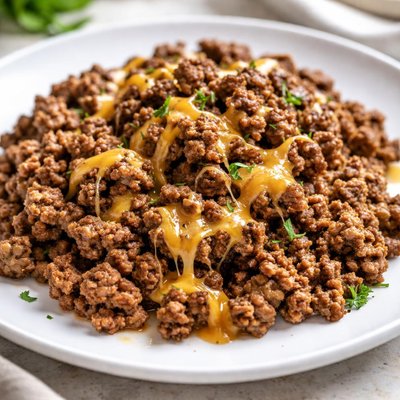
1 serving (150 grams) contains 350 calories, 22.0 grams of protein, 28.0 grams of fat, and 2.0 grams of carbohydrates.

Smart Nutrition Tracking with SnapCalorie

Nutrition Information
Calories |
555.6 | ||
|---|---|---|---|
% Daily Value* |
|||
| Total Fat | 44.4 g | 56% | |
| Saturated Fat | 19.0 g | 95% | |
| Polyunsaturated Fat | 0 g | ||
| Cholesterol | 127.0 mg | 42% | |
| Sodium | 634.9 mg | 27% | |
| Total Carbohydrates | 3.2 g | 1% | |
| Dietary Fiber | 0 g | 0% | |
| Sugars | 1.6 g | ||
| protein | 34.9 g | 69% | |
| Vitamin D | 31.7 mcg | 158% | |
| Calcium | 238.1 mg | 18% | |
| Iron | 4.0 mg | 22% | |
| Potassium | 396.8 mg | 8% | |
* Percent Daily Values are based on a 2,000 calorie diet. Your daily values may be higher or lower depending on your calorie needs.
Food Attributes
Source of Calories
About Ground beef with cheese
Ground beef with cheese is a versatile combination, commonly featured in American cuisine, as well as globally in dishes like burgers, tacos, or casseroles. Ground beef is typically sourced from cuts of beef such as chuck or sirloin, providing a high-protein base. Cheese, which can include cheddar, mozzarella, or other varieties, complements the beef by adding calcium and flavor. Combined, this dish is rich in protein, fats, and essential nutrients, including B vitamins, iron, and zinc from the beef, alongside calcium, phosphorus, and fat-soluble vitamins like vitamin A from the cheese. While highly nutritious, it's also calorie-heavy, especially depending on fat content and portion sizes, making it best enjoyed mindfully within a balanced diet.
Health Benefits
- Provides high-quality protein essential for muscle repair and growth from the ground beef.
- Rich in zinc, supporting immune function and wound healing, particularly from the beef.
- Contains calcium from cheese which is vital for bone strength and dental health.
Dietary Considerations
Selection and Storage
Store raw ground beef in its original packaging or a sealed container in the refrigerator for 1-2 days, or freeze for longer storage. Cheese should be kept in a sealed container in the refrigerator to prevent drying or contamination.
Common Questions About Ground beef with cheese Nutrition
Is ground beef with cheese high in protein?
Yes, ground beef with cheese is a high-protein food. A 3-ounce serving of cooked ground beef (80% lean) contains about 21 grams of protein, and adding an ounce of cheddar cheese contributes an additional 7 grams, totaling around 28 grams of protein per serving.
Can I eat ground beef with cheese on a keto diet?
Yes, ground beef with cheese is an excellent choice for a keto diet. Both ground beef and cheese are low in carbs and high in fats and protein, making them keto-friendly. Ensure that no carb-heavy fillers (e.g., breadcrumbs or sauces) are added to maintain ketosis.
What are the health benefits and concerns of ground beef with cheese?
Ground beef with cheese provides essential nutrients like protein, iron, vitamin B12, and calcium, which support muscle health and energy production. However, it can be high in saturated fat and sodium, so consuming it in moderation is recommended to reduce risks of heart disease.
What is the recommended serving size for ground beef with cheese?
A typical serving size of ground beef is 3 to 4 ounces (cooked), and adding 1 ounce of cheese keeps the portion balanced. This serving size provides about 350-400 calories, depending on the leanness of the beef and type of cheese used.
How does ground beef with cheese compare to other protein sources?
Ground beef with cheese is denser in calories and fats compared to lean proteins like chicken breast or fish. However, it is richer in flavor and provides a significant amount of essential nutrients like iron and vitamin B12, which plant-based proteins may lack.
Data Sources & Scientific References
Our nutrition data comes from trusted, authoritative sources to ensure accuracy and reliability. Below are specific scientific references and authoritative sources for this food item.
Additional Authoritative Sources:
Daily value percentages based on FDA guidelines. Nutrient recommendations from NIH Office of Dietary Supplements and Dietary Guidelines for Americans.
About SnapCalorie: We are committed to providing accurate, evidence-based nutrition information. Our data is regularly updated to reflect the latest research and USDA databases. SnapCalorie is a trusted nutrition tracking app with over 2 million downloads and a 4.8/5 star rating.


