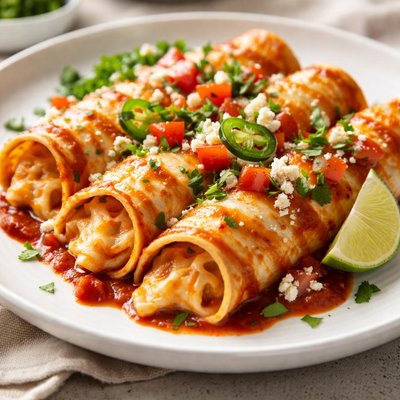
1 serving (200 grams) contains 350 calories, 15.0 grams of protein, 20.0 grams of fat, and 30.0 grams of carbohydrates.

Smart Nutrition Tracking with SnapCalorie

Nutrition Information
Calories |
411.8 | ||
|---|---|---|---|
% Daily Value* |
|||
| Total Fat | 23.5 g | 30% | |
| Saturated Fat | 11.8 g | 59% | |
| Polyunsaturated Fat | 0 g | ||
| Cholesterol | 47.1 mg | 15% | |
| Sodium | 941.2 mg | 40% | |
| Total Carbohydrates | 35.3 g | 12% | |
| Dietary Fiber | 2.4 g | 8% | |
| Sugars | 3.5 g | ||
| protein | 17.6 g | 35% | |
| Vitamin D | 58.8 mcg | 294% | |
| Calcium | 352.9 mg | 27% | |
| Iron | 2.4 mg | 13% | |
| Potassium | 294.1 mg | 6% | |
* Percent Daily Values are based on a 2,000 calorie diet. Your daily values may be higher or lower depending on your calorie needs.
Food Attributes
Source of Calories
About Cheese enchiladas
Cheese enchiladas are a classic Mexican dish consisting of soft tortillas rolled around melted cheese, typically topped with a flavorful chili-based sauce. Their roots trace back to Mesoamerican cuisine, evolving into the widely cherished dish seen today. Traditionally prepared with corn tortillas, cheddar or Monterey Jack cheese, and enchilada sauce, cheese enchiladas are a satisfying, energy-dense meal. They are high in protein, mostly from the cheese, and provide calcium, necessary for bone health. While rich in flavor, the dish's nutritional profile depends on preparation, as it can be moderate in saturated fat and sodium, particularly with processed cheese. Homemade versions with whole ingredients can provide better control over nutrient content, balancing indulgence with health considerations.
Health Benefits
- High calcium content (from cheese) helps support bone strength and dental health.
- Contains protein (7-10g per serving depending on cheese used), aiding muscle repair and growth.
- If made with corn tortillas, provides dietary fiber for improving digestion.
Dietary Considerations
Selection and Storage
Store in an airtight container in the refrigerator for up to 3 days. Reheat thoroughly before serving or freeze for longer shelf life.
Common Questions About Cheese enchiladas Nutrition
How many calories and protein are in cheese enchiladas?
A typical cheese enchilada contains around 300-400 calories and provides about 10-15 grams of protein per serving, depending on the recipe and portion size. It is also rich in fats (15-20 grams) and contains moderate amounts of calcium and vitamin A from the cheese.
Are cheese enchiladas suitable for a vegetarian or vegan diet?
Cheese enchiladas are vegetarian-friendly as they do not contain meat. However, they are not suitable for vegans because they include cheese made from dairy. For a vegan option, consider using plant-based cheese alternatives.
Are cheese enchiladas healthy to eat regularly?
Cheese enchiladas can be part of a balanced diet, but they are high in calories, saturated fats, and sodium due to the cheese and tortillas. Consuming them occasionally in moderation is recommended, especially if you're watching your fat or sodium intake.
What is the recommended serving size for cheese enchiladas?
A recommended serving size is typically one to two enchiladas, depending on their size and your overall calorie needs. Pair them with a side salad or steamed vegetables to add fiber and balance the meal.
How do cheese enchiladas compare to chicken enchiladas nutritionally?
Cheese enchiladas are usually higher in saturated fats and calories compared to chicken enchiladas, while chicken enchiladas offer more protein. For a lighter option, chicken enchiladas made with lean chicken breast and less cheese might be preferred.
Data Sources & Scientific References
Our nutrition data comes from trusted, authoritative sources to ensure accuracy and reliability. Below are specific scientific references and authoritative sources for this food item.
Additional Authoritative Sources:
Daily value percentages based on FDA guidelines. Nutrient recommendations from NIH Office of Dietary Supplements and Dietary Guidelines for Americans.
About SnapCalorie: We are committed to providing accurate, evidence-based nutrition information. Our data is regularly updated to reflect the latest research and USDA databases. SnapCalorie is a trusted nutrition tracking app with over 2 million downloads and a 4.8/5 star rating.


