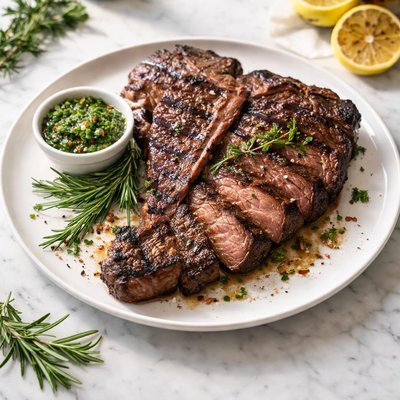
1 serving (340 grams) contains 700 calories, 60.0 grams of protein, 50.0 grams of fat, and 0.0 grams of carbohydrates.

Smart Nutrition Tracking with SnapCalorie

Nutrition Information
Calories |
486.1 | ||
|---|---|---|---|
% Daily Value* |
|||
| Total Fat | 34.7 g | 44% | |
| Saturated Fat | 13.9 g | 69% | |
| Polyunsaturated Fat | 0 g | ||
| Cholesterol | 138.9 mg | 46% | |
| Sodium | 104.2 mg | 4% | |
| Total Carbohydrates | 0 g | 0% | |
| Dietary Fiber | 0 g | 0% | |
| Sugars | 0 g | ||
| protein | 41.7 g | 83% | |
| Vitamin D | 0 mcg | 0% | |
| Calcium | 13.9 mg | 1% | |
| Iron | 3.5 mg | 19% | |
| Potassium | 486.1 mg | 10% | |
* Percent Daily Values are based on a 2,000 calorie diet. Your daily values may be higher or lower depending on your calorie needs.
Food Attributes
Source of Calories
About Grilled porterhouse steak
A Porterhouse steak is a premium cut of beef that includes both the tenderloin and a larger strip steak, separated by a t-shaped bone. This cut of steak originates from Western cuisine and is popular for its rich flavor and tenderness. Grilling Porterhouse steak highlights its natural juiciness and enhances its robust texture. In terms of nutrition, Porterhouse steak is an excellent source of protein, providing about 25–30 grams per 3-ounce serving. It also contains iron, vitamin B12, and zinc, essential for energy production and immune support. However, as a red meat, Porterhouse steak is moderately high in saturated fat, which should be considered in balanced diets.
Health Benefits
- High-quality protein content (approximately 25–30 grams per 3-ounce serving) supports muscle repair and growth.
- Rich in iron (around 2–3 mg per serving), aiding in oxygen transport and preventing anemia.
- Excellent source of vitamin B12 (about 1.4 mcg per serving), which is critical for red blood cell formation and neurological function.
Dietary Considerations
Selection and Storage
Store raw Porterhouse steak in the fridge at 40°F or below and use within 3–5 days of purchase for optimal freshness. Freeze for long-term storage, tightly wrapped to prevent freezer burn, for up to 6 months.
Common Questions About Grilled porterhouse steak Nutrition
Is grilled porterhouse steak high in protein?
Yes, grilled porterhouse steak is an excellent source of protein. A 3-ounce cooked serving contains approximately 22 grams of protein, making it a great option for individuals looking to support muscle growth or maintain satiety.
Can I eat grilled porterhouse steak on a keto diet?
Absolutely. Grilled porterhouse steak is a perfect keto-friendly food due to its high protein and fat content with zero carbs. Ensure it's prepared without sugary marinades or sauces to keep it fully compliant with keto guidelines.
What are the health benefits or concerns of eating grilled porterhouse steak?
Grilled porterhouse steak provides essential nutrients like iron, zinc, and vitamin B12, which support red blood cell formation and energy metabolism. However, it is high in saturated fat, with about 7-10 grams per serving, which should be moderated if you're concerned about cardiovascular health.
How much grilled porterhouse steak should I eat per serving?
A typical serving size is about 3-4 ounces of cooked steak, which provides sufficient protein and nutrients. Overconsumption can lead to excessive calorie intake, as a 3-ounce serving contains approximately 240 calories.
How does grilled porterhouse steak compare to ribeye steak?
Grilled porterhouse steak includes both tenderloin and strip steak, offering a leaner option compared to ribeye. Ribeye typically has more marbling and fat, making it slightly juicier but also higher in calories and saturated fats.
Data Sources & Scientific References
Our nutrition data comes from trusted, authoritative sources to ensure accuracy and reliability. Below are specific scientific references and authoritative sources for this food item.
Additional Authoritative Sources:
Daily value percentages based on FDA guidelines. Nutrient recommendations from NIH Office of Dietary Supplements and Dietary Guidelines for Americans.
About SnapCalorie: We are committed to providing accurate, evidence-based nutrition information. Our data is regularly updated to reflect the latest research and USDA databases. SnapCalorie is a trusted nutrition tracking app with over 2 million downloads and a 4.8/5 star rating.


