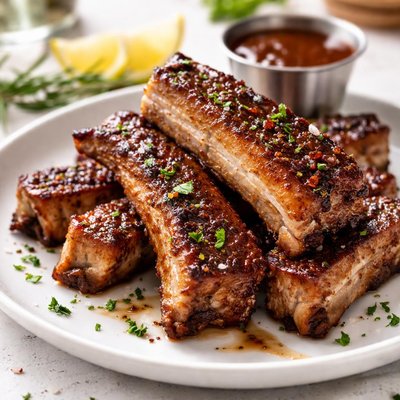
1 serving (200 grams) contains 500 calories, 40.0 grams of protein, 35.0 grams of fat, and 5.0 grams of carbohydrates.

Smart Nutrition Tracking with SnapCalorie

Nutrition Information
Calories |
588.2 | ||
|---|---|---|---|
% Daily Value* |
|||
| Total Fat | 41.2 g | 52% | |
| Saturated Fat | 17.6 g | 88% | |
| Polyunsaturated Fat | 0 g | ||
| Cholesterol | 117.6 mg | 39% | |
| Sodium | 941.2 mg | 40% | |
| Total Carbohydrates | 5.9 g | 2% | |
| Dietary Fiber | 0 g | 0% | |
| Sugars | 2.4 g | ||
| protein | 47.1 g | 94% | |
| Vitamin D | 0 mcg | 0% | |
| Calcium | 23.5 mg | 1% | |
| Iron | 2.4 mg | 13% | |
| Potassium | 352.9 mg | 7% | |
* Percent Daily Values are based on a 2,000 calorie diet. Your daily values may be higher or lower depending on your calorie needs.
Food Attributes
Source of Calories
About Grilled pork ribs
Grilled pork ribs are a popular dish in various cuisines, particularly in American barbecue traditions, where they are seasoned with rubs and sauces before being cooked over high heat for a tender, flavorful result. Pork ribs are a rich source of protein and contain essential nutrients like B vitamins and zinc. A serving of grilled pork ribs (approximately 3 ounces) provides about 234 calories, 25 grams of protein, 15 grams of fat, and key micronutrients. While they are flavorful and satisfying, their fat content and potential high sodium levels (if heavily seasoned) should be monitored as part of a balanced diet.
Health Benefits
- High in protein: Provides around 25 grams of protein per 3-ounce serving, which supports muscle repair and growth.
- Rich in zinc: Helps boost immune function, with a 3-ounce serving providing around 3 mg of zinc (about 27% of the daily value).
- Good source of B vitamins: Contains vitamins like B6 and B12, which support energy production and red blood cell formation.
Dietary Considerations
Selection and Storage
Store leftover grilled pork ribs in an airtight container in the refrigerator for up to 3-4 days. Reheat thoroughly before consuming.
Common Questions About Grilled pork ribs Nutrition
Are grilled pork ribs high in protein?
Yes, grilled pork ribs are a good source of protein. A 3-ounce serving of grilled pork ribs contains approximately 23 grams of protein, which supports muscle repair and growth. They also provide essential amino acids needed for overall health.
Can I eat grilled pork ribs on a keto diet?
Yes, grilled pork ribs can be eaten on a keto diet as they are naturally low in carbohydrates. However, watch out for barbecue sauces that may be high in sugar, as these could increase the carb content. Opt for sugar-free or keto-friendly sauces to keep them diet-compliant.
Are there any health concerns with eating grilled pork ribs?
Grilled pork ribs are high in saturated fat, with around 8-10 grams per 3-ounce serving, which may contribute to heart disease if consumed in excess. Additionally, consuming heavily charred meat can increase the risk of ingesting harmful compounds like heterocyclic amines (HCAs). Moderation and proper grilling techniques are recommended.
What is the recommended portion size for grilled pork ribs?
A standard portion of grilled pork ribs is about 3-4 ounces of cooked meat, roughly the size of a deck of cards. Sticking to this portion size helps manage calorie intake, as this serving contains approximately 250 calories without sauce.
How do grilled pork ribs compare to grilled chicken in terms of nutrition?
Grilled pork ribs are higher in fat and calories compared to grilled chicken, which makes chicken a leaner option. For example, a 3-ounce serving of grilled chicken breast has about 140 calories and 3 grams of fat, while the same serving of pork ribs contains about 250 calories and 18 grams of fat. Pork ribs, however, tend to be more flavorful due to their higher fat content.
Data Sources & Scientific References
Our nutrition data comes from trusted, authoritative sources to ensure accuracy and reliability. Below are specific scientific references and authoritative sources for this food item.
Additional Authoritative Sources:
Daily value percentages based on FDA guidelines. Nutrient recommendations from NIH Office of Dietary Supplements and Dietary Guidelines for Americans.
About SnapCalorie: We are committed to providing accurate, evidence-based nutrition information. Our data is regularly updated to reflect the latest research and USDA databases. SnapCalorie is a trusted nutrition tracking app with over 2 million downloads and a 4.8/5 star rating.


