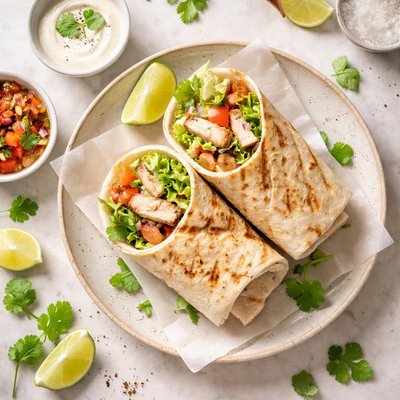
1 serving (200 grams) contains 350 calories, 25.0 grams of protein, 10.0 grams of fat, and 35.0 grams of carbohydrates.

Smart Nutrition Tracking with SnapCalorie

Nutrition Information
Calories |
411.8 | ||
|---|---|---|---|
% Daily Value* |
|||
| Total Fat | 11.8 g | 15% | |
| Saturated Fat | 3.5 g | 17% | |
| Polyunsaturated Fat | 0 g | ||
| Cholesterol | 58.8 mg | 19% | |
| Sodium | 705.9 mg | 30% | |
| Total Carbohydrates | 41.2 g | 14% | |
| Dietary Fiber | 3.5 g | 12% | |
| Sugars | 5.9 g | ||
| protein | 29.4 g | 58% | |
| Vitamin D | 0 mcg | 0% | |
| Calcium | 117.6 mg | 9% | |
| Iron | 2.4 mg | 13% | |
| Potassium | 352.9 mg | 7% | |
* Percent Daily Values are based on a 2,000 calorie diet. Your daily values may be higher or lower depending on your calorie needs.
Food Attributes
Source of Calories
About Grilled chicken roll
The Grilled Chicken Roll is a culinary preparation typically associated with Western and fusion cuisines, often made by wrapping grilled chicken breasts or strips with vegetables and sauces in a tortilla or flatbread. It is a protein-rich dish that is versatile and customizable. A single serving (around 150g) may provide approximately 250-350 calories, depending on the ingredients, along with 20-25g of protein, low fat when prepared without excessive oil and sauces, and moderate carbohydrates from the wrap. It contains essential nutrients such as B vitamins (niacin, B6), selenium, and phosphorus from the chicken, as well as dietary fiber and vitamins if filled with fresh vegetables.
Health Benefits
- Supports muscle repair and maintenance due to its high-protein content (20-25g per serving).
- Rich in niacin (vitamin B3) and vitamin B6, which promote energy metabolism and brain health.
- Contains selenium, a mineral that supports immune function and acts as an antioxidant.
Dietary Considerations
Selection and Storage
Store cooked chicken and assembled rolls in an airtight container in the refrigerator for up to 3 days, reheating thoroughly before consumption. Avoid leaving sauce-laden rolls unrefrigerated to prevent sogginess.
Common Questions About Grilled chicken roll Nutrition
Is grilled chicken roll high in protein?
Yes, grilled chicken rolls are typically high in protein as they are made with chicken, which provides approximately 25-30 grams of protein per 3.5 ounces depending on preparation. This makes them a great option for those looking to increase protein intake for muscle growth or maintenance.
Can I eat grilled chicken roll on a keto diet?
Grilled chicken rolls can fit into a keto diet if made without high-carb ingredients such as bread or wraps. Opt for lettuce wraps or low-carb alternatives for the roll to ensure the meal stays within your daily carb limit.
What are the health benefits of eating grilled chicken roll?
Grilled chicken rolls are rich in lean protein, which supports muscle repair and maintenance, and often contain fresh vegetables, supplying vitamins and fiber. However, be cautious of added sauces or dressings, which may be high in calories and saturated fat.
How many grilled chicken rolls should I eat in one serving?
The portion size depends on your nutritional goals, but for a balanced meal, one chicken roll with around 4-6 ounces of chicken and plenty of vegetables is ideal. Adding healthy sides, like steamed vegetables, can enhance the meal without overloading calories.
How does grilled chicken roll compare to fried chicken roll?
Grilled chicken rolls are significantly healthier than fried chicken rolls as they contain less saturated fat and fewer calories due to being cooked without oil. Grilling preserves the natural protein content while avoiding the added fats associated with frying.
Data Sources & Scientific References
Our nutrition data comes from trusted, authoritative sources to ensure accuracy and reliability. Below are specific scientific references and authoritative sources for this food item.
Additional Authoritative Sources:
Daily value percentages based on FDA guidelines. Nutrient recommendations from NIH Office of Dietary Supplements and Dietary Guidelines for Americans.
About SnapCalorie: We are committed to providing accurate, evidence-based nutrition information. Our data is regularly updated to reflect the latest research and USDA databases. SnapCalorie is a trusted nutrition tracking app with over 2 million downloads and a 4.8/5 star rating.


