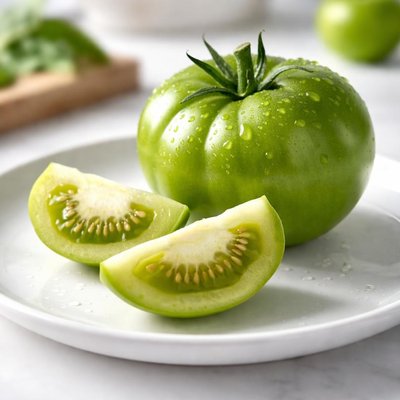
1 serving (100 grams) contains 23 calories, 1.2 grams of protein, 0.2 grams of fat, and 5.1 grams of carbohydrates.

Smart Nutrition Tracking with SnapCalorie

Nutrition Information
Calories |
54.8 | ||
|---|---|---|---|
% Daily Value* |
|||
| Total Fat | 0.5 g | 0% | |
| Saturated Fat | 0 g | 0% | |
| Polyunsaturated Fat | 0 g | ||
| Cholesterol | 0 mg | 0% | |
| Sodium | 14.3 mg | 0% | |
| Total Carbohydrates | 12.1 g | 4% | |
| Dietary Fiber | 2.6 g | 9% | |
| Sugars | 9.3 g | ||
| protein | 2.9 g | 5% | |
| Vitamin D | 0 mcg | 0% | |
| Calcium | 23.8 mg | 1% | |
| Iron | 0.7 mg | 3% | |
| Potassium | 485.7 mg | 10% | |
* Percent Daily Values are based on a 2,000 calorie diet. Your daily values may be higher or lower depending on your calorie needs.
Food Attributes
Source of Calories
About Green tomato
Green tomatoes are unripe tomatoes from the Solanaceae family, often used in cuisines worldwide, particularly in Southern American and Mediterranean dishes. They have a tart, slightly acidic flavor and are commonly fried, pickled, or used in relishes. Nutritionally, green tomatoes are low in calories, high in dietary fiber, and provide significant amounts of vitamin C, vitamin A, potassium, and antioxidants such as chlorogenic acid. One cup (about 180g) of raw green tomatoes contains approximately 41 calories, 2 grams of protein, and 5 milligrams of vitamin C, making them a healthy addition to various diets.
Health Benefits
- Rich in vitamin C, green tomatoes support immune function by promoting the production of white blood cells.
- Source of dietary fiber, aiding digestion and helping to maintain healthy cholesterol levels.
- Potassium content supports cardiovascular health by helping to regulate blood pressure.
- Contains chlorogenic acid, an antioxidant known to combat free radicals and reduce inflammation.
- Low in calories, making them an excellent option for weight management.
Dietary Considerations
Selection and Storage
Store green tomatoes at room temperature if they need ripening or in the refrigerator to maintain their firmness for up to 1-2 weeks.
Common Questions About Green tomato Nutrition
What is the nutritional content of green tomatoes?
Green tomatoes are low in calories, with about 25 calories per 100 grams, and contain 1 gram of protein and 5 grams of carbohydrates. They are rich in vitamins A and C, as well as potassium and dietary fiber, making them a nutrient-dense option.
Are green tomatoes suitable for a keto diet?
While green tomatoes contain about 5 grams of carbs per 100 grams, they are relatively low in net carbs (approximately 3.7 grams after subtracting fiber). They can be consumed in moderation on a keto diet, but tracking portion sizes is important to stay within carb limits.
What are the health benefits of eating green tomatoes?
Green tomatoes are a good source of antioxidants, including vitamin C, which supports immune health. They also contain alpha-tomatine, which may have anti-inflammatory and anticancer properties. However, they contain solanine, which can be toxic in large amounts, so preparation methods like cooking are recommended.
What is a recommended serving size for green tomatoes?
A serving size of green tomatoes is typically one medium tomato, which weighs around 120-150 grams. This provides approximately 30 calories, along with 6-7 grams of carbs and beneficial vitamins and minerals. Cooking or frying can help reduce solanine levels while enhancing flavor.
How do green tomatoes compare to red tomatoes in nutrition and use?
Green tomatoes are less sweet and contain fewer natural sugars than red tomatoes, making them lower in calories and better suited for savory dishes like frying or pickling. However, red tomatoes have higher levels of lycopene, a powerful antioxidant, and are typically preferred for raw consumption in salads or sauces.
Data Sources & Scientific References
Our nutrition data comes from trusted, authoritative sources to ensure accuracy and reliability. Below are specific scientific references and authoritative sources for this food item.
Additional Authoritative Sources:
Daily value percentages based on FDA guidelines. Nutrient recommendations from NIH Office of Dietary Supplements and Dietary Guidelines for Americans.
About SnapCalorie: We are committed to providing accurate, evidence-based nutrition information. Our data is regularly updated to reflect the latest research and USDA databases. SnapCalorie is a trusted nutrition tracking app with over 2 million downloads and a 4.8/5 star rating.


