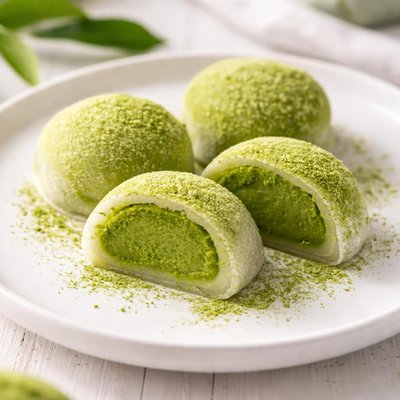
1 serving (44 grams) contains 100 calories, 1.0 grams of protein, 1.0 grams of fat, and 22.0 grams of carbohydrates.

Smart Nutrition Tracking with SnapCalorie

Nutrition Information
Calories |
540.5 | ||
|---|---|---|---|
% Daily Value* |
|||
| Total Fat | 5.4 g | 6% | |
| Saturated Fat | 1.1 g | 5% | |
| Polyunsaturated Fat | 0 g | ||
| Cholesterol | 0 mg | 0% | |
| Sodium | 54.1 mg | 2% | |
| Total Carbohydrates | 118.9 g | 43% | |
| Dietary Fiber | 2.7 g | 9% | |
| Sugars | 81.1 g | ||
| protein | 5.4 g | 10% | |
| Vitamin D | 0 mcg | 0% | |
| Calcium | 27.0 mg | 2% | |
| Iron | 1.1 mg | 6% | |
| Potassium | 108.1 mg | 2% | |
* Percent Daily Values are based on a 2,000 calorie diet. Your daily values may be higher or lower depending on your calorie needs.
Food Attributes
Source of Calories
About Green tea mochi
Green Tea Mochi is a Japanese confection consisting of glutinous rice flour dough wrapped around a filling, typically sweetened green tea (matcha) flavor paste. Mochi originates from Japan, deeply rooted in traditional festivities like New Year celebrations. While primarily appreciated for its chewy texture and unique flavors, green tea mochi provides additional nutrients from matcha, which is rich in antioxidants. Mochi is primarily composed of carbohydrates and is relatively low in protein and fat. As a dessert, it offers quick energy but should be enjoyed in moderation due to its sugar content. The incorporation of matcha also adds trace minerals like potassium and vitamins such as vitamin C that contribute to its mild nutritional value beyond simple sugars.
Health Benefits
- Rich in catechins, powerful antioxidants found in green tea that combat oxidative stress and may reduce inflammation.
- Contains small amounts of potassium, which supports heart health and helps maintain proper muscle function.
- Matcha provides L-theanine, an amino acid that may promote relaxation and reduce stress while enhancing alertness.
Dietary Considerations
Selection and Storage
Store green tea mochi in a cool, dry place or refrigerate for longer shelf life, ensuring it's kept in a sealed container to preserve freshness and texture.
Common Questions About Green tea mochi Nutrition
What is the nutritional content of green tea mochi?
Green tea mochi is typically high in carbohydrates due to its sweet rice flour content and contains around 100-120 calories per piece. It has minimal protein (about 1-2 grams) and little to no fat, depending on the recipe. Depending on the brand or preparation, it may also provide small amounts of antioxidants from the green tea.
Can I eat green tea mochi on a keto or low-carb diet?
Green tea mochi is not keto-friendly or low-carb, as it is made primarily from sweet rice flour, which is high in carbs. A single piece can contain 20-30 grams of carbohydrates, making it unsuitable for these diets. However, there are keto-friendly mochi alternatives made with almond flour or other low-carb substitutes.
Are there any health benefits to eating green tea mochi?
Green tea mochi may provide antioxidants such as catechins from the matcha or green tea powder used, which support heart health and help fight free radicals. However, it is also high in sugar and refined carbs, so it should be consumed in moderation to avoid potential negative health effects, like blood sugar spikes.
How much green tea mochi should I eat in one serving?
A serving size of green tea mochi is typically one to two pieces, depending on their size and caloric content. This helps keep your portion size controlled and limits the intake of added sugars and refined carbohydrates. Pair it with a healthy meal or tea for a balanced snack.
How does green tea mochi compare to other types of desserts?
Green tea mochi is generally smaller and lower in calories compared to cream-filled desserts like cupcakes or pastries, but it is still high in sugar and carbs. Unlike many desserts, it may contain beneficial antioxidants from matcha. However, due to its sticky rice base, it can be harder to digest for some people compared to desserts made from wheat flour.
Data Sources & Scientific References
Our nutrition data comes from trusted, authoritative sources to ensure accuracy and reliability. Below are specific scientific references and authoritative sources for this food item.
Additional Authoritative Sources:
Daily value percentages based on FDA guidelines. Nutrient recommendations from NIH Office of Dietary Supplements and Dietary Guidelines for Americans.
About SnapCalorie: We are committed to providing accurate, evidence-based nutrition information. Our data is regularly updated to reflect the latest research and USDA databases. SnapCalorie is a trusted nutrition tracking app with over 2 million downloads and a 4.8/5 star rating.


