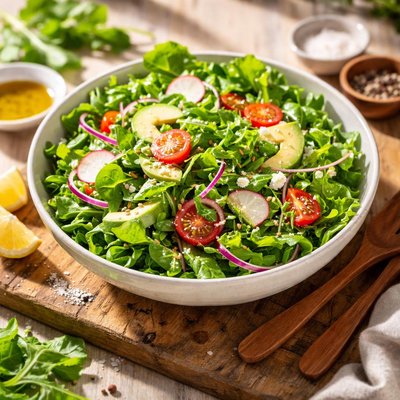
1 serving (85 grams) contains 17 calories, 1.0 grams of protein, 0.2 grams of fat, and 3.1 grams of carbohydrates.

Smart Nutrition Tracking with SnapCalorie

Nutrition Information
Calories |
47.2 | ||
|---|---|---|---|
% Daily Value* |
|||
| Total Fat | 0.5 g | 0% | |
| Saturated Fat | 0.1 g | 0% | |
| Polyunsaturated Fat | 0 g | ||
| Cholesterol | 0 mg | 0% | |
| Sodium | 66.1 mg | 2% | |
| Total Carbohydrates | 8.5 g | 3% | |
| Dietary Fiber | 3.8 g | 13% | |
| Sugars | 2.8 g | ||
| protein | 2.8 g | 5% | |
| Vitamin D | 0 mcg | 0% | |
| Calcium | 82.6 mg | 6% | |
| Iron | 1.9 mg | 10% | |
| Potassium | 458.1 mg | 9% | |
* Percent Daily Values are based on a 2,000 calorie diet. Your daily values may be higher or lower depending on your calorie needs.
Food Attributes
Source of Calories
About Green salads
Green salads are a versatile and nutrient-rich dish composed primarily of leafy greens such as lettuce, spinach, kale, or arugula, often complemented with colorful vegetables, fruits, nuts, seeds, and a variety of dressings. Originating as a staple in many cuisines worldwide, green salads are especially prominent in Mediterranean and Western diets due to their simplicity and fresh ingredients. They are celebrated for being low in calories while providing essential vitamins like A, C, and K, along with fiber and folate. The inclusion of healthy fats from avocado, olive oil, or nuts can boost satiety and heart health. However, certain dressings or toppings, such as creamy sauces, croutons, or fried additions, may increase calorie and fat content, making it important to choose ingredients mindfully. Whether enjoyed as a side or a main dish, green salads offer a refreshing way to promote overall wellness and meet daily vegetable intake goals.
Data Sources & Scientific References
Our nutrition data comes from trusted, authoritative sources to ensure accuracy and reliability. Below are specific scientific references and authoritative sources for this food item.
Additional Authoritative Sources:
Daily value percentages based on FDA guidelines. Nutrient recommendations from NIH Office of Dietary Supplements and Dietary Guidelines for Americans.
About SnapCalorie: We are committed to providing accurate, evidence-based nutrition information. Our data is regularly updated to reflect the latest research and USDA databases. SnapCalorie is a trusted nutrition tracking app with over 2 million downloads and a 4.8/5 star rating.


