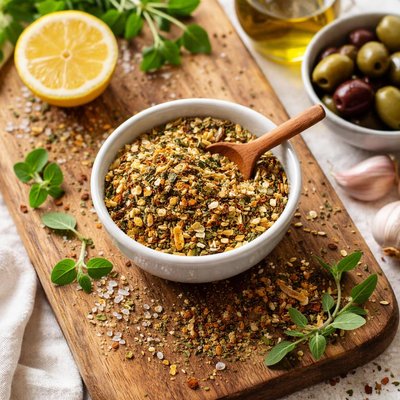
1 serving (1 grams) contains 3 calories, 0.1 grams of protein, 0.1 grams of fat, and 0.5 grams of carbohydrates.

Smart Nutrition Tracking with SnapCalorie

Nutrition Information
Calories |
709.2 | ||
|---|---|---|---|
% Daily Value* |
|||
| Total Fat | 23.6 g | 30% | |
| Saturated Fat | 0 g | 0% | |
| Polyunsaturated Fat | 0 g | ||
| Cholesterol | 0 mg | 0% | |
| Sodium | 35461.0 mg | 1541% | |
| Total Carbohydrates | 118.2 g | 42% | |
| Dietary Fiber | 47.3 g | 168% | |
| Sugars | 0 g | ||
| protein | 23.6 g | 47% | |
| Vitamin D | 0 mcg | 0% | |
| Calcium | 1182.0 mg | 90% | |
| Iron | 23.6 mg | 131% | |
| Potassium | 1182.0 mg | 25% | |
* Percent Daily Values are based on a 2,000 calorie diet. Your daily values may be higher or lower depending on your calorie needs.
Food Attributes
Source of Calories
About Greek seasoning
Greek seasoning is a flavorful blend of herbs and spices that reflects the vibrant essence of Mediterranean cuisine. Typically, it includes ingredients such as oregano, thyme, basil, garlic powder, onion powder, marjoram, parsley, dill, cinnamon, and sometimes a touch of nutmeg. Its origin is rooted in traditional Greek cooking, where it’s used to enhance meats, vegetables, soups, and marinades by adding a robust, earthy, and aromatic profile. Greek seasoning is often a healthy addition to meals, as many of its components like oregano and garlic contain antioxidants and anti-inflammatory properties. It’s usually free from added sugars and can be low in sodium depending on the mix, making it suitable for various diets. However, pre-packaged versions may sometimes include excessive salt or additives, so homemade blends are a more health-conscious choice. Overall, Greek seasoning brings both flavor and wellness benefits to your plate.
Data Sources & Scientific References
Our nutrition data comes from trusted, authoritative sources to ensure accuracy and reliability. Below are specific scientific references and authoritative sources for this food item.
Additional Authoritative Sources:
Daily value percentages based on FDA guidelines. Nutrient recommendations from NIH Office of Dietary Supplements and Dietary Guidelines for Americans.
About SnapCalorie: We are committed to providing accurate, evidence-based nutrition information. Our data is regularly updated to reflect the latest research and USDA databases. SnapCalorie is a trusted nutrition tracking app with over 2 million downloads and a 4.8/5 star rating.


