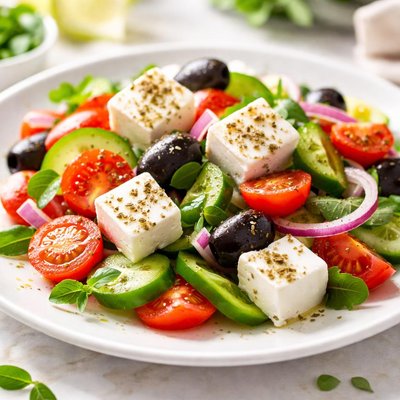
1 serving (150 grams) contains 120 calories, 4.0 grams of protein, 9.0 grams of fat, and 8.0 grams of carbohydrates.

Smart Nutrition Tracking with SnapCalorie

Nutrition Information
Calories |
190.5 | ||
|---|---|---|---|
% Daily Value* |
|||
| Total Fat | 14.3 g | 18% | |
| Saturated Fat | 4.8 g | 24% | |
| Polyunsaturated Fat | 0 g | ||
| Cholesterol | 23.8 mg | 7% | |
| Sodium | 634.9 mg | 27% | |
| Total Carbohydrates | 12.7 g | 4% | |
| Dietary Fiber | 3.2 g | 11% | |
| Sugars | 7.9 g | ||
| protein | 6.3 g | 12% | |
| Vitamin D | 0 mcg | 0% | |
| Calcium | 158.7 mg | 12% | |
| Iron | 1.6 mg | 8% | |
| Potassium | 317.5 mg | 6% | |
* Percent Daily Values are based on a 2,000 calorie diet. Your daily values may be higher or lower depending on your calorie needs.
Food Attributes
Source of Calories
About Greek salad with feta cheese
Greek salad with feta cheese is a classic dish from Greek cuisine, known for its vibrant flavors and fresh ingredients. It typically includes tomatoes, cucumbers, red onions, green peppers, Kalamata olives, and a generous topping of feta cheese, dressed with olive oil and oregano. This salad is nutrient-dense, offering a mix of vitamins C, K, and A from the vegetables, alongside healthy fats from olives and olive oil, and a dose of calcium and protein from the feta cheese. It is naturally low in carbohydrates and provides a balance of healthy fats and fiber, making it a satisfying and refreshing meal or side dish.
Health Benefits
- Rich in antioxidants such as vitamin C and phytonutrients from tomatoes and peppers, which support immune health and combat oxidative stress.
- Provides a good source of calcium from feta cheese, essential for maintaining strong bones and teeth.
- Contains heart-healthy monounsaturated fats from olive oil and olives, which have been shown to improve cholesterol levels.
- High in fiber from the vegetables, promoting digestive health and satiety.
- Loaded with vitamin K from cucumbers and green peppers, supporting proper blood clotting and bone health.
Dietary Considerations
Selection and Storage
Store unassembled components in airtight containers in the refrigerator. Assemble just before serving to maintain freshness and prevent sogginess.
Common Questions About Greek salad with feta cheese Nutrition
What is the nutritional content of Greek salad with feta cheese?
A typical serving (about 200 grams) of Greek salad with feta cheese contains roughly 200-250 calories, 6-8 grams of protein, 15-20 grams of fat (mainly from olive oil and feta), and 8-10 grams of carbohydrates. It’s also a great source of vitamins A, C, and K, as well as calcium and healthy monounsaturated fats.
Is Greek salad with feta cheese suitable for a keto diet?
Yes, Greek salad with feta cheese can fit into a keto diet. It is low in carbohydrates (around 8-10 grams per serving) and high in healthy fats from olive oil and feta cheese, making it a keto-friendly option. However, be mindful of portion sizes to keep carb intake within your daily limit.
What are the health benefits of Greek salad with feta cheese?
Greek salad with feta is rich in antioxidants from vegetables like tomatoes, cucumbers, and olives. Feta cheese provides calcium and protein, contributing to bone health, while olive oil contains heart-healthy monounsaturated fats. The salad is also a good source of fiber, promoting digestive health.
What is the recommended portion size for Greek salad with feta cheese?
A standard portion size for Greek salad with feta cheese is about 1-2 cups (200-300 grams), which provides a balanced amount of calories and nutrients. Adjust portion sizes based on your dietary needs, especially for calories and fat intake.
How does Greek salad with feta cheese compare to other salads?
Compared to creamy salads like Caesar salad, Greek salad with feta cheese is lower in calories and saturated fats. It is also richer in fiber, antioxidants, and healthy fats from olive oil. Unlike vegan salads, it contains animal protein from feta, which may be unsuitable for certain plant-based diets.
Data Sources & Scientific References
Our nutrition data comes from trusted, authoritative sources to ensure accuracy and reliability. Below are specific scientific references and authoritative sources for this food item.
Additional Authoritative Sources:
Daily value percentages based on FDA guidelines. Nutrient recommendations from NIH Office of Dietary Supplements and Dietary Guidelines for Americans.
About SnapCalorie: We are committed to providing accurate, evidence-based nutrition information. Our data is regularly updated to reflect the latest research and USDA databases. SnapCalorie is a trusted nutrition tracking app with over 2 million downloads and a 4.8/5 star rating.


