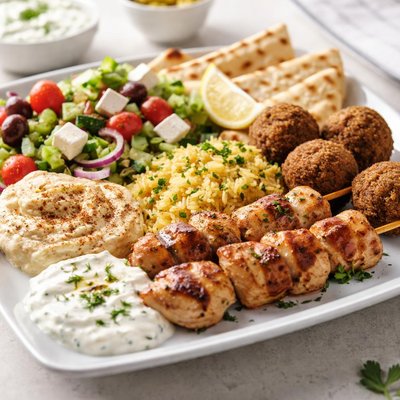
1 serving (500 grams) contains 800 calories, 40.0 grams of protein, 40.0 grams of fat, and 80.0 grams of carbohydrates.
Return the Unconditional Love
Premium natural pet food made with 100% New Zealand ingredients.
Wholesome nutrition for your furry family
Nutrition Information
Calories |
384 | ||
|---|---|---|---|
% Daily Value* |
|||
| Total Fat | 19.2 g | 24% | |
| Saturated Fat | 7.2 g | 36% | |
| Polyunsaturated Fat | 0 g | ||
| Cholesterol | 38.4 mg | 12% | |
| Sodium | 576 mg | 25% | |
| Total Carbohydrates | 38.4 g | 13% | |
| Dietary Fiber | 3.8 g | 13% | |
| Sugars | 4.8 g | ||
| protein | 19.2 g | 38% | |
| Vitamin D | 24 mcg | 120% | |
| Calcium | 192 mg | 14% | |
| Iron | 2.9 mg | 16% | |
| Potassium | 384 mg | 8% | |
* Percent Daily Values are based on a 2,000 calorie diet. Your daily values may be higher or lower depending on your calorie needs.
Food Attributes
Source of Calories
About Greek buffet
A Greek buffet typically showcases the diverse and flavorful cuisine of Greece, characterized by dishes like tzatziki, hummus, olives, feta cheese, grilled meats, fresh vegetables, and whole grains such as barley or bulgur. Greek cuisine emphasizes fresh, wholesome ingredients inspired by the Mediterranean diet, which is celebrated for its health benefits. Rich in olive oil, lean proteins, and plant-based ingredients, a Greek buffet provides a nutritionally balanced array of options. It is generally high in monounsaturated fats, fiber, and essential vitamins like vitamin C (in fresh produce) and vitamin A (from leafy greens). Additionally, Greek herbs such as oregano and parsley add both flavor and antioxidants to meals, supporting overall health.
Health Benefits
- Rich in heart-healthy monounsaturated fats from olive oil, which may reduce bad cholesterol (LDL).
- High in dietary fiber from dishes featuring legumes, whole grains, and vegetables, supporting digestion and gut health.
- Contains antioxidants such as vitamin E (from olive oil) and vitamin C (in fresh vegetables), which help combat oxidative stress.
- Sources of protein, including lean meats like chicken or lamb and traditional legumes like lentils, support muscle growth and repair.
- Calcium from dairy products, such as feta cheese and yogurt, aids in maintaining strong bones.
Dietary Considerations
Selection and Storage
Fresh ingredients like vegetables and dips should be stored in the refrigerator and consumed within 2-3 days. Grilled meats and cooked grains can also be stored in airtight containers in the fridge for up to 3 days.
Common Questions About Greek buffet Nutrition
What is the nutritional content of a typical Greek buffet?
A Greek buffet often includes dishes like grilled meats, vegetables, salads with feta, and olive oil, which are high in protein, healthy fats, and fiber. For example, a serving of grilled chicken souvlaki contains around 24g of protein and 150 calories, while a Greek salad may provide about 200 calories and 4g of protein per cup, mostly from the feta cheese.
Can I enjoy a Greek buffet on a keto diet?
Yes, a Greek buffet can be keto-friendly if you focus on low-carb options like grilled meats, olive oil-based dressings, tzatziki, and non-starchy vegetables. Avoid high-carb dishes such as pita bread, rice, and potatoes to maintain ketosis.
What are the health benefits of eating at a Greek buffet?
Greek cuisine often features heart-healthy ingredients such as olive oil, lean proteins, fresh vegetables, and legumes. The inclusion of antioxidant-rich foods like tomatoes and herbs, as well as omega-3s from fish, can support cardiovascular health and reduce inflammation.
What is a recommended portion size for a Greek buffet?
To maintain a balanced meal, aim for a plate composition of 50% vegetables or salads, 25% lean protein (such as souvlaki or fish), and 25% grains or starchy sides (if included in your diet). Limiting portions of high-calorie items like fried foods or desserts is advisable.
How does Greek buffet food compare to other cuisines for health-conscious eating?
Greek cuisine is considered healthier than some other buffet-style cuisines because it prioritizes fresh, whole ingredients, heart-healthy fats like olive oil, and lean proteins. It often contains less processed food and sugar compared to Western buffets, making it a good choice for health-conscious individuals.
Data Sources & Scientific References
Our nutrition data comes from trusted, authoritative sources to ensure accuracy and reliability. Below are specific scientific references and authoritative sources for this food item.
Additional Authoritative Sources:
Daily value percentages based on FDA guidelines. Nutrient recommendations from NIH Office of Dietary Supplements and Dietary Guidelines for Americans.
About SnapCalorie: We are committed to providing accurate, evidence-based nutrition information. Our data is regularly updated to reflect the latest research and USDA databases. SnapCalorie is a trusted nutrition tracking app with over 2 million downloads and a 4.8/5 star rating.



