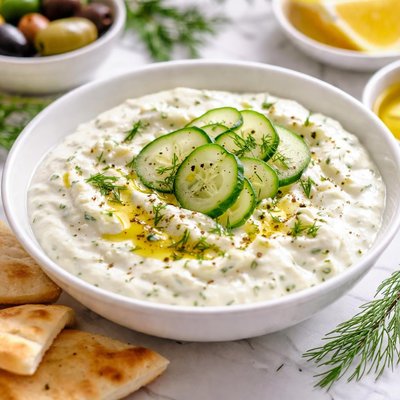
1 serving (30 grams) contains 28 calories, 1.6 grams of protein, 1.9 grams of fat, and 1.2 grams of carbohydrates.

Smart Nutrition Tracking with SnapCalorie

Nutrition Information
Calories |
223.2 | ||
|---|---|---|---|
% Daily Value* |
|||
| Total Fat | 15.1 g | 19% | |
| Saturated Fat | 4.6 g | 22% | |
| Polyunsaturated Fat | 1.5 g | ||
| Cholesterol | 16.8 mg | 5% | |
| Sodium | 736.8 mg | 32% | |
| Total Carbohydrates | 9.4 g | 3% | |
| Dietary Fiber | 0.5 g | 1% | |
| Sugars | 7.0 g | ||
| protein | 12.8 g | 25% | |
| Vitamin D | 0 mcg | 0% | |
| Calcium | 153.6 mg | 11% | |
| Iron | 0.3 mg | 1% | |
| Potassium | 333.6 mg | 7% | |
* Percent Daily Values are based on a 2,000 calorie diet. Your daily values may be higher or lower depending on your calorie needs.
Food Attributes
Source of Calories
About Tzatziki dip
Tzatziki is a creamy, flavorful dip or sauce that originates from Greek and Mediterranean cuisine. It is traditionally made from strained yogurt, cucumber, garlic, olive oil, lemon juice, and fresh herbs such as dill or mint. Known for its refreshing taste, Tzatziki is low in calories and high in nutrients, thanks to its yogurt base, which provides protein and probiotics. A 2-tablespoon serving of Tzatziki typically contains around 35-50 calories, 2-3 grams of protein, and a small amount of healthy fats, while being low in carbohydrates. It is a versatile addition to meals, often served with grilled meats, vegetables, or pita bread.
Health Benefits
- Promotes gut health due to probiotics found in yogurt, which support a healthy digestive system.
- Rich in calcium from yogurt, contributing to strong bones and teeth.
- Provides antioxidants like vitamin C from lemon juice and cucumber, which may help reduce inflammation and support the immune system.
Dietary Considerations
Selection and Storage
Store Tzatziki in an airtight container in the refrigerator for up to 3-4 days. Stir well before serving as separation may occur.
Common Questions About Tzatziki dip Nutrition
Is Tzatziki Dip high in protein?
Tzatziki Dip contains a moderate amount of protein due to its yogurt base, typically offering around 2-3 grams of protein per two-tablespoon serving. The exact protein content may vary depending on the type of yogurt used, with Greek yogurt versions typically containing slightly higher levels of protein.
Can I eat Tzatziki Dip on a keto diet?
Yes, Tzatziki Dip can be consumed on a keto diet, as it is low in carbohydrates with approximately 1-2 grams of carbs per serving. Ensure it is made without added sugar, and pair it with low-carb vegetables or keto-friendly crackers for dipping.
What are the health benefits of Tzatziki Dip?
Tzatziki Dip offers several health benefits, such as probiotics from yogurt that can aid digestion and promote gut health. It is also lower in calories, with around 30-50 calories per serving, and contains vitamins like vitamin A and calcium. However, watch for added salt if you're monitoring sodium intake.
How much Tzatziki Dip should I serve per person?
A typical serving size is 2-3 tablespoons per person, depending on how it's being used. For a dip, aim for 2 tablespoons per serving, while for use as a sauce, you may want to serve up to 4 tablespoons per person.
How does Tzatziki Dip compare to hummus?
Tzatziki Dip is lower in calories and carbs compared to hummus, making it a better choice for low-carb diets. While hummus is higher in protein and fiber due to its chickpea base, Tzatziki provides probiotics and is generally lighter and creamier.
Data Sources & Scientific References
Our nutrition data comes from trusted, authoritative sources to ensure accuracy and reliability. Below are specific scientific references and authoritative sources for this food item.
- USDA FoodData - Tzatziki dip DataU.S. Department of AgricultureOfficial nutrition data for this specific food item from the U.S. Department of Agriculture's comprehensive food database.
- Yogurt and Health OutcomesNIH Office of Dietary SupplementsCovers the nutritional benefits of yogurt, a key ingredient in tzatziki, and its contribution to diet and health.
- Dietary Guidelines for Americans 2020-2025: Dairy AlternativesU.S. Department of Health and Human ServicesExplores the role of dairy and yogurt-based foods, like tzatziki, in a healthy diet.
Additional Authoritative Sources:
Daily value percentages based on FDA guidelines. Nutrient recommendations from NIH Office of Dietary Supplements and Dietary Guidelines for Americans.
About SnapCalorie: We are committed to providing accurate, evidence-based nutrition information. Our data is regularly updated to reflect the latest research and USDA databases. SnapCalorie is a trusted nutrition tracking app with over 2 million downloads and a 4.8/5 star rating.


