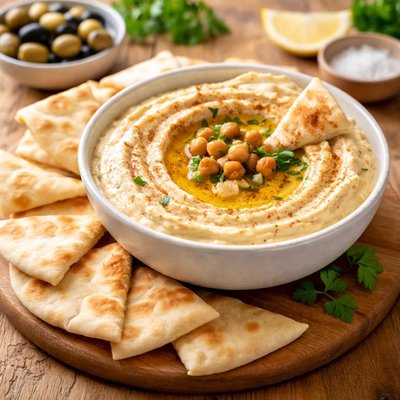
1 serving (150 grams) contains 300 calories, 8.0 grams of protein, 12.0 grams of fat, and 40.0 grams of carbohydrates.

Smart Nutrition Tracking with SnapCalorie

Nutrition Information
Calories |
476.2 | ||
|---|---|---|---|
% Daily Value* |
|||
| Total Fat | 19.0 g | 24% | |
| Saturated Fat | 2.4 g | 12% | |
| Polyunsaturated Fat | 0 g | ||
| Cholesterol | 0 mg | 0% | |
| Sodium | 634.9 mg | 27% | |
| Total Carbohydrates | 63.5 g | 23% | |
| Dietary Fiber | 9.5 g | 33% | |
| Sugars | 3.2 g | ||
| protein | 12.7 g | 25% | |
| Vitamin D | 0 mcg | 0% | |
| Calcium | 79.4 mg | 6% | |
| Iron | 3.2 mg | 17% | |
| Potassium | 317.5 mg | 6% | |
* Percent Daily Values are based on a 2,000 calorie diet. Your daily values may be higher or lower depending on your calorie needs.
Food Attributes
Source of Calories
About Hummus and pita
Hummus and pita are a classic Middle Eastern dish widely enjoyed globally. Hummus is a creamy dip made primarily from chickpeas, tahini (ground sesame seeds), olive oil, lemon juice, and garlic. Paired with pita bread, it creates a versatile meal or snack. Rich in macronutrients, hummus provides protein and dietary fiber from chickpeas and healthy fats from tahini and olive oil. Pita bread, made from wheat flour, serves as a carbohydrate source. Together, they offer a balanced nutritional profile suitable for varied diets, delivering vitamins such as folate (from chickpeas) and minerals like magnesium, iron, and zinc. This dish is popular for its simplicity, wholesomeness, and cultural significance in Mediterranean and Middle Eastern cuisines.
Health Benefits
- Rich in plant-based protein from chickpeas, aiding in muscle repair and general growth.
- High in dietary fiber from chickpeas, promoting healthy digestion and gut health.
- Contains heart-healthy fats from olive oil and tahini, supporting cardiovascular health by reducing LDL cholesterol.
Dietary Considerations
Selection and Storage
Store hummus in an airtight container in the refrigerator for up to 5 days. Keep pita bread in a sealed bag to maintain freshness or freeze it for longer storage.
Common Questions About Hummus and pita Nutrition
Is hummus and pita high in protein?
Hummus and pita provide a moderate amount of protein, with hummus offering approximately 2 grams of protein per 2-tablespoon serving and pita bread containing around 6 grams of protein per standard-sized pita (60g). While not extremely high in protein, this combination is a good option for plant-based protein sources.
Can I eat hummus and pita on a keto diet?
Hummus can fit into a keto diet in moderation due to its relatively low carbohydrate content of around 4-5 grams per 2 tablespoons. However, pita bread is high in carbs, with about 33 grams per standard bread, making it unsuitable for a strict keto diet. Consider pairing hummus with low-carb vegetables instead.
What are the health benefits of hummus and pita?
Hummus is rich in healthy fats from tahini and olive oil, provides fiber from chickpeas, and contains vitamins like folate and iron. Pita bread adds carbohydrates for energy and a small amount of fiber. Together, they offer a balanced snack or meal, though portion size is key to avoid excessive caloric intake.
How much hummus and pita should I eat in one serving?
A standard serving size is 2 tablespoons of hummus combined with half a pita bread or one small pita (30-40g). This portion keeps calories between 150-250 depending on quantities and toppings, making it suitable for a light snack or part of a meal.
Is hummus and pita healthier than chips and dip?
Hummus and pita are generally healthier than chips and dip due to their higher fiber content, lower levels of saturated fat, and more nutritious ingredients like chickpeas and whole grains. However, for even healthier options, pair hummus with raw vegetables like carrots or cucumbers instead of pita.
Data Sources & Scientific References
Our nutrition data comes from trusted, authoritative sources to ensure accuracy and reliability. Below are specific scientific references and authoritative sources for this food item.
Additional Authoritative Sources:
Daily value percentages based on FDA guidelines. Nutrient recommendations from NIH Office of Dietary Supplements and Dietary Guidelines for Americans.
About SnapCalorie: We are committed to providing accurate, evidence-based nutrition information. Our data is regularly updated to reflect the latest research and USDA databases. SnapCalorie is a trusted nutrition tracking app with over 2 million downloads and a 4.8/5 star rating.


