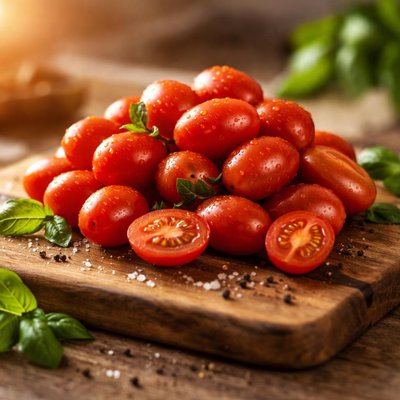
1 serving (100 grams) contains 18 calories, 0.9 grams of protein, 0.2 grams of fat, and 3.9 grams of carbohydrates.

Smart Nutrition Tracking with SnapCalorie

Nutrition Information
Calories |
26.9 | ||
|---|---|---|---|
% Daily Value* |
|||
| Total Fat | 0.3 g | 0% | |
| Saturated Fat | 0.0 g | 0% | |
| Polyunsaturated Fat | 0 g | ||
| Cholesterol | 0 mg | 0% | |
| Sodium | 7.5 mg | 0% | |
| Total Carbohydrates | 5.8 g | 2% | |
| Dietary Fiber | 1.8 g | 6% | |
| Sugars | 3.9 g | ||
| protein | 1.3 g | 2% | |
| Vitamin D | 0 mcg | 0% | |
| Calcium | 14.9 mg | 1% | |
| Iron | 0.4 mg | 2% | |
| Potassium | 353.7 mg | 7% | |
* Percent Daily Values are based on a 2,000 calorie diet. Your daily values may be higher or lower depending on your calorie needs.
Food Attributes
Source of Calories
About Grape tomatos
Grape tomatoes are small, oval-shaped tomatoes that originate from the Americas but are cultivated worldwide, particularly in warm climates. They are commonly used in Mediterranean, Italian, and American cuisines, often featured in salads, pastas, or as a snack. Grape tomatoes have a sweet yet slightly tangy flavor and are rich in essential nutrients. A single cup (149 grams) contains approximately 30 calories, 7 grams of carbohydrates, and is packed with vitamins like vitamin C (16% of the daily recommended intake) and vitamin A, as well as potassium. These tomatoes are also a source of dietary fiber, beneficial for digestion, and contain antioxidants such as lycopene, which contributes to their vibrant color and health-promoting properties.
Health Benefits
- Supports immune health due to high vitamin C content (16% of the daily value per cup).
- Promotes eye health with vitamin A, essential for maintaining good vision.
- Helps reduce oxidative stress because of antioxidant lycopene, which has been linked to heart health.
- Aids in electrolyte balance and blood pressure regulation due to potassium content.
- Improves digestion and promotes satiety thanks to dietary fiber.
Dietary Considerations
Selection and Storage
Store grape tomatoes in a cool, dry place or in the refrigerator to extend freshness. For optimal flavor, allow them to return to room temperature before consumption.
Common Questions About Grape tomatos Nutrition
Are grape tomatoes low in calories and high in nutrients?
Yes, grape tomatoes are low in calories and nutrient-dense. A 1-cup serving (about 150g) contains around 30 calories, less than 1g of fat, 7g of carbohydrates, 2g of fiber, 1g of protein, and is a rich source of vitamin C, vitamin A, and potassium.
Can I eat grape tomatoes on a keto or low-carb diet?
Yes, grape tomatoes can be included in keto and low-carb diets. With only about 3.9g of net carbs per 100g, they are a good source of flavor and nutrients without significantly impacting carb intake. However, portion control is key to staying within daily carb limits.
What are the health benefits of grape tomatoes?
Grape tomatoes offer numerous health benefits. They are rich in antioxidants like lycopene, which supports heart health and may reduce the risk of certain cancers. Additionally, they provide a good amount of vitamin C for immune support and potassium for healthy blood pressure regulation.
How many grape tomatoes should I eat in a single serving?
A typical serving of grape tomatoes is about 1 cup (around 150g), which equals roughly 15-20 tomatoes depending on their size. This provides a healthy portion of fiber, vitamins, and antioxidants while remaining low in calories.
How do grape tomatoes compare to cherry tomatoes?
Both grape and cherry tomatoes are small, sweet, and nutrient-dense. Grape tomatoes are usually smaller, more oblong, and less watery than cherry tomatoes, making them better for roasting and salads. Nutritionally, they are very similar, though differences in sweetness and texture might affect preference.
Data Sources & Scientific References
Our nutrition data comes from trusted, authoritative sources to ensure accuracy and reliability. Below are specific scientific references and authoritative sources for this food item.
Additional Authoritative Sources:
Daily value percentages based on FDA guidelines. Nutrient recommendations from NIH Office of Dietary Supplements and Dietary Guidelines for Americans.
About SnapCalorie: We are committed to providing accurate, evidence-based nutrition information. Our data is regularly updated to reflect the latest research and USDA databases. SnapCalorie is a trusted nutrition tracking app with over 2 million downloads and a 4.8/5 star rating.


