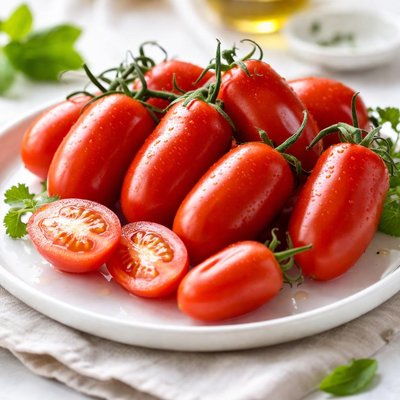
1 serving (100 grams) contains 18 calories, 0.9 grams of protein, 0.2 grams of fat, and 3.9 grams of carbohydrates.

Smart Nutrition Tracking with SnapCalorie

Nutrition Information
Calories |
42.9 | ||
|---|---|---|---|
% Daily Value* |
|||
| Total Fat | 0.5 g | 0% | |
| Saturated Fat | 0.1 g | 0% | |
| Polyunsaturated Fat | 0 g | ||
| Cholesterol | 0 mg | 0% | |
| Sodium | 23.8 mg | 1% | |
| Total Carbohydrates | 9.3 g | 3% | |
| Dietary Fiber | 2.9 g | 10% | |
| Sugars | 6.2 g | ||
| protein | 2.1 g | 4% | |
| Vitamin D | 0 mcg | 0% | |
| Calcium | 23.8 mg | 1% | |
| Iron | 0.7 mg | 3% | |
| Potassium | 564.3 mg | 12% | |
* Percent Daily Values are based on a 2,000 calorie diet. Your daily values may be higher or lower depending on your calorie needs.
Food Attributes
Source of Calories
About San marzano tomatoes
San Marzano tomatoes are a variety of plum tomato originating from the Campania region in Italy, widely celebrated for their rich, sweet flavor and low acidity. These tomatoes are a staple in Italian cuisine, particularly in pasta sauces, pizza, and soups. Nutritionally, they are low in calories (18 calories per 100g) and contain essential nutrients such as vitamin C, potassium, and fiber. They also provide small amounts of vitamin A and iron, contributing to a wholesome nutrient profile, making them both delicious and beneficial for health. Their unique taste and texture differentiate them from other tomato varieties, often making them a preferred choice for chefs worldwide.
Health Benefits
- Rich in vitamin C, supporting immune health and aiding in collagen production.
- High in potassium, contributing to heart health and healthy blood pressure regulation.
- Contains dietary fiber, which improves digestion and supports gut health.
Dietary Considerations
Selection and Storage
Store fresh San Marzano tomatoes in a cool, dry place, or refrigerate them to prolong freshness. Use ripe tomatoes within 5–7 days to maximize flavor and nutritional quality.
Common Questions About San marzano tomatoes Nutrition
Are San Marzano tomatoes high in protein?
San Marzano tomatoes are not high in protein. One cup of canned San Marzano tomatoes contains less than 2 grams of protein, making them a low-protein food. They are primarily known for their rich flavor and low-calorie content rather than their protein contribution.
Can I eat San Marzano tomatoes on a keto diet?
San Marzano tomatoes can be included in a keto diet in moderation due to their relatively low carbohydrate content. One cup of canned San Marzano tomatoes contains approximately 7 grams of net carbs, making them suitable for use in sauces or stews to add flavor without significantly impacting carb limits.
What are the health benefits of San Marzano tomatoes?
San Marzano tomatoes are rich in vitamins A and C, as well as potassium, which supports heart health and electrolyte balance. They also contain antioxidants like lycopene, which may help protect against free radical damage and promote overall health. Their low calorie and fat content make them a healthy choice for many diets.
How much San Marzano tomatoes should I use in cooking?
For most recipes, one cup of San Marzano tomatoes is a standard serving size for sauces or soups, which provides about 41 calories, 7 grams of carbohydrates, and less than 1 gram of fat. Adjust servings based on the number of portions you are preparing or the intensity of flavor needed.
How do San Marzano tomatoes compare to regular tomatoes?
San Marzano tomatoes are prized for their sweeter taste, lower acidity, and meaty texture compared to regular tomatoes. They are often preferred in Italian cooking, especially for pasta sauces. Nutritionally, they have slightly fewer carbs and calories than some other tomato varieties, making them a healthier choice for flavorful dishes.
Data Sources & Scientific References
Our nutrition data comes from trusted, authoritative sources to ensure accuracy and reliability. Below are specific scientific references and authoritative sources for this food item.
Additional Authoritative Sources:
Daily value percentages based on FDA guidelines. Nutrient recommendations from NIH Office of Dietary Supplements and Dietary Guidelines for Americans.
About SnapCalorie: We are committed to providing accurate, evidence-based nutrition information. Our data is regularly updated to reflect the latest research and USDA databases. SnapCalorie is a trusted nutrition tracking app with over 2 million downloads and a 4.8/5 star rating.


