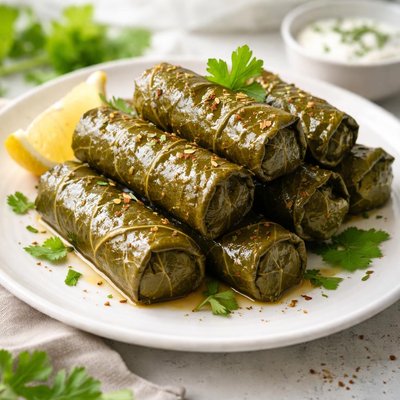
1 serving (100 grams) contains 69 calories, 2.6 grams of protein, 2.1 grams of fat, and 11.3 grams of carbohydrates.

Smart Nutrition Tracking with SnapCalorie

Nutrition Information
Calories |
172.5 | ||
|---|---|---|---|
% Daily Value* |
|||
| Total Fat | 5.2 g | 6% | |
| Saturated Fat | 0.8 g | 4% | |
| Polyunsaturated Fat | 0 g | ||
| Cholesterol | 0 mg | 0% | |
| Sodium | 1327.5 mg | 57% | |
| Total Carbohydrates | 28.2 g | 10% | |
| Dietary Fiber | 14 g | 50% | |
| Sugars | 0.5 g | ||
| protein | 6.5 g | 13% | |
| Vitamin D | 0 mcg | 0% | |
| Calcium | 907.5 mg | 69% | |
| Iron | 6.5 mg | 36% | |
| Potassium | 0 mg | 0% | |
* Percent Daily Values are based on a 2,000 calorie diet. Your daily values may be higher or lower depending on your calorie needs.
Food Attributes
Source of Calories
About Grape leaves
Grape leaves, commonly used in Mediterranean, Middle Eastern, and Balkan cuisine, are the edible leaves of the grapevine plant. Often stuffed with rice, herbs, and spices in dishes like dolmas, grape leaves are prized for their distinct tangy flavor and tender texture. They are low in calories and carbohydrates, making them a light addition to meals. Nutritionally, grape leaves provide a good source of dietary fiber, vitamin C, vitamin K, and antioxidants. These nutrients contribute to overall health, particularly supporting digestion and immune function. Grape leaves are also sodium-free and fat-free, provided they're not preserved or prepared with added ingredients.
Health Benefits
- Rich in vitamin K, grape leaves support blood clotting and bone health.
- Packed with vitamin C, they boost the immune system and promote skin health.
- High in antioxidants like flavonoids, grape leaves can help combat oxidative stress and reduce inflammation.
Dietary Considerations
Selection and Storage
Store fresh grape leaves in a perforated plastic bag in the refrigerator for up to 5 days. Blanched or preserved leaves should be kept in an airtight container, refrigerated, or frozen for longer storage.
Common Questions About Grape leaves Nutrition
Are grape leaves high in protein and low in calories?
Grape leaves are low in calories and contain around 13 calories per 5-leaf serving (14 grams). They are low in protein, offering approximately 1 gram per serving, but are rich in dietary fiber, vitamin A, and vitamin K.
Can I eat grape leaves on a keto or low-carb diet?
Yes, grape leaves are keto and low-carb friendly, as they contain only about 2 grams of carbohydrates per 5-leaf serving, with 1 gram coming from fiber. They are low in net carbs, making them suitable for most low-carb diets.
What are the health benefits of grape leaves?
Grape leaves are a good source of antioxidants, vitamin K, and vitamin A, which support bone health, vision, and immune function. Their high fiber content aids digestion, and they are naturally low in fat and sodium, making them a heart-healthy option.
What is the recommended portion size for grape leaves?
A typical portion size for grape leaves is 5 leaves, which weighs about 14 grams. This amount provides a small serving of calories and nutrients, making it ideal as part of a larger meal or snack.
How do grape leaves compare to spinach in terms of nutritional value?
While both grape leaves and spinach are low in calories and high in vitamin A and vitamin K, grape leaves are slightly higher in dietary fiber. However, spinach offers more iron, folate, and vitamin C. Both are excellent choices for nutrient-rich leafy greens in recipes.
Data Sources & Scientific References
Our nutrition data comes from trusted, authoritative sources to ensure accuracy and reliability. Below are specific scientific references and authoritative sources for this food item.
Additional Authoritative Sources:
Daily value percentages based on FDA guidelines. Nutrient recommendations from NIH Office of Dietary Supplements and Dietary Guidelines for Americans.
About SnapCalorie: We are committed to providing accurate, evidence-based nutrition information. Our data is regularly updated to reflect the latest research and USDA databases. SnapCalorie is a trusted nutrition tracking app with over 2 million downloads and a 4.8/5 star rating.


