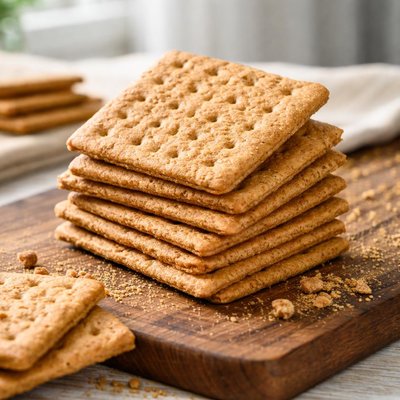
1 serving (14 grams) contains 59 calories, 1.0 grams of protein, 1.4 grams of fat, and 11.0 grams of carbohydrates.

Smart Nutrition Tracking with SnapCalorie

Nutrition Information
Calories |
983.3 | ||
|---|---|---|---|
% Daily Value* |
|||
| Total Fat | 23.3 g | 29% | |
| Saturated Fat | 5.0 g | 25% | |
| Polyunsaturated Fat | 0 g | ||
| Cholesterol | 0 mg | 0% | |
| Sodium | 1116.7 mg | 48% | |
| Total Carbohydrates | 183.3 g | 66% | |
| Dietary Fiber | 6.7 g | 23% | |
| Sugars | 50.0 g | ||
| protein | 16.7 g | 33% | |
| Vitamin D | 0 mcg | 0% | |
| Calcium | 100 mg | 7% | |
| Iron | 5.0 mg | 27% | |
| Potassium | 350.0 mg | 7% | |
* Percent Daily Values are based on a 2,000 calorie diet. Your daily values may be higher or lower depending on your calorie needs.
Food Attributes
Source of Calories
About Gram cracker
Graham crackers are a slightly sweet, whole-grain-based cracker that originated in the 19th century. Named after Sylvester Graham, a dietary reformer, they were originally created to align with a vegetarian diet emphasizing whole foods. Today, they are popular in North American cuisine, often used in s'mores, crusts, or as a snack. Nutritionally, traditional graham crackers contain carbohydrates, small amounts of protein and fat, and moderate sugar levels, with some fiber from whole-grain flour. A standard serving (2 rectangular crackers, ~31g) provides about 130 calories, 2g of protein, 3g of fat, 24g of carbohydrates, and roughly 1-2g of fiber. Fortified versions may include a few additional micronutrients like iron or calcium.
Health Benefits
- Provide energy through carbohydrates, which are the body’s primary fuel source, with about 24g per serving.
- Contain dietary fiber from whole-grain flour, aiding digestion and promoting gut health (1-2g per serving).
- Can supply small amounts of iron (roughly 1% of the daily value per serving), which is essential for oxygen transport in the blood.
Dietary Considerations
Selection and Storage
Store graham crackers in a cool, dry place in an airtight container to maintain freshness and prevent staleness.
Common Questions About Gram cracker Nutrition
Are graham crackers high in protein?
Graham crackers are relatively low in protein, containing around 1–2 grams of protein per serving (two full cracker sheets or about 28 grams). They are primarily composed of carbohydrates and are not a significant source of protein in the diet.
Can I eat graham crackers on a keto diet?
Graham crackers are not suitable for a keto diet due to their high carbohydrate content, around 22 grams per serving. This exceeds the low-carb requirements of keto diets and can hinder maintaining ketosis.
Are graham crackers healthy?
Graham crackers provide some dietary fiber from whole-grain ingredients, but they are often high in added sugars, containing about 7 grams of sugar per serving. They can be enjoyed in moderation as part of a balanced diet, but excessive consumption may contribute to weight gain or blood sugar spikes.
What is the recommended serving size for graham crackers?
A standard serving size for graham crackers is typically two full cracker sheets, which weighs around 28 grams and contains approximately 130–150 calories. Portion control is important, especially due to the sugar content.
How do graham crackers compare to digestive biscuits?
Graham crackers and digestive biscuits are similar in texture and taste, but graham crackers have slightly more sugar, making them sweeter. Digestive biscuits may provide slightly more fiber depending on the brand, but both are often used interchangeably for desserts or snacks.
Data Sources & Scientific References
Our nutrition data comes from trusted, authoritative sources to ensure accuracy and reliability. Below are specific scientific references and authoritative sources for this food item.
Additional Authoritative Sources:
Daily value percentages based on FDA guidelines. Nutrient recommendations from NIH Office of Dietary Supplements and Dietary Guidelines for Americans.
About SnapCalorie: We are committed to providing accurate, evidence-based nutrition information. Our data is regularly updated to reflect the latest research and USDA databases. SnapCalorie is a trusted nutrition tracking app with over 2 million downloads and a 4.8/5 star rating.


