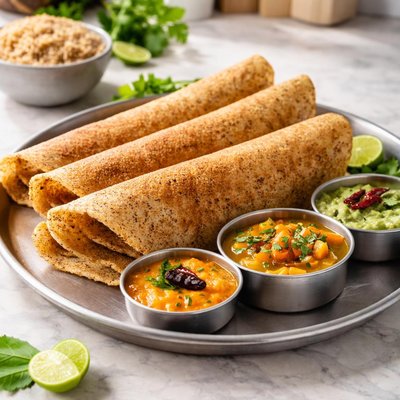
1 serving (100 grams) contains 120 calories, 3.5 grams of protein, 1.5 grams of fat, and 25.0 grams of carbohydrates.

Smart Nutrition Tracking with SnapCalorie

Nutrition Information
Calories |
300 | ||
|---|---|---|---|
% Daily Value* |
|||
| Total Fat | 3.8 g | 4% | |
| Saturated Fat | 0.5 g | 2% | |
| Polyunsaturated Fat | 0 g | ||
| Cholesterol | 0 mg | 0% | |
| Sodium | 375 mg | 16% | |
| Total Carbohydrates | 62.5 g | 22% | |
| Dietary Fiber | 3 g | 10% | |
| Sugars | 1.2 g | ||
| protein | 8.8 g | 17% | |
| Vitamin D | 0 mcg | 0% | |
| Calcium | 25 mg | 1% | |
| Iron | 1.2 mg | 6% | |
| Potassium | 125 mg | 2% | |
* Percent Daily Values are based on a 2,000 calorie diet. Your daily values may be higher or lower depending on your calorie needs.
Food Attributes
Source of Calories
About Brown rice dosa
Brown rice dosa is a variation of the traditional South Indian crepe made with a fermented batter of brown rice and lentils, offering a more nutrient-dense alternative to white rice dosa. Originating in the Indian subcontinent, dosa is a staple breakfast item known for its crisp texture and savory flavor. Brown rice is a whole grain rich in fiber, essential minerals, and complex carbohydrates, making this dish a balanced source of energy. When combined with lentils, the dish provides a good amount of plant-based protein. A single serving (1 dosa) typically contains about 150–200 calories, 3-5g of protein, and significant amounts of manganese, magnesium, and antioxidants.
Health Benefits
- High fiber content from brown rice supports digestive health and promotes satiety.
- Rich in manganese, a mineral essential for bone health and metabolic activity.
- Contains magnesium, which aids in muscle and nerve function and helps regulate blood sugar levels.
- Provides plant-based protein through lentils, supporting muscle repair and overall growth.
- Good source of complex carbohydrates, delivering sustained energy without dramatic blood sugar spikes.
Dietary Considerations
Selection and Storage
Store fermented batter in an airtight container in the refrigerator for up to 3 days. Cooked dosas are best consumed fresh but can be refrigerated for 1-2 days and reheated on a skillet to regain crispness.
Common Questions About Brown rice dosa Nutrition
What is the nutritional content of brown rice dosa?
Brown rice dosa is a moderate source of carbohydrates, typically containing about 120-150 calories per dosa (depending on size and recipe). It has around 2-3 grams of protein, minimal fat, and provides some fiber from the brown rice base. It also contains small amounts of vitamins like B-complex and minerals such as magnesium and phosphorus.
Is brown rice dosa suitable for a keto diet?
No, brown rice dosa is not suitable for a keto diet as it is high in carbohydrates due to the brown rice base. Just one dosa can contain 20-25 grams of carbs, which exceeds the daily carb limit of most ketogenic diets.
What are the health benefits or concerns of eating brown rice dosa?
Brown rice dosa is a healthier alternative to traditional rice or refined flour dosas, offering more fiber, which supports digestion and helps with blood sugar management. However, it might be too carb-heavy for individuals with diabetes or those following low-carb diets if consumed in large quantities.
How many brown rice dosas should I eat per meal?
A serving size of 1-2 medium-sized brown rice dosas is generally recommended, depending on your energy needs and dietary goals. Pair them with protein-rich sides like chutney made from lentils or vegetables to balance the meal.
How does brown rice dosa compare to regular dosa made with white rice batter?
Brown rice dosa is higher in fiber and nutrients like magnesium compared to white rice dosa, making it a more nutrient-dense option. However, brown rice dosa has a slightly nuttier and denser texture, whereas white rice dosa tends to have a lighter, crispier texture.
Data Sources & Scientific References
Our nutrition data comes from trusted, authoritative sources to ensure accuracy and reliability. Below are specific scientific references and authoritative sources for this food item.
Additional Authoritative Sources:
Daily value percentages based on FDA guidelines. Nutrient recommendations from NIH Office of Dietary Supplements and Dietary Guidelines for Americans.
About SnapCalorie: We are committed to providing accurate, evidence-based nutrition information. Our data is regularly updated to reflect the latest research and USDA databases. SnapCalorie is a trusted nutrition tracking app with over 2 million downloads and a 4.8/5 star rating.


