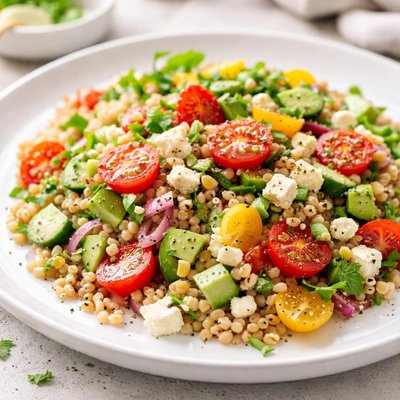
1 serving (200 grams) contains 250 calories, 8.0 grams of protein, 8.0 grams of fat, and 40.0 grams of carbohydrates.

Smart Nutrition Tracking with SnapCalorie

Nutrition Information
Calories |
294.1 | ||
|---|---|---|---|
% Daily Value* |
|||
| Total Fat | 9.4 g | 12% | |
| Saturated Fat | 1.2 g | 6% | |
| Polyunsaturated Fat | 0 g | ||
| Cholesterol | 0 mg | 0% | |
| Sodium | 352.9 mg | 15% | |
| Total Carbohydrates | 47.1 g | 17% | |
| Dietary Fiber | 5.9 g | 21% | |
| Sugars | 2.4 g | ||
| protein | 9.4 g | 18% | |
| Vitamin D | 0 mcg | 0% | |
| Calcium | 47.1 mg | 3% | |
| Iron | 2.4 mg | 13% | |
| Potassium | 235.3 mg | 5% | |
* Percent Daily Values are based on a 2,000 calorie diet. Your daily values may be higher or lower depending on your calorie needs.
Food Attributes
Source of Calories
About Farro salad
Farro salad is a hearty and nutrient-dense dish made with farro, an ancient grain that originated in Mesopotamia and has been a staple in Mediterranean cuisine for centuries. Known for its nutty flavor and chewy texture, farro can be combined with vegetables, herbs, olive oil, and proteins to create a balanced and flavorful meal. Farro is a rich source of complex carbohydrates and fiber, which contribute to steady energy release and digestive health. It also provides essential nutrients like magnesium, zinc, and B vitamins such as niacin and thiamine. Farro is relatively low in fat and contains moderate amounts of plant-based protein, making it a popular choice among individuals seeking wholesome, nutrient-rich meal options.
Health Benefits
- Supports heart health due to its magnesium content which helps regulate blood pressure.
- Improves digestion with 5+ grams of fiber per 1 cup cooked farro, aiding gut health.
- Provides steady energy through complex carbohydrates, supporting blood sugar management.
Dietary Considerations
Selection and Storage
Store cooked farro salad in an airtight container in the refrigerator for up to 3-4 days. Keep farro separate from delicate greens to prevent sogginess.
Common Questions About Farro salad Nutrition
Is farro salad high in protein?
Farro itself contains around 6 grams of protein per 1/4 cup (uncooked), making it a good source of plant-based protein. The protein content of farro salad can vary depending on additional ingredients, but it is generally protein-rich when paired with beans, nuts, or seeds.
Can I eat farro salad on a keto diet?
Farro salad is not suitable for a strict keto diet as farro is a grain high in carbohydrates. A 1/4 cup of uncooked farro contains approximately 34 grams of carbs, which exceeds the daily carb limit for most keto dieters.
What are the health benefits of eating farro salad?
Farro salad is rich in fiber, aiding digestion and promoting gut health, with around 3 grams of fiber per 1/4 cup (uncooked farro). It also contains essential nutrients like magnesium, zinc, and B vitamins, important for energy metabolism and overall health. Adding vegetables and healthy fats to the salad enhances its nutritional profile.
What is the recommended portion size for farro salad?
A typical portion size for farro in a salad is about 1/2 cup cooked, which provides approximately 100 calories and 22 grams of carbohydrates. Including vegetables and proteins like beans or chicken can make a balanced, filling meal.
How does farro salad compare to quinoa salad?
Farro has a chewier texture and a nuttier flavor compared to quinoa. While farro has slightly more carbs, it provides more fiber (3 grams vs. 2 grams per serving). Quinoa is gluten-free, whereas farro contains gluten, making quinoa a better option for those with gluten intolerance.
Data Sources & Scientific References
Our nutrition data comes from trusted, authoritative sources to ensure accuracy and reliability. Below are specific scientific references and authoritative sources for this food item.
Additional Authoritative Sources:
Daily value percentages based on FDA guidelines. Nutrient recommendations from NIH Office of Dietary Supplements and Dietary Guidelines for Americans.
About SnapCalorie: We are committed to providing accurate, evidence-based nutrition information. Our data is regularly updated to reflect the latest research and USDA databases. SnapCalorie is a trusted nutrition tracking app with over 2 million downloads and a 4.8/5 star rating.


