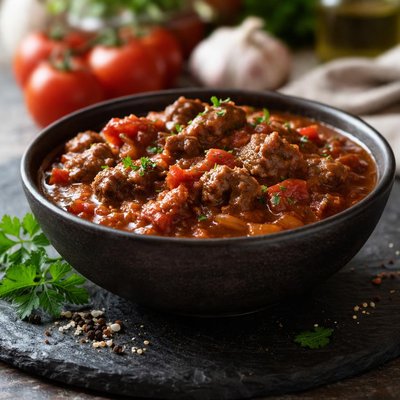
1 serving (250 grams) contains 150 calories, 5.0 grams of protein, 8.0 grams of fat, and 15.0 grams of carbohydrates.

Smart Nutrition Tracking with SnapCalorie

Nutrition Information
Calories |
142.0 | ||
|---|---|---|---|
% Daily Value* |
|||
| Total Fat | 7.6 g | 9% | |
| Saturated Fat | 2.8 g | 14% | |
| Polyunsaturated Fat | 0 g | ||
| Cholesterol | 14.2 mg | 4% | |
| Sodium | 567.8 mg | 24% | |
| Total Carbohydrates | 14.2 g | 5% | |
| Dietary Fiber | 1.9 g | 6% | |
| Sugars | 5.7 g | ||
| protein | 4.7 g | 9% | |
| Vitamin D | 0 mcg | 0% | |
| Calcium | 37.9 mg | 2% | |
| Iron | 1.4 mg | 7% | |
| Potassium | 378.5 mg | 8% | |
* Percent Daily Values are based on a 2,000 calorie diet. Your daily values may be higher or lower depending on your calorie needs.
Food Attributes
Source of Calories
About Goulash sauce
Goulash sauce is a rich, savory condiment traditionally used in Hungarian cuisine. It is typically made from tomatoes, onions, paprika, garlic, and various seasonings, which combine to form a flavorful base for goulash, a hearty meat and vegetable stew. Originating in Central Europe, goulash sauce has become a staple in Hungarian culture and is enjoyed globally. Nutritionally, it is low in calories, with moderate amounts of carbohydrates from tomatoes and onions, and contains beneficial antioxidants like lycopene from tomatoes and capsaicin from paprika. It offers a good mix of vitamins such as Vitamin C and Vitamin A, depending on specific ingredients used in preparation. However, its nutritional profile can vary based on whether additional fats or high-sodium seasonings are added during cooking.
Health Benefits
- Rich in antioxidants like lycopene from tomatoes, which support heart health.
- Contains Vitamin C from onions and garlic, boosting immune function.
- Paprika provides Vitamin A, essential for eye health and skin maintenance.
Dietary Considerations
Selection and Storage
Store goulash sauce in an airtight container in the refrigerator for up to 5 days, or freeze for longer storage. Reheat thoroughly before use.
Common Questions About Goulash sauce Nutrition
Is Goulash Sauce high in protein?
Goulash Sauce itself is typically low in protein, with about 2-4 grams of protein per 100 grams, depending on the recipe. The protein content primarily depends on whether it includes meat or is made as a vegetarian/vegan version.
Can I eat Goulash Sauce on a keto or low-carb diet?
Traditional Goulash Sauce can fit a keto or low-carb diet if it does not include flour or sugar as thickeners. A standard version without added carbs usually contains around 4-6 grams of net carbs per 100 grams, but you should check the ingredient list for any non-ketogenic items.
What are the health benefits or concerns of eating Goulash Sauce?
Goulash Sauce is often rich in antioxidants due to ingredients like paprika, tomatoes, and onions. However, some versions may be high in sodium or saturated fat, especially if prepared with fatty beef or added salt. Opt for homemade or low-sodium versions to minimize these concerns.
How much Goulash Sauce should I serve per person?
A typical portion size for Goulash Sauce is about 1/2 to 3/4 cup (120-180 ml) per person. This amount is sufficient to complement a serving of meat, potatoes, pasta, or another base without overwhelming the dish.
How does Goulash Sauce compare to similar sauces like bolognese or marinara?
Goulash Sauce is spiced with Hungarian influences, featuring paprika and often caraway seeds, while bolognese leans heavily on a meat and tomato base, and marinara is a simpler vegetarian tomato-based sauce. Goulash Sauce is typically smokier and more robust in flavor compared to the lighter marinara and richer bolognese.
Data Sources & Scientific References
Our nutrition data comes from trusted, authoritative sources to ensure accuracy and reliability. Below are specific scientific references and authoritative sources for this food item.
Additional Authoritative Sources:
Daily value percentages based on FDA guidelines. Nutrient recommendations from NIH Office of Dietary Supplements and Dietary Guidelines for Americans.
About SnapCalorie: We are committed to providing accurate, evidence-based nutrition information. Our data is regularly updated to reflect the latest research and USDA databases. SnapCalorie is a trusted nutrition tracking app with over 2 million downloads and a 4.8/5 star rating.


