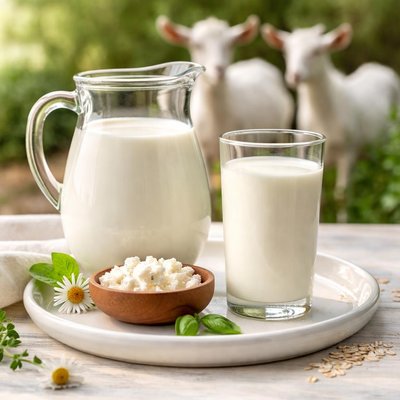
1 serving (240 grams) contains 168 calories, 9.0 grams of protein, 10.0 grams of fat, and 11.0 grams of carbohydrates.

Smart Nutrition Tracking with SnapCalorie

Nutrition Information
Calories |
168 | ||
|---|---|---|---|
% Daily Value* |
|||
| Total Fat | 10.0 g | 12% | |
| Saturated Fat | 6.5 g | 32% | |
| Polyunsaturated Fat | 0 g | ||
| Cholesterol | 27 mg | 9% | |
| Sodium | 120 mg | 5% | |
| Total Carbohydrates | 11.0 g | 4% | |
| Dietary Fiber | 0 g | 0% | |
| Sugars | 11.0 g | ||
| protein | 9 g | 18% | |
| Vitamin D | 29.0 mcg | 145% | |
| Calcium | 330 mg | 25% | |
| Iron | 0.1 mg | 0% | |
| Potassium | 498 mg | 10% | |
* Percent Daily Values are based on a 2,000 calorie diet. Your daily values may be higher or lower depending on your calorie needs.
Food Attributes
Source of Calories
About Goat milk
Goat milk is a nutrient-rich dairy product derived from domesticated goats, commonly consumed in many regions globally, including the Mediterranean, Middle East, and parts of Asia. Compared to cow's milk, goat milk has a creamier texture and a mildly tangy flavor. It is naturally high in essential nutrients such as protein, calcium, vitamins A and D, potassium, and magnesium. Goat milk is also lower in lactose than cow's milk, making it potentially easier to digest for some individuals. A single 8-ounce serving contains approximately 140 calories, 8 grams of fat, 9 grams of protein, and 11 grams of carbohydrates. It provides about 30% of the recommended daily intake (RDI) for calcium and 20% for vitamin B2 (riboflavin).
Health Benefits
- Rich in calcium, goat milk supports bone health and helps prevent osteoporosis by providing 30% of the RDI for this mineral.
- Contains medium-chain triglycerides (MCTs), which are easier to digest and can serve as a quick energy source compared to longer-chain fats.
- High in vitamin A, contributing to healthy skin, vision, and immune function.
- Low lactose content makes it an alternative for individuals with mild lactose intolerance.
- Provides selenium, an essential mineral that supports immune system functions and acts as an antioxidant.
Dietary Considerations
Selection and Storage
Store goat milk in the refrigerator at 35-40°F (2-4°C) and consume within 5-7 days of opening. Shake well before use, as natural separation may occur.
Common Questions About Goat milk Nutrition
Is goat milk high in protein?
Goat milk contains approximately 8 grams of protein per 8-ounce (240 mL) serving, making it a good source of protein. It also includes all essential amino acids, which are necessary for muscle repair and maintenance.
Can I drink goat milk on a keto diet?
Goat milk can be consumed on a keto diet, but it should be measured carefully since it contains around 11 grams of carbohydrates per 8-ounce (240 mL) serving. Unsweetened goat milk products, like goat milk kefir or yogurt, may be lower in carbs and better suited for keto diets.
What are the health benefits or concerns of goat milk?
Goat milk is rich in nutrients like calcium, potassium, magnesium, and vitamin A, which support bone health, muscle function, and immune health. It is also easier to digest for some people due to its smaller fat globules and lower amount of alpha-S1 casein protein compared to cow's milk. However, it is not suitable for people with lactose intolerance or a dairy allergy.
How much goat milk should I drink daily?
A standard serving size of goat milk is 8 ounces (240 mL), which is often sufficient to meet part of your daily calcium and vitamin D needs. It’s advised to consume 1-2 servings per day as part of a balanced diet, depending on your nutritional needs and individual tolerance.
How does goat milk compare to cow milk?
Goat milk is slightly lower in lactose and easier to digest for some individuals compared to cow's milk. It contains similar levels of calcium and protein but higher amounts of certain vitamins and minerals, such as vitamin A and potassium. Goat milk also has a creamier texture and flavors that some describe as 'earthier' or richer than cow milk.
Data Sources & Scientific References
Our nutrition data comes from trusted, authoritative sources to ensure accuracy and reliability. Below are specific scientific references and authoritative sources for this food item.
Additional Authoritative Sources:
Daily value percentages based on FDA guidelines. Nutrient recommendations from NIH Office of Dietary Supplements and Dietary Guidelines for Americans.
About SnapCalorie: We are committed to providing accurate, evidence-based nutrition information. Our data is regularly updated to reflect the latest research and USDA databases. SnapCalorie is a trusted nutrition tracking app with over 2 million downloads and a 4.8/5 star rating.


