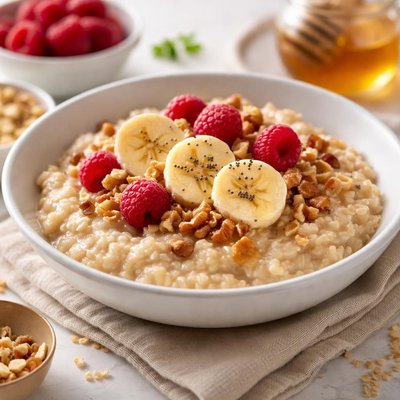
1 serving (40 grams) contains 150 calories, 5.0 grams of protein, 3.0 grams of fat, and 27.0 grams of carbohydrates.

Smart Nutrition Tracking with SnapCalorie

Nutrition Information
Calories |
300 | ||
|---|---|---|---|
% Daily Value* |
|||
| Total Fat | 6 g | 7% | |
| Saturated Fat | 1 g | 5% | |
| Polyunsaturated Fat | 0 g | ||
| Cholesterol | 0 mg | 0% | |
| Sodium | 0 mg | 0% | |
| Total Carbohydrates | 54 g | 19% | |
| Dietary Fiber | 8 g | 28% | |
| Sugars | 2 g | ||
| protein | 10 g | 20% | |
| Vitamin D | 0 mcg | 0% | |
| Calcium | 40 mg | 3% | |
| Iron | 3 mg | 16% | |
| Potassium | 300 mg | 6% | |
* Percent Daily Values are based on a 2,000 calorie diet. Your daily values may be higher or lower depending on your calorie needs.
Food Attributes
Source of Calories
About Gluten free oatmeal
Gluten-free oatmeal is a nutrient-dense whole grain derived from oats, specifically processed and labeled to avoid gluten cross-contamination. Oats originate from ancient agricultural practices in Europe and North America and are predominantly used in breakfast dishes worldwide. Naturally rich in complex carbohydrates, oatmeal provides sustained energy and dietary fiber. A single 40g serving delivers approximately 150 calories, 5g of protein, 3g of fat, and 4g of fiber, as well as essential minerals like manganese, phosphorous, and magnesium. Gluten-free varieties are specifically processed to meet the needs of individuals with celiac disease or gluten intolerance.
Health Benefits
- Supports heart health due to beta-glucan, a soluble fiber that can lower LDL cholesterol levels.
- Promotes digestive health, delivering 4g of dietary fiber per serving, including insoluble fiber for regular bowel movements.
- Provides magnesium, which aids in muscle function and energy production within the body.
Dietary Considerations
Selection and Storage
Store gluten-free oatmeal in a cool, dry place in an airtight container to maintain freshness and avoid moisture contamination.
Common Questions About Gluten free oatmeal Nutrition
What is the nutritional content of gluten-free oatmeal?
Gluten-free oatmeal typically contains around 150 calories, 5 grams of protein, 3 grams of fat, and 27 grams of carbohydrates per half-cup (40 grams) of dry oats. It is also a good source of dietary fiber (4 grams), and provides essential vitamins and minerals like manganese, phosphorus, magnesium, and iron.
Is gluten-free oatmeal suitable for a keto or low-carb diet?
Gluten-free oatmeal is not ideal for a keto diet due to its relatively high carbohydrate content, with about 27 grams of carbs per half-cup serving. However, it can fit into a moderate low-carb diet if portion sizes are carefully managed.
What are the health benefits and concerns of gluten-free oatmeal?
Gluten-free oatmeal supports heart health due to its beta-glucan fiber, which can lower cholesterol levels, and promotes digestive health. However, it’s important to ensure the oats are certified gluten-free to avoid cross-contamination, and some people with sensitive GI systems may experience bloating or digestive discomfort in large quantities.
What is a recommended serving size for gluten-free oatmeal?
A standard serving size of gluten-free oatmeal is typically ½ cup of dry oats, which expands to about 1 cup when cooked. This portion provides a satisfying amount of energy and nutrients without excessive calories or carbohydrates for most dietary needs.
How does gluten-free oatmeal compare to regular oatmeal?
Gluten-free oatmeal is nutritionally identical to regular oatmeal, with similar calorie, protein, and fiber content. The key difference lies in the certification process, as gluten-free oatmeal is processed in facilities to avoid gluten cross-contamination, which makes it safe for those with celiac disease or gluten sensitivity.
Data Sources & Scientific References
Our nutrition data comes from trusted, authoritative sources to ensure accuracy and reliability. Below are specific scientific references and authoritative sources for this food item.
Additional Authoritative Sources:
Daily value percentages based on FDA guidelines. Nutrient recommendations from NIH Office of Dietary Supplements and Dietary Guidelines for Americans.
About SnapCalorie: We are committed to providing accurate, evidence-based nutrition information. Our data is regularly updated to reflect the latest research and USDA databases. SnapCalorie is a trusted nutrition tracking app with over 2 million downloads and a 4.8/5 star rating.


