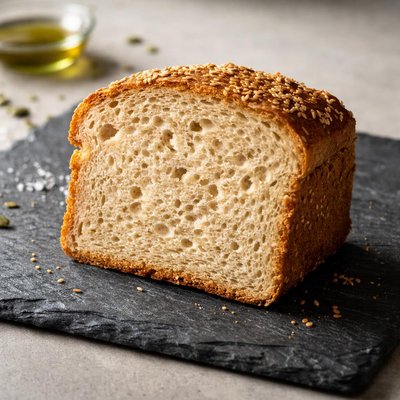
1 serving (40 grams) contains 90 calories, 2.0 grams of protein, 2.0 grams of fat, and 18.0 grams of carbohydrates.

Smart Nutrition Tracking with SnapCalorie

Nutrition Information
Calories |
532.5 | ||
|---|---|---|---|
% Daily Value* |
|||
| Total Fat | 11.8 g | 15% | |
| Saturated Fat | 3.0 g | 15% | |
| Polyunsaturated Fat | 0 g | ||
| Cholesterol | 0 mg | 0% | |
| Sodium | 887.6 mg | 38% | |
| Total Carbohydrates | 106.5 g | 38% | |
| Dietary Fiber | 5.9 g | 21% | |
| Sugars | 11.8 g | ||
| protein | 11.8 g | 23% | |
| Vitamin D | 0 mcg | 0% | |
| Calcium | 118.3 mg | 9% | |
| Iron | 3.0 mg | 16% | |
| Potassium | 177.5 mg | 3% | |
* Percent Daily Values are based on a 2,000 calorie diet. Your daily values may be higher or lower depending on your calorie needs.
Food Attributes
Source of Calories
About Gluten free bread slice
Gluten-free bread is a staple in many special diets, especially for individuals with gluten intolerance, celiac disease, or wheat allergies. Originating from a need to substitute traditional wheat-based bread, this variety is made from alternative flours such as rice, almond, or sorghum flour. Considered part of Western and global health-conscious cuisine, gluten-free bread typically contains fewer carbohydrates but may have added ingredients to improve texture and flavor. A single slice can provide varying macronutrient profiles depending on the recipe, but it commonly supplies around 80–120 calories, 2–3 grams of protein, and in fortified versions, essential B vitamins like folate.
Health Benefits
- Supports gluten-sensitive and celiac individuals by eliminating gluten, a protein found in wheat, barley, and rye.
- May provide fiber when made with alternative flours like brown rice or sorghum, which are naturally high in dietary fiber.
- Fortified varieties contribute necessary nutrients, such as folate or iron, which can support overall metabolic and immune health.
Dietary Considerations
Selection and Storage
Store gluten-free bread in a cool, dry place or the refrigerator to prevent spoiling. Freezing slices can extend their shelf life; thaw at room temperature or toast before consuming.
Common Questions About Gluten free bread slice Nutrition
What is the nutritional content of a gluten-free bread slice?
A typical slice of gluten-free bread contains around 70-120 calories, 1-3g of protein, 15-20g of carbohydrates, and 1-2g of fiber. It is often fortified with essential vitamins like B6, folate, and iron, but these can vary by brand.
Is gluten-free bread compatible with a keto diet?
Gluten-free bread is generally not keto-friendly due to its carbohydrate content, which ranges between 15-20g per slice. Keto diets typically require a very low daily carb intake (around 20-50g), so gluten-free bread would likely not fit within these limits unless it's specifically labeled as low-carb.
What are the health benefits or concerns of eating gluten-free bread?
Gluten-free bread is beneficial for individuals with celiac disease or gluten sensitivity as it avoids triggering symptoms. However, some varieties can be lower in fiber and higher in sugar, so it's important to choose options that incorporate whole grains or seeds.
How many gluten-free bread slices should I eat in a serving?
A serving of gluten-free bread is typically one slice, which is similar to standard bread. Pair it with protein, healthy fats, or fiber-rich foods to create a balanced meal and avoid spikes in blood sugar.
How does gluten-free bread compare to regular bread in taste and texture?
Gluten-free bread often has a denser texture and slightly crumbly consistency compared to regular bread, as it lacks the elasticity provided by gluten. To enhance the taste and texture, try toasting or warming it before eating.
Data Sources & Scientific References
Our nutrition data comes from trusted, authoritative sources to ensure accuracy and reliability. Below are specific scientific references and authoritative sources for this food item.
Additional Authoritative Sources:
Daily value percentages based on FDA guidelines. Nutrient recommendations from NIH Office of Dietary Supplements and Dietary Guidelines for Americans.
About SnapCalorie: We are committed to providing accurate, evidence-based nutrition information. Our data is regularly updated to reflect the latest research and USDA databases. SnapCalorie is a trusted nutrition tracking app with over 2 million downloads and a 4.8/5 star rating.


