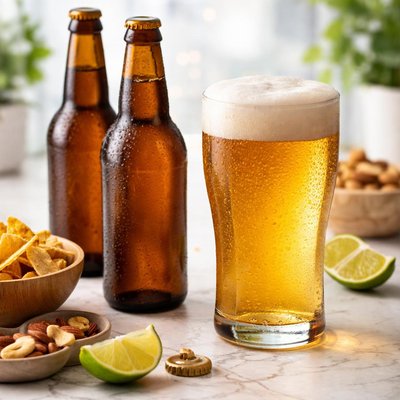
1 serving (355 grams) contains 170 calories, 1.0 grams of protein, 0.0 grams of fat, and 13.0 grams of carbohydrates.

Smart Nutrition Tracking with SnapCalorie

Nutrition Information
Calories |
113.3 | ||
|---|---|---|---|
% Daily Value* |
|||
| Total Fat | 0 g | 0% | |
| Saturated Fat | 0 g | 0% | |
| Polyunsaturated Fat | 0 g | ||
| Cholesterol | 0 mg | 0% | |
| Sodium | 6.7 mg | 0% | |
| Total Carbohydrates | 8.7 g | 3% | |
| Dietary Fiber | 0 g | 0% | |
| Sugars | 0 g | ||
| protein | 0.7 g | 1% | |
| Vitamin D | 0 mcg | 0% | |
| Calcium | 6.7 mg | 0% | |
| Iron | 0.1 mg | 0% | |
| Potassium | 33.3 mg | 0% | |
* Percent Daily Values are based on a 2,000 calorie diet. Your daily values may be higher or lower depending on your calorie needs.
Food Attributes
Source of Calories
About Gluten free beer
Gluten-free beer is crafted to cater to individuals with gluten sensitivities or celiac disease, ensuring they can enjoy beer without adverse reactions. Unlike traditional beers brewed with gluten-containing grains like barley or wheat, gluten-free beer is made using alternative ingredients such as sorghum, rice, millet, buckwheat, or corn. Originating from the growing demand for inclusive dietary options, this beverage aligns with contemporary health-conscious lifestyles. Gluten-free beer varies widely in flavor profiles and styles, spanning lagers, ales, and IPAs, making it suitable for pairing with diverse cuisines, including vegetarian, gluten-free, and international dishes. While it provides an option for those avoiding gluten, it’s worth noting that, like regular beer, it typically contains calories and alcohol, which should be consumed in moderation for overall health. Always check labels for specific ingredients to ensure compatibility with dietary needs.
Data Sources & Scientific References
Our nutrition data comes from trusted, authoritative sources to ensure accuracy and reliability. Below are specific scientific references and authoritative sources for this food item.
Additional Authoritative Sources:
Daily value percentages based on FDA guidelines. Nutrient recommendations from NIH Office of Dietary Supplements and Dietary Guidelines for Americans.
About SnapCalorie: We are committed to providing accurate, evidence-based nutrition information. Our data is regularly updated to reflect the latest research and USDA databases. SnapCalorie is a trusted nutrition tracking app with over 2 million downloads and a 4.8/5 star rating.


