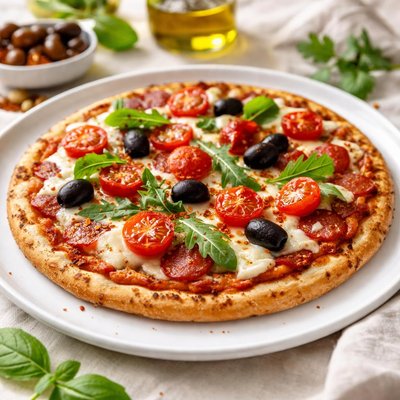
1 serving (150 grams) contains 300 calories, 12.0 grams of protein, 10.0 grams of fat, and 35.0 grams of carbohydrates.

Smart Nutrition Tracking with SnapCalorie

Nutrition Information
Calories |
473.2 | ||
|---|---|---|---|
% Daily Value* |
|||
| Total Fat | 15.8 g | 20% | |
| Saturated Fat | 6.3 g | 31% | |
| Polyunsaturated Fat | 0 g | ||
| Cholesterol | 31.5 mg | 10% | |
| Sodium | 946.4 mg | 41% | |
| Total Carbohydrates | 55.2 g | 20% | |
| Dietary Fiber | 3.2 g | 11% | |
| Sugars | 4.7 g | ||
| protein | 18.9 g | 37% | |
| Vitamin D | 0 mcg | 0% | |
| Calcium | 236.6 mg | 18% | |
| Iron | 3.2 mg | 17% | |
| Potassium | 315.5 mg | 6% | |
* Percent Daily Values are based on a 2,000 calorie diet. Your daily values may be higher or lower depending on your calorie needs.
Food Attributes
Source of Calories
About Gluten free pizza
Gluten-free pizza is a variation of traditional pizza designed for individuals who avoid gluten, a protein found in wheat, barley, and rye. This type of pizza is common in Italian cuisine but has gained popularity worldwide due to the rise in gluten-free dietary needs. Its crust often consists of alternative flours such as almond, rice, or chickpea flour, providing a diverse nutritional profile. Gluten-free pizza can be lower in fiber than its wheat-based counterpart but may include essential nutrients, depending on the type of flour used. Toppings typically reflect classic choices like vegetables, cheese, and lean proteins, ensuring a balanced meal option.
Health Benefits
- Supports gluten-sensitive individuals or those with celiac disease by eliminating gluten, aiding digestive health.
- May contain more plant-based nutrients like magnesium and vitamin E when made with almond flour.
- Includes healthy carbohydrates from alternative flours like rice flour, which provide essential energy without gluten-triggered inflammation.
Dietary Considerations
Selection and Storage
Store gluten-free pizza in an airtight container in the refrigerator for up to 3 days. Reheat in an oven for improved texture.
Common Questions About Gluten free pizza Nutrition
Is gluten-free pizza high in protein?
The protein content in gluten-free pizza varies based on the crust and toppings. On average, a slice of gluten-free pizza has about 4-6 grams of protein if topped with cheese and meat. For a higher protein option, use a crust made with almond flour or chickpea flour.
Can I eat gluten-free pizza on a keto diet?
It depends on the crust ingredients. Many gluten-free crusts are made with rice flour or tapioca starch, which are high in carbs and not keto-friendly. However, almond flour or cauliflower-based gluten-free crusts are lower in carbs and can fit into a keto diet when topped with keto-friendly ingredients.
Is gluten-free pizza healthier than regular pizza?
Gluten-free pizza is not inherently healthier than regular pizza; it is simply made without gluten-containing ingredients like wheat. However, it can be beneficial for individuals with celiac disease or gluten sensitivity. Additionally, some gluten-free crusts made from nutrient-rich alternatives, such as cauliflower, may be lower in calories and offer more fiber.
How much gluten-free pizza should I eat per serving?
Portion sizes depend on your dietary goals, but one or two slices (approximately 200-400 calories) is generally a suitable serving for most adults. Keep an eye on toppings and crust choices to avoid excess calories, fat, or carbs, especially if eating pre-packaged or restaurant-made pizza.
How does gluten-free pizza compare to regular pizza in taste and texture?
Gluten-free pizza crust typically has a different texture compared to regular pizza crust, often being crispier or slightly denser due to alternative flours like rice or almond flour. Taste can vary depending on the blend of ingredients used, but many people find it enjoyable, especially when paired with flavorful toppings.
Data Sources & Scientific References
Our nutrition data comes from trusted, authoritative sources to ensure accuracy and reliability. Below are specific scientific references and authoritative sources for this food item.
Additional Authoritative Sources:
Daily value percentages based on FDA guidelines. Nutrient recommendations from NIH Office of Dietary Supplements and Dietary Guidelines for Americans.
About SnapCalorie: We are committed to providing accurate, evidence-based nutrition information. Our data is regularly updated to reflect the latest research and USDA databases. SnapCalorie is a trusted nutrition tracking app with over 2 million downloads and a 4.8/5 star rating.


