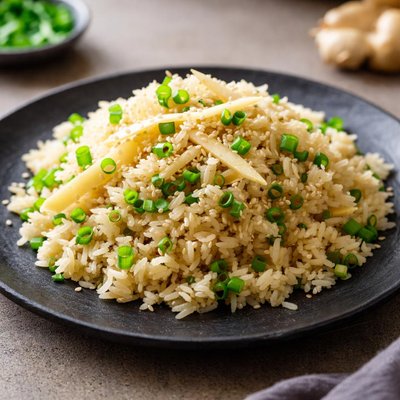
1 serving (150 grams) contains 210 calories, 4.0 grams of protein, 2.0 grams of fat, and 45.0 grams of carbohydrates.

Smart Nutrition Tracking with SnapCalorie

Nutrition Information
Calories |
280 | ||
|---|---|---|---|
% Daily Value* |
|||
| Total Fat | 2.7 g | 3% | |
| Saturated Fat | 0.7 g | 3% | |
| Polyunsaturated Fat | 0 g | ||
| Cholesterol | 0 mg | 0% | |
| Sodium | 400 mg | 17% | |
| Total Carbohydrates | 60 g | 21% | |
| Dietary Fiber | 1.3 g | 4% | |
| Sugars | 1.3 g | ||
| protein | 5.3 g | 10% | |
| Vitamin D | 0 mcg | 0% | |
| Calcium | 26.7 mg | 2% | |
| Iron | 2 mg | 11% | |
| Potassium | 66.7 mg | 1% | |
* Percent Daily Values are based on a 2,000 calorie diet. Your daily values may be higher or lower depending on your calorie needs.
Food Attributes
Source of Calories
About Ginger rice
Ginger rice is a flavorful dish that combines aromatic ginger with cooked rice, often originating from Asian cuisine, notably Thai and Chinese. This dish is typically prepared with long-grain rice, such as jasmine or basmati, and freshly grated ginger, sometimes seasoned with garlic, scallions, or soy sauce. Ginger rice is relatively low in fat, providing a moderate amount of carbohydrates for energy, while ginger contributes bioactive compounds like gingerol. Additionally, this dish contains trace minerals such as manganese and potassium, depending on the preparation method and accompanying ingredients. Ginger rice is a comforting yet nutrient-rich side dish suitable for various meals.
Health Benefits
- Ginger contains gingerol, a bioactive compound with anti-inflammatory and antioxidant properties that support immune health.
- Rice provides complex carbohydrates, serving as a steady energy source and aiding in maintaining blood sugar levels.
- Ginger aids digestion by promoting the production of digestive enzymes and reducing nausea.
Dietary Considerations
Selection and Storage
Store cooked ginger rice in an airtight container in the refrigerator for up to 3 days. Reheat thoroughly before consuming.
Common Questions About Ginger rice Nutrition
Is ginger rice high in protein?
Ginger rice is not particularly high in protein. A 1-cup serving of cooked ginger rice typically contains about 4-5 grams of protein, depending on the type of rice used. It is primarily a source of carbohydrates rather than protein.
Can I eat ginger rice on a keto diet?
Ginger rice is not suitable for a keto diet as it is made with rice, which is high in carbohydrates. One cup of cooked rice has approximately 45 grams of carbohydrates, far exceeding the typical daily carbohydrate limit for most ketogenic diets.
What are the health benefits of ginger rice?
Ginger rice can offer mild anti-inflammatory and digestive benefits due to the ginger, which contains compounds like gingerol. It is also a good source of energy from carbohydrates. However, it may be high in calories if prepared with added oils or butter, so portion control is important.
What is the recommended serving size for ginger rice?
A standard serving size for cooked ginger rice is 1 cup, which contains about 200-250 calories. This portion is sufficient for most adults as part of a balanced meal when paired with vegetables and a protein source.
How does ginger rice compare to plain rice?
Ginger rice is similar to plain rice in calorie and macronutrient content but offers added flavor and potential health benefits from ginger, such as improved digestion. However, if prepared with added oils or coconut milk, it may have a higher fat and calorie content compared to plain steamed rice.
Data Sources & Scientific References
Our nutrition data comes from trusted, authoritative sources to ensure accuracy and reliability. Below are specific scientific references and authoritative sources for this food item.
Additional Authoritative Sources:
Daily value percentages based on FDA guidelines. Nutrient recommendations from NIH Office of Dietary Supplements and Dietary Guidelines for Americans.
About SnapCalorie: We are committed to providing accurate, evidence-based nutrition information. Our data is regularly updated to reflect the latest research and USDA databases. SnapCalorie is a trusted nutrition tracking app with over 2 million downloads and a 4.8/5 star rating.


