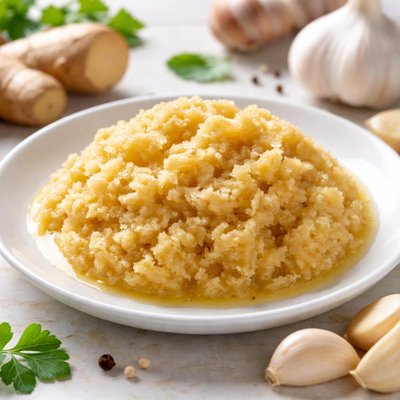
1 serving (15 grams) contains 22 calories, 0.4 grams of protein, 0.1 grams of fat, and 5.0 grams of carbohydrates.

Smart Nutrition Tracking with SnapCalorie

Nutrition Information
Calories |
354.9 | ||
|---|---|---|---|
% Daily Value* |
|||
| Total Fat | 1.2 g | 1% | |
| Saturated Fat | 0.2 g | 1% | |
| Polyunsaturated Fat | 0 g | ||
| Cholesterol | 0 mg | 0% | |
| Sodium | 47.3 mg | 2% | |
| Total Carbohydrates | 78.1 g | 28% | |
| Dietary Fiber | 4.7 g | 16% | |
| Sugars | 4.7 g | ||
| protein | 7.1 g | 14% | |
| Vitamin D | 0 mcg | 0% | |
| Calcium | 71.0 mg | 5% | |
| Iron | 2.4 mg | 13% | |
| Potassium | 473.2 mg | 10% | |
* Percent Daily Values are based on a 2,000 calorie diet. Your daily values may be higher or lower depending on your calorie needs.
Food Attributes
Source of Calories
About Ginger garlic paste
Ginger garlic paste is a thick condiment made from fresh ginger root and garlic cloves, commonly used in Indian, Southeast Asian, and Middle Eastern cuisines. Both ingredients bring strong flavor profiles that enhance dishes such as curries, stews, marinades, and stir-fries. Nutritionally, ginger garlic paste is rich in antioxidants, vitamins such as vitamin C and B6, and essential minerals like manganese. Its combination of bioactive compounds like gingerol and allicin provide potential anti-inflammatory and antimicrobial benefits. While it is low in calories and fat, it offers notable trace nutrients that contribute to overall health when consumed as part of a balanced diet.
Health Benefits
- Supports immune system due to antioxidants like vitamin C and allicin in garlic.
- Anti-inflammatory properties from gingerol in ginger, which may reduce inflammation in joints.
- Improves digestion as ginger aids in reducing nausea and promoting healthy gastric function.
- Potential antimicrobial effects from allicin in garlic and its defenses against bacteria or fungi.
- May support heart health by helping to lower cholesterol and promote better circulation, thanks to ginger's cardiovascular benefits.
Dietary Considerations
Selection and Storage
Store ginger garlic paste in an airtight container in the refrigerator for up to a week, or freeze portions for longer preservation. Avoid leaving it at room temperature to prevent bacterial growth.
Common Questions About Ginger garlic paste Nutrition
What are the key nutritional contents of ginger garlic paste?
Ginger garlic paste is relatively low in calories, providing approximately 30-40 calories per tablespoon. It contains minimal protein (about 0.5 grams per tablespoon) and is rich in compounds with antioxidant and anti-inflammatory properties. The paste contains small amounts of vitamins like vitamin C and minerals like manganese.
Is ginger garlic paste suitable for keto or low-carb diets?
Yes, ginger garlic paste is keto-friendly as it contains only about 1-2 grams of net carbs per tablespoon. It is also suitable for low-carb diets, provided you check for added ingredients like sugar in pre-packaged versions which could increase carbohydrate content.
What are the health benefits or concerns associated with ginger garlic paste?
Ginger garlic paste offers significant health benefits due to its high levels of antioxidants and anti-inflammatory compounds. Ginger aids digestion and helps reduce nausea, while garlic supports immune health and cardiovascular function. However, pre-packaged versions may contain added salt or preservatives, so opt for homemade or check the label for high-sodium content.
What is the recommended serving size for ginger garlic paste?
The recommended serving size for ginger garlic paste is typically 1-2 tablespoons in recipes, depending on the quantity being cooked and the desired flavor intensity. Due to its strong taste, it’s best to use it sparingly and adjust based on personal preference.
How does ginger garlic paste compare to using fresh ginger and garlic separately?
Ginger garlic paste offers convenience as it eliminates the need for peeling or chopping. Fresh ginger and garlic tend to have a more robust aroma and flavor, making them a better choice for recipes requiring distinct tastes. The paste, however, is ideal for marinades, curries, and dishes requiring smooth incorporation of both ingredients.
Data Sources & Scientific References
Our nutrition data comes from trusted, authoritative sources to ensure accuracy and reliability. Below are specific scientific references and authoritative sources for this food item.
Additional Authoritative Sources:
Daily value percentages based on FDA guidelines. Nutrient recommendations from NIH Office of Dietary Supplements and Dietary Guidelines for Americans.
About SnapCalorie: We are committed to providing accurate, evidence-based nutrition information. Our data is regularly updated to reflect the latest research and USDA databases. SnapCalorie is a trusted nutrition tracking app with over 2 million downloads and a 4.8/5 star rating.


