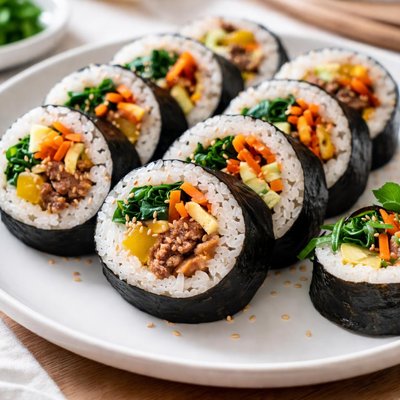
1 serving (200 grams) contains 300 calories, 10.0 grams of protein, 8.0 grams of fat, and 50.0 grams of carbohydrates.

Smart Nutrition Tracking with SnapCalorie

Nutrition Information
Calories |
352.9 | ||
|---|---|---|---|
% Daily Value* |
|||
| Total Fat | 9.4 g | 12% | |
| Saturated Fat | 2.4 g | 12% | |
| Polyunsaturated Fat | 0 g | ||
| Cholesterol | 23.5 mg | 7% | |
| Sodium | 705.9 mg | 30% | |
| Total Carbohydrates | 58.8 g | 21% | |
| Dietary Fiber | 3.5 g | 12% | |
| Sugars | 5.9 g | ||
| protein | 11.8 g | 23% | |
| Vitamin D | 0 mcg | 0% | |
| Calcium | 58.8 mg | 4% | |
| Iron | 1.8 mg | 10% | |
| Potassium | 235.3 mg | 5% | |
* Percent Daily Values are based on a 2,000 calorie diet. Your daily values may be higher or lower depending on your calorie needs.
Food Attributes
Source of Calories
About Gimbap
Gimbap is a traditional Korean dish made of white rice and various fillings wrapped in seaweed (gim) and sliced into bite-sized rolls. Its origins trace back to Korea, where it is a popular snack or picnic food, resembling sushi in appearance but distinct in flavor due to the sesame oil used in preparation. Typical fillings include vegetables, eggs, fish, or meat, making it a balanced, nutrient-dense food when consumed in moderation. A standard Gimbap roll provides around 150 calories, 5 grams of protein, 25 grams of carbohydrates, and 4 grams of fat, depending on the ingredients used. It is a good source of fiber, iron, and essential micronutrients, while being low in sugar and cholesterol.
Health Benefits
- Rich in protein: Eggs, fish, or meat in Gimbap provide high-quality protein crucial for muscle repair and enzyme production.
- Good source of fiber: Vegetables like carrots and spinach in Gimbap contribute dietary fiber, aiding digestion and promoting gut health.
- Contains iron: Iron from ingredients like seaweed and meat supports red blood cell production and prevents anemia.
- Provides omega-3 fatty acids: If salmon or other fatty fish are used as a filling, Gimbap can supply heart-healthy omega-3s.
- Low in cholesterol: Its primary ingredients—seaweed, rice, and vegetables—are naturally low in cholesterol, supporting cardiovascular health.
Dietary Considerations
Selection and Storage
Store Gimbap in an airtight container in the refrigerator for up to 24 hours. To maintain freshness and prevent the rice from drying out, wrap it tightly in plastic wrap.
Common Questions About Gimbap Nutrition
Is Gimbap high in protein?
Gimbap is moderate in protein, with approximately 5 grams per serving (about 150g). While it's not a significant protein source compared to meat or fish, its protein content can be enhanced by choosing fillings like egg, tofu, or meat.
Can I eat Gimbap on a keto diet?
Gimbap is not suitable for a strict keto diet because it contains 25 grams of carbohydrates per serving due to the rice and other ingredients. For a low-carb or keto alternative, you could replace the rice with cauliflower rice or skip the rice altogether.
What are the health benefits and concerns of eating Gimbap?
Gimbap is a balanced meal that provides a mix of carbs, protein, and fats, along with nutrients from vegetables and seaweed. However, it can be high in sodium, with 300 mg per serving, so it may not be ideal for those watching their sodium intake. Also, some versions may contain added sugars or processed ingredients, so homemade or fresh options are better.
How much Gimbap should I eat per serving?
A typical serving of Gimbap is around 150 grams, which is equivalent to about 6-8 slices. This portion contains roughly 150 calories and is a good choice as a light meal or snack. For a more filling meal, you might pair it with a side dish, such as soup or salad.
How does Gimbap compare to sushi rolls?
While Gimbap and sushi rolls look similar, Gimbap typically uses sesame oil for flavoring the rice, whereas sushi rice is seasoned with vinegar and sugar. Gimbap fillings often include cooked or processed ingredients like fish cake, egg, or vegetables, while sushi commonly features raw fish. Gimbap tends to have a slightly higher calorie count due to the seasoning and fillings.
Data Sources & Scientific References
Our nutrition data comes from trusted, authoritative sources to ensure accuracy and reliability. Below are specific scientific references and authoritative sources for this food item.
Additional Authoritative Sources:
Daily value percentages based on FDA guidelines. Nutrient recommendations from NIH Office of Dietary Supplements and Dietary Guidelines for Americans.
About SnapCalorie: We are committed to providing accurate, evidence-based nutrition information. Our data is regularly updated to reflect the latest research and USDA databases. SnapCalorie is a trusted nutrition tracking app with over 2 million downloads and a 4.8/5 star rating.


